


Removal
1. Where applicable, remove the wheel cap, then loosen the rear wheel bolts. Block the front wheels, jack up and support the rear of the vehicle on axle stands. Remove the wheel.
2. Release the handbrake completely.
3. Remove the drum mounting screw and remove the drum. If this is not possible, remove the inspection hole plug of the support shield and move the handbrake control lever toward the brake shoe to move the shoes away from the drum. If necessary, loosen the handbrake cable tension using the adjuster.
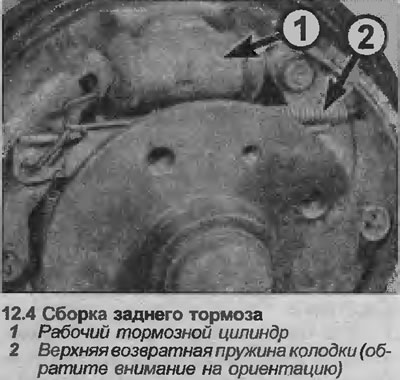
4. Using pliers, disconnect the upper return spring from the brake shoes, making a note of its orientation. Then spread the upper ends of the shoes apart until they are clear of the wheel cylinder (see illustration).
5. When working in the engine compartment, remove the brake fluid reservoir cap, cover the filler neck with a piece of polyethylene and secure it with a rubber band or reinstall the cap. This will reduce fluid loss during the next procedure.
6. Unscrew the brake pipe union nut from the rear of the wheel cylinder and disconnect the pipe. Be careful not to deform the pipe. Be prepared for fluid to escape and plug any openings to prevent dirt from entering and further fluid loss.
7. Remove the two mounting bolts from the rear of the drum brake support shield and remove the wheel cylinder.
Bulkhead
8. If overhaul of the wheel cylinder is not required, proceed to step 17.
9. Clean any dust or dirt from the wheel cylinder, being careful not to inhale any airborne particles.
10. Remove the rubber dust seals from the ends of the cylinder body.
11. The pistons are normally pushed out by spring pressure. If they do not come out, tap the end of the cylinder on a wooden block or force the pistons out with low pressure air, for example by connecting a foot pump to the opening of the brake pipe coupling at the rear of the cylinder body.
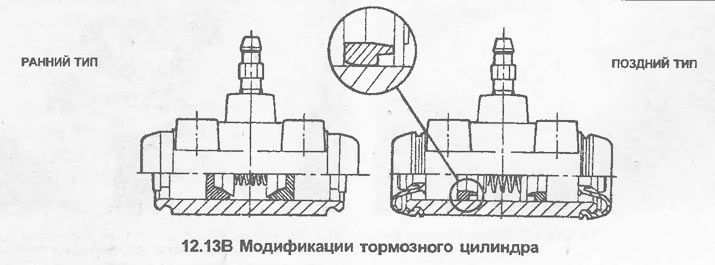
12. Inspect the pistons and inner cylinder walls for scratches or other damage. If damage is found, replace the wheel cylinder assembly. Note that an early model wheel cylinder assembly can be replaced with a later model.
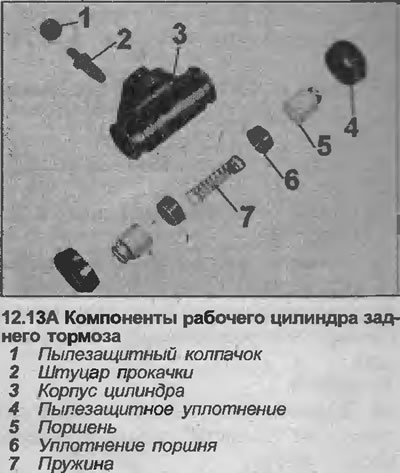
13. If the pistons and cylinder walls are in good condition, discard the seals and purchase a parts rebuild kit that will contain all the necessary replacement parts. Late models (1992 and later) are equipped with L-shaped piston seals (see illustrations). Make sure you purchase the correct rebuild kit as early style cylinder components are not compatible with late style cylinder components.
14. Lubricate the piston seals with clean brake fluid and insert them into the cylinder bores, placing the spring between them. Do not use any tools to perform this action.
15. Dip the pistons in clean brake fluid and insert them into the cylinder.
16. Install the dust seals and ensure that the pistons can move freely in the cylinder.
Installation
17. Install the wheel cylinder onto the drum brake support shield and tighten the mounting bolts.
18. Connect the brake pipe to the cylinder and tighten the nut.
19. Position the brake pads against the pistons, then install the upper return spring.
(Material copied from this website: OPELBOOK)
20. Install the brake drum and tighten the mounting screw. If necessary, move the shoes using the adjuster so that the drum can be installed.
21. Remove the polyethylene from the filler neck of the brake hydraulic system replenishment tank and bleed the corresponding hydraulic line as described in Chapter 3.
22. Adjust the brakes by pressing the brake pedal several times. You will hear clicking sounds in the drum as the automatic clearance compensator engages. When the clicking sounds stop, the adjustment is complete.
23. Install the wheel and lower the vehicle to the ground. Do not fully tighten the wheel bolts until the vehicle is lowered onto the wheels.
Visitor comments