OpelBook.ru
Cars AvtoVAZ Cars Mitsubishi Cars BMW Cars Mercedes Cars Nissan Cars Toyota Cars Chevrolet
English Русский
Български
Беларускі
Український
Српски
Hrvatski
Română
Polski
Slovenský
Magyar
 |  Sitemap  |  Contacts  |    


Main Astra Corsa Insignia Kadett Omega Vectra Zafira Others Articles
Kadett D (1979-1984) Kadett E (1984-1995)
  • Main
  • Kadett

History and description cars Opel Kadett


This is a small family car of the C-class of the German car manufacturer Opel. It was produced in the periods 1937-1940 and 1962-1991, after which it was replaced Opel Astra. The engine is located transversely in the front, the drive in the first models was on the rear wheels, and modern modifications have a drive only on the front wheels. The modern Cadet is a competitor Peugeot 205, Hyundai Elantra, Nissan Sunny, Ford Escort (North America).

Opel Kadett 1936 year 
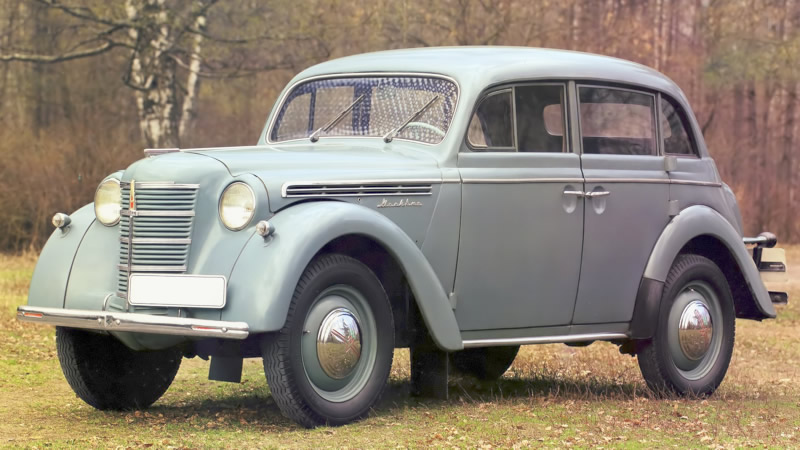
Opel Kadett 1936 year
The first Kadett was presented to the public in December 1936 by Opel's commercial and technical director Heinrich Nordhoff, who would become known in the following decades for his leading role in the creation of the company Volkswagen. This model was based on the Opel Olympia, which had a monocoque body. The Cadet was positioned as a "people's" car and was sold for 2,100 Reichsmarks, unlike the Olympia, which cost over 2,500 Reichsmarks.

Moskvich-400 
Moskvich-400
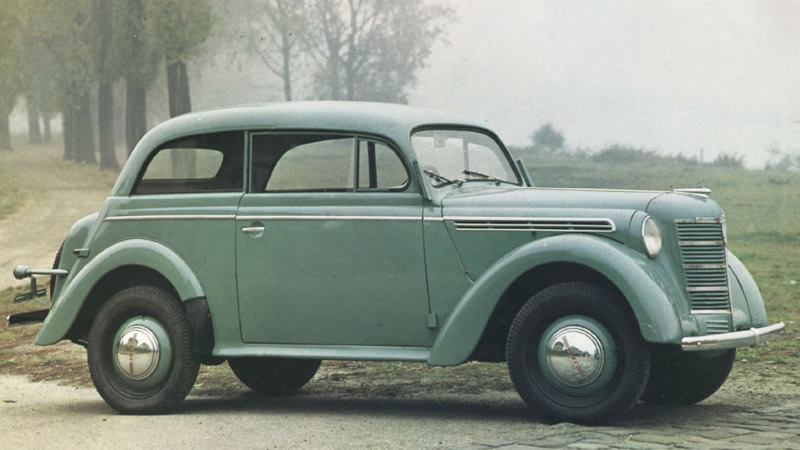
In 1940, production of the Kadett and Olympia was stopped to produce Opel Blitz trucks for military purposes. After World War II, equipment from the Opel Rüsselsheim car plant was requested by the Soviet Union as part of the war reparations package to compensate for the loss of production lines for the KIM-10-52 car during the siege of Moscow. Based on this equipment, the Moscow Small Car Plant produced the Moskvich-400, which was a complete analogue of the 4-door Kadett.

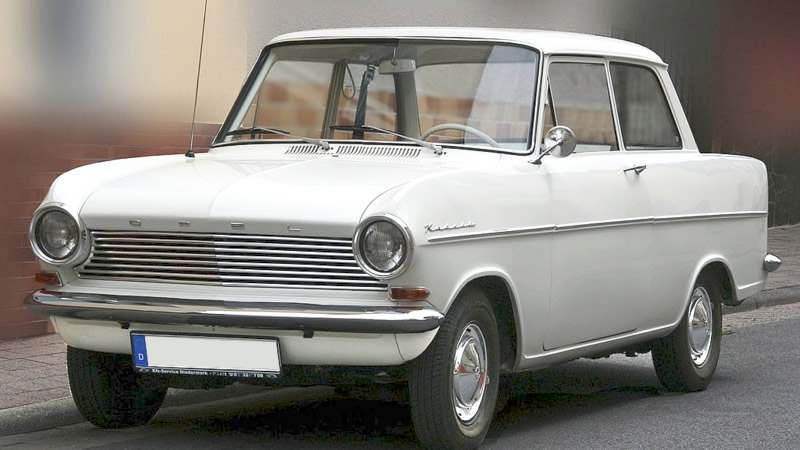
Opel Cadet A (1962-1965)


Opel Kadett A 
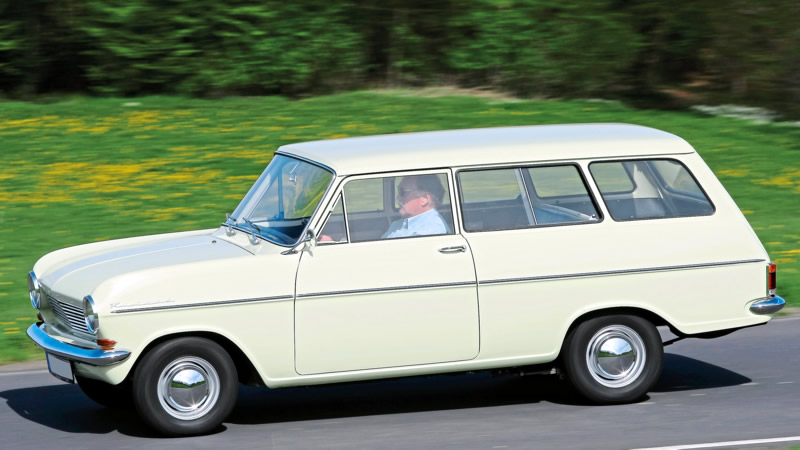
Opel Kadett A
The Kadett was reintroduced in 1962, with deliveries starting on October 2, just over 22 years after the original model was discontinued. Production began at a new plant in Bochum, built for Opel's 100th anniversary. The body style was initially a 2-door saloon, but later a 3-door estate (Car-A-Van) and then a coupe body style appeared. The Kadett featured a more modern design than the Volkswagen Beetle, which dominated the market for small family cars, but had poor corrosion protection. A total of 650,000 cars of the first generation were built, of which 126,000 were estates.

Opel Kadett A, wagon 
Opel Kadett A, wagon
The engine was a 4-cylinder petrol engine with a capacity of 1.0 liter, which was developed specifically for this car. The power was 40 hp, and in October 1963 a high-speed engine was released "1.0 S-Motor" 48 hp. In 1965, the volume was increased to 1.1 liters. The gearbox is mechanical 4-speed. The drive was carried out on the rear wheels through a single clutch with a dry plate. All four wheels had 200 mm brake drums.

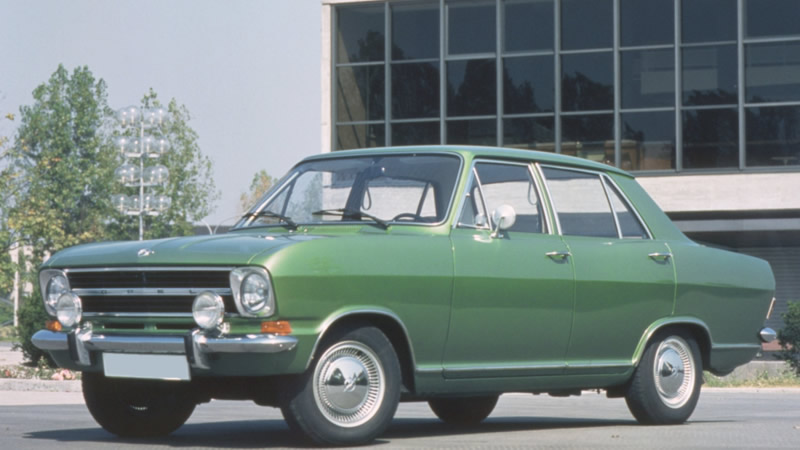
Opel Cadet B (1965-1973)


Opel Kadett B, sedan 
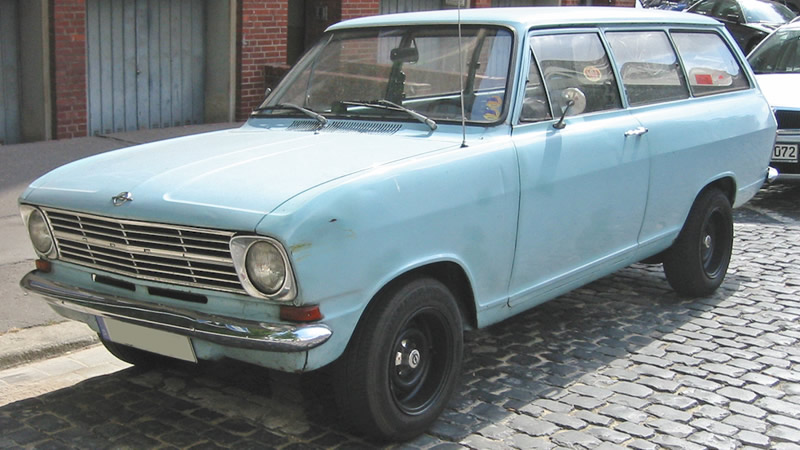
Opel Kadett B, sedan
The second generation of the Kadett was presented at the Frankfurt Motor Show in late summer 1965. This is a deep modernization of the first generation, retaining the main technical solutions, but with a modernized body. The car became wider and longer, the interior space for passengers increased, and the height was reduced by 10 mm. Assembly was in Germany (Bochum) and Malaysia (johor Bahru city).

Opel Kadett B, wagon 
Opel Kadett B, wagon
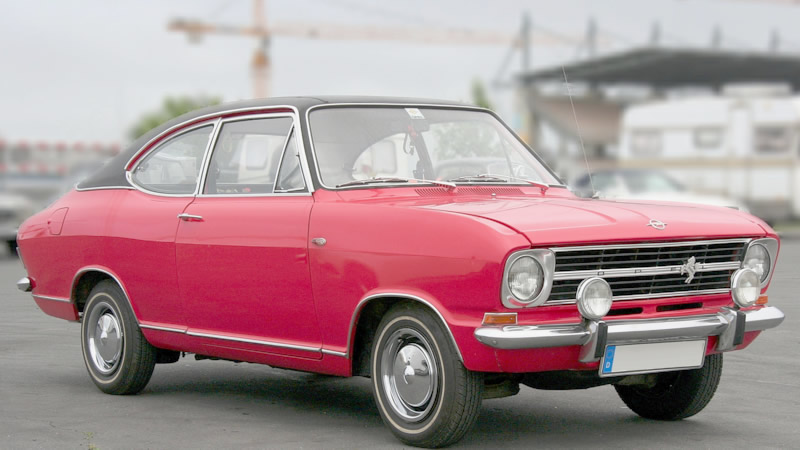
The range of bodies was expanded - 2- and 4-door saloon, 3- and 5-door station wagon and 2-door coupe. For the first time, disc brakes were offered on the front wheels, except for the cheapest models. Since February 1967, the single-circuit hydraulic system was replaced by a dual-circuit brake system. The front suspension was improved, as a result of which the car began to "hold" the road better.

Opel Kadett B, coupe 
Opel Kadett B, coupe
The engine designs remained the same - petrol 4-cylinder OHV with water cooling, but with increased volumes from 1.1 to 1.9 liters with a power of 45 to 106 hp. Initially, all cars were equipped with a 6-speed manual gearbox, and since 1968 it became possible to choose a 3-speed automatic "Turbo-Hydramatic 180".

Opel Cadet C (1973-1979)


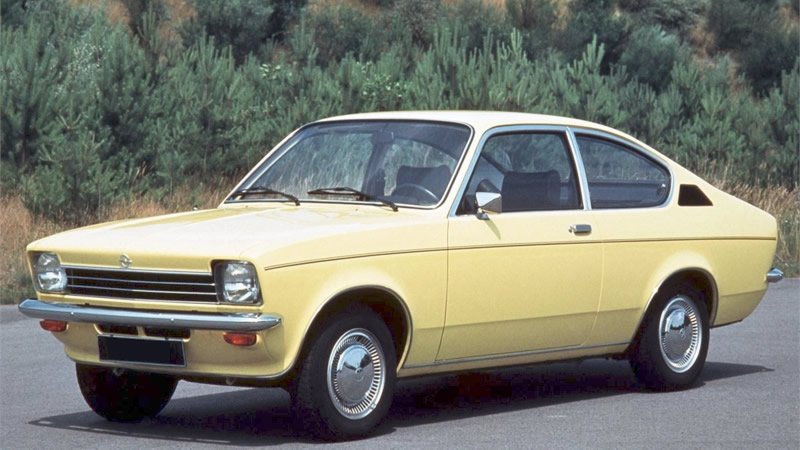
Opel Kadett C, coupe 
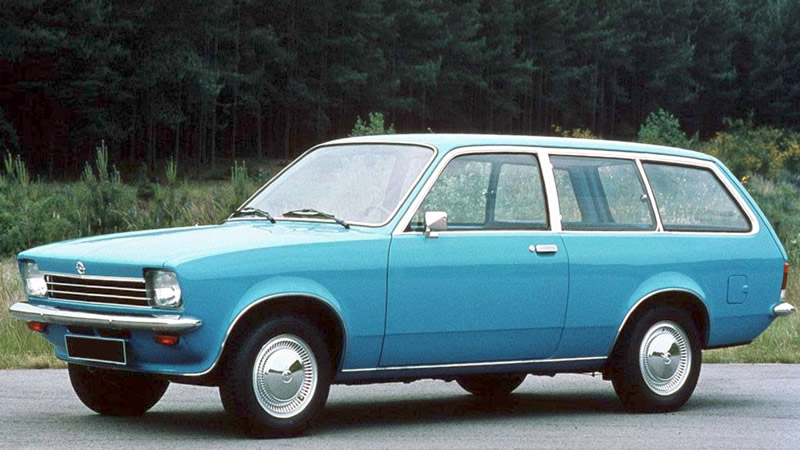
Opel Kadett C, coupe
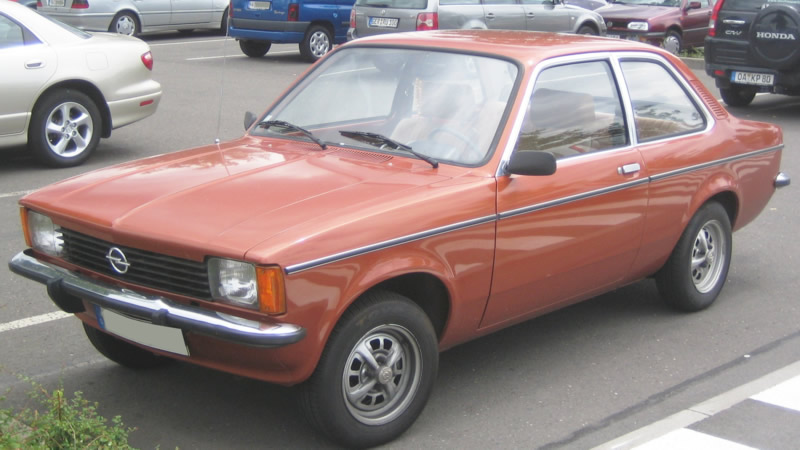
In August 1973, the third generation of the Kadett with the letter index "C" was released. The car was assembled in Germany and Belgium on the basis of the international platform "GM T platform" and was the last small Opel with rear-wheel drive. The design became less lumpy and became more streamlined and sporty. The external dimensions remained almost the same. About 1.7 million cars were produced.

Opel Kadett C, wagon 
Opel Kadett C, wagon
The body styles were as follows: 2- and 4-door sedan, 3-door hatchback ("Kadett City", to compete on price with Ford Fiesta), 3-door station wagon ("Caravan") and 2-door coupe and 2-door convertible. At first, the brakes were drum on all wheels, and since 1975, front disc brakes have been installed on all cars. Vacuum brake booster was installed on all cars.

Opel Kadett C, sedan, restyling 
Opel Kadett C, sedan, restyling
The engines were only petrol 4-cylinder with a capacity of 1.0, 1.2, 1.9 and 2.0 liters with a power of 39 to 108 hp. There were three transmission options - 4- and 5-speed manual or 3-speed automatic. In 1977 and 1978, there was a small restyling of the interior trim and exterior. The headlights became rectangular and larger, and the turn signals were moved from under the bumper to the top next to the headlights.

Opel Cadet D (1979-1984)


Opel Kadett D, hatchback 
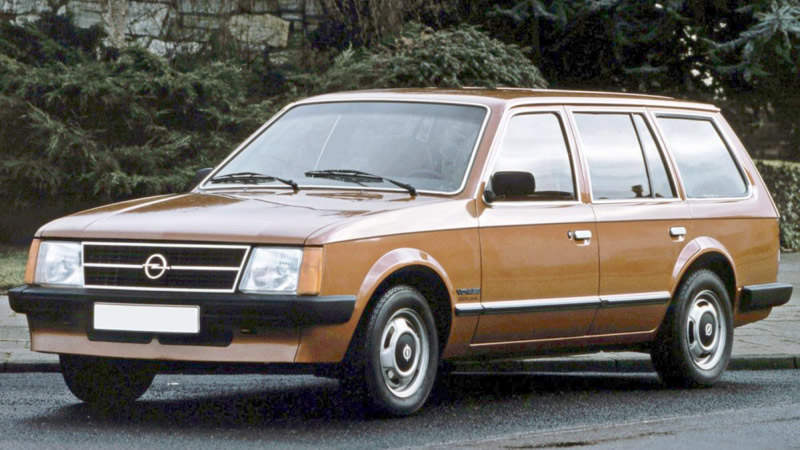
Opel Kadett D, hatchback
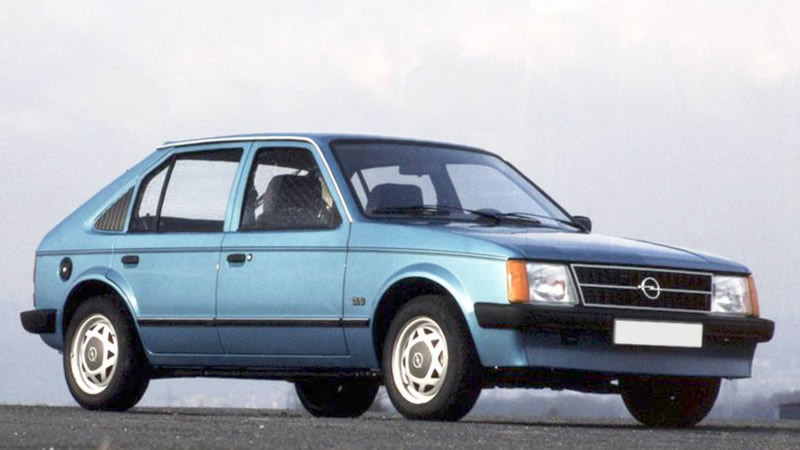
The fourth generation was presented in August 1979, and official deliveries began in September. This is the first Opel car with front-wheel drive, the engine is located transversely in front. Because of this, its length was slightly reduced, but the volume of the cabin was increased. Assembly prices were in Germany, Belgium and Great Britain. In total, about 2 million cars were produced in 5 years. In its class, the Kadett became one of the leaders.

Opel Kadett D, wagon 
Opel Kadett D, wagon
The body styles were as follows: 3- and 5-door hatchback, 2- and 4-door fastback (more sloping rear end compared to hatchback) and 3- and 5-door station wagons ("Caravan"). Front-wheel drive reduced fuel consumption and improved directional stability.

New petrol engines "GM Family II" all 4-cylinder with one overhead camshaft, volume from 1.0 to 1.8 liters, power from 45 to 104 hp. For the first time, a diesel engine with a volume of 1.6 liters and a power of 55 hp was offered on this model. There are three transmission options to choose from - 4- and 5-speed manual and 3-speed automatic.

Opel Cadet E (1984—1995)
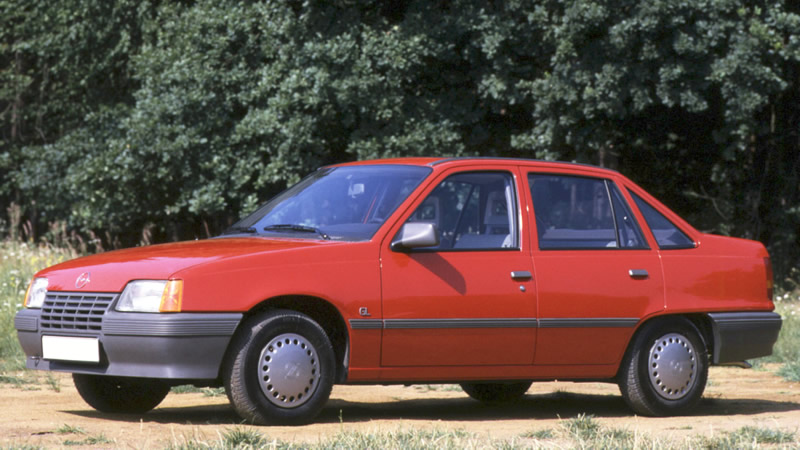


Opel Kadett E, sedan 
Opel Kadett E, sedan
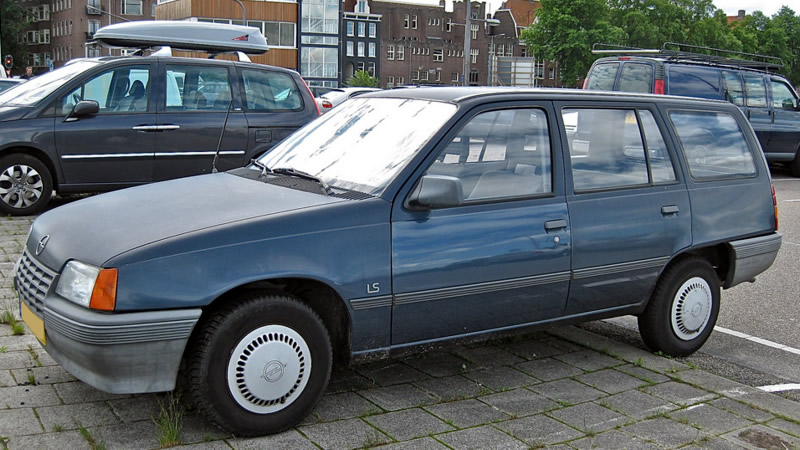
The last generation was introduced to the public in August 1984. Production was established in Germany, Belgium, Portugal and the United Kingdom. The car became very popular and during this period about 3.8 million copies were produced. In 1985, the Cadet won the European Car of the Year award. The body shapes were as follows: a 3-and 5-door hatchback, a 4-door sedan, a 3-and 5-door station wagon ("Caravan") and a 2-door convertible.

The range of petrol 4-cylinder engines includes seven modifications with a volume of 1.2 to 2.0 liters and a power of 59 to 116 hp. There are three diesel engines - 1.6 liters (4EC1, turbocharged, 70 hp), 1.7 liters (4EE1, turbocharged, 86 hp) and 1.7 liters (GM Family II, 58 hp). There are three transmissions to choose from: 4- or 5-speed manual and 3-speed automatic.

In 1991, Kadett was renamed Astra while maintaining the letter designation of generations.
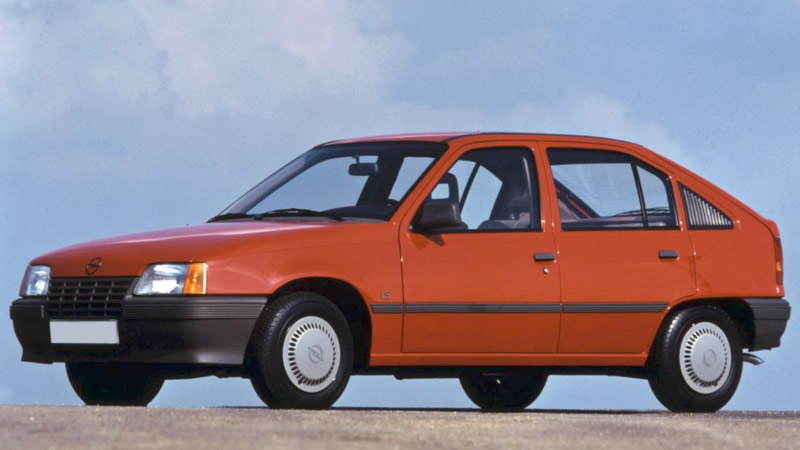
Opel Kadett E, hatchback 
Opel Kadett E, hatchback
Opel Kadett E, wagon 
Opel Kadett E, wagon
Opel Kadett E, cabriolet 
Opel Kadett E, cabriolet


Share information:


Link to this page in different formats
HTMLTextBB Code

Kadett E (1984-1995) 
  • General information
  • Vehicle description
  • Operation and maintenance
  • OHV power unit
  • Engine design
  • Check and repair
  • Engine work
  • OHC power unit
  • Engine design
  • Engine repair
  • Ignition system
  • Cooling and lubrication
  • Supply system
  • Fuel injection «LE-Jetronic»
  • Fuel injection «LE3-Jetronic»
  • Motronic ML4.1 system
  • Motronic M1.5 system
  • Motronic M2.5 system
  • Transmission
  • Clutch
  • Gearbox F10 and F13
  • Gearbox F16 and F20
  • Automatic gearbox
  • Drive shafts
  • Chassis
  • Front suspension
  • Rear suspension
  • Steering
  • Brake system
  • Electrical equipment
  • Equipment and devices
  • Electrical circuits
Kadett D (1979-1984) 
  • General information
  • Car care
  • Maintenance
  • Power unit
  • Gasoline engines
  • Lubrication system
  • Cooling system
  • Power system (gasoline)
  • Carburetor Solex 35 PDSI
  • Carburetor Varajet II
  • Carburetor 1B1
  • Fuel injection (gasoline)
  • Diesel engines
  • Fuel system (diesel)
  • Transmission
  • Clutch
  • Manual gearbox
  • Chassis
  • Front suspension
  • Rear suspension
  • Steering
  • Brake system
  • Wheels and tires
  • Body
  • Body elements
  • Doors and windows
  • Electrical equipment
  • Equipment and devices
  • Lighting system
  • Power devices
  • Ignition system
  • Electrical circuits
OpelBook.ru © 2017–2026 · Mobile version · · Sitemap: EN BG BY UA RS HR RO PL SK HU · Feedback · Site search
Astra F, petrol · Astra G, petrol · Astra G · Astra H · Astra J, petrol · Corsa B · Corsa C, petrol · Corsa C · Insignia A · Kadett D · Kadett E · Omega A · Omega B · Omega B2 · Vectra A, petrol · Vectra A · Vectra B, petrol · Vectra B · Vectra C · Zafira A, petrol · Frontera A, petrol · Frontera B · Ascona C · Vivaro A ·
We want your visit to be comfortable 🤝! We use cookies 🍪 to make that happen.