


Note: Manufacturers recommend using special tools for this procedure, although replacements can be made (described in the text). It is recommended that you read this Chapter carefully before you begin. Read the section again Chapters 1, providing information regarding cup-shaped flywheels.
Removal
1. Where applicable, remove the left front wheel cap, then loosen the wheel bolts. Tighten the handbrake, jack up and install the front of the vehicle on the axial supports. Remove the wheel to improve access. For models with two overhead camshafts (DOHC), remove the lower engine guard plate.
2. Unscrew the mounting bolts and remove the protective cover from the base of the clutch housing.
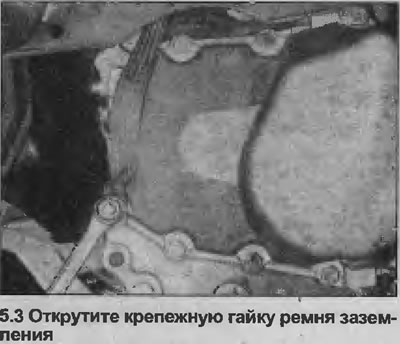
3. Loosen the retaining nut and disconnect the ground strap from the transmission end cover (see illustration).
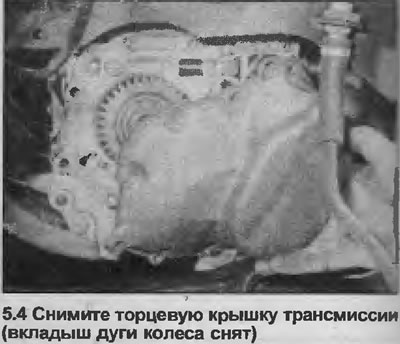
4. Place a container under the transmission end cover to catch the oil, then remove the mounting bolts and cover (see illustration). Mark the position of the bolt securing the ground strap. To improve access, remove the wheel arch liner as described in Section 11.
5. Remove the gasket.
6. Remove the retaining ring from the recess at the end of the input shaft using special pliers.
Text copied from this portal (opelbook.ru)
7. Using a twelve-point socket wrench, remove the screw from the end of the input shaft.
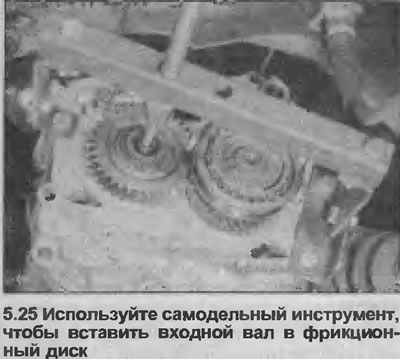
8. Remove the input shaft from the clutch friction disc hub. For this procedure, manufacturers recommend using tools No. KM-556-1-A and KM-556-4, but a replacement can be made (see illustration). The tool is attached to the transmission with end cap bolts (see illustration 5.25). The dimensions of the tool depend on the type of transmission.
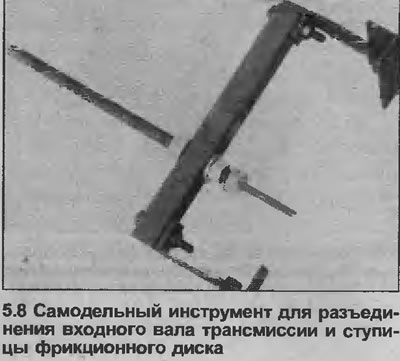
9. Alternatively, screw an M7 bolt into the end of the input shaft and use it to push the shaft out (to the border). The input shaft may be installed very tightly, then it will be impossible to remove it without the help of the special tool described above. In some cases, a sliding hammer can be used.
10. Before removing the clutch assembly, it is necessary to move the pressure plate against the pressure of the diaphragm spring, otherwise the assembly will be too thick and will not pass between the flywheel and the edge of the clutch housing.
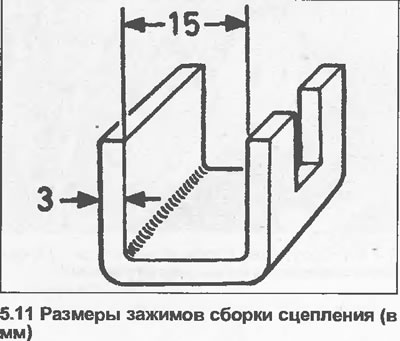
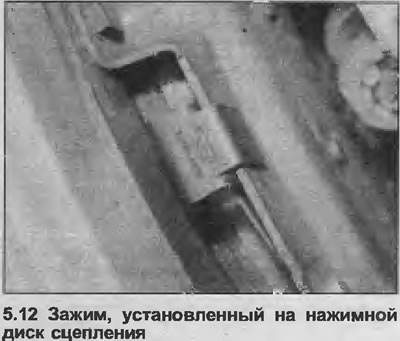
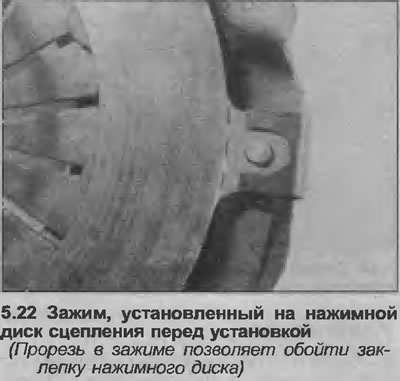
11. There are special clamps for this purpose (tool #KM-526-A), but a replacement can be made from metal strips. The clamps should be U-shaped and match the dimensions given below (see illustration). File the edges of the clamps to ease installation and cut a notch in one of the folded ends to fit around the pressure plate rivets.
- a) Strip thickness - 3.0 mm
- b) Distance between bent ends - 15.0 mm
12. Have an assistant fully depress the clutch pedal, then securely install the clamps around the edge of the housing/pressure plate, inserting the clamps into the slots on the periphery of the housing (see illustration). Rotate the crankshaft with a wrench on the sprocket bolt to gain access to where each clamp is mounted.
13. Once the clamps have been installed, have an assistant release the clutch pedal.
14. Gradually loosen and remove the six bolts and spring washers securing the clutch housing to the flywheel. Rotate the crankshaft again to access each bolt. Note the position of the mark on the flywheel that aligns with the notch on the clutch housing.
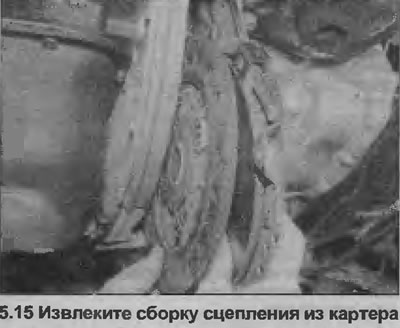
15. Remove the clutch assembly from the clutch housing (downwards) (see illustration). Be prepared to catch the friction disc that may fall out of the cover when removing the clutch, and remember the correct orientation of the friction disc. The side of the hub with the smaller protrusion should face the flywheel.
16. To remove the clamps, clamp the clutch assembly in a vice with soft-grip jaws.
17. Inspect the clutch components for signs of wear or damage.
Inspection
18. Remove all traces of dust from the removed clutch assembly using a dry cloth. Although most friction discs are fitted with asbestos-free linings, it is recommended that precautions be taken to avoid inhaling any dust removed, as asbestos is hazardous to health.
19. Inspect the friction disc linings for signs of wear and broken rivets. Check the disc for deformation, cracks, broken damper springs and worn grooves. The surface of the friction linings may be worn, but if the texture of the material is still visible, the condition of the lining is considered satisfactory. If there are any signs of contamination with oil or grease (shiny black spots), the disc must be replaced and the cause of the contamination found and corrected. Typically the source of contamination is either a leaking crankshaft seal or a transmission input shaft seal (or both). The procedures for replacing them are given in Sections 2A, 2B and 7 (depending on the model). The friction disc must also be replaced if the lining has worn down to the rivet heads (or almost to them).
20. Inspect the flywheel and pressure plate surfaces. If they have deep scratches or nicks, they must be replaced. The pressure plate should also be replaced if it has cracks or if the diaphragm spring is damaged or weakened.
21. While the clutch is removed, it is recommended to check the condition of the release bearing as described in Chapter 7.
Installation
Note: Use new snap ring when assembling (input shaft end) and the transmission end cover gasket.
22. Sometimes the new clutch assembly is already clamped in place (see point 11). If this is not the case, compress the assembly yourself. Clamp the assembly in a vice with soft-grip jaws and install the clamps used during removal (see illustration).
23. Make sure that no oil or grease gets on the friction disc linings and the surface of the pressure plate and flywheel. It is recommended to install the clutch assembly with clean hands and wipe the surface of the pressure plate and flywheel with a clean rag.
24. Apply a small amount of molybdenum grease to the grooves of the friction disc hub. Then install the disc onto the flywheel with the side of the hub with the smaller projection facing the flywheel. Press the friction disc onto the flywheel and install the housing/pressure plate assembly into place.
25. Insert the input shaft into the clutch disc hub so that its end fits into the bearing at the end of the crankshaft. Never try to force the shaft into place with a mallet or similar tool, as this may damage the transmission. If the input shaft cannot be installed manually, manufacturers recommend using a special tool (No. KM-564). The homemade tool used to remove the shaft can also be used (to do this you need to move the nut) (see illustration).
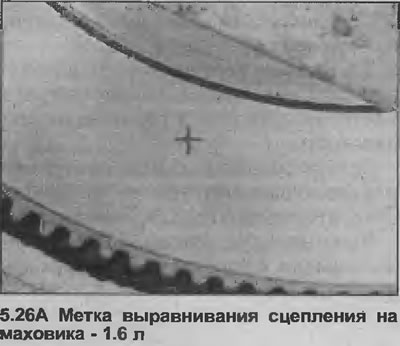
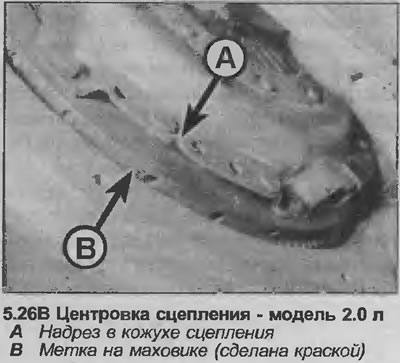
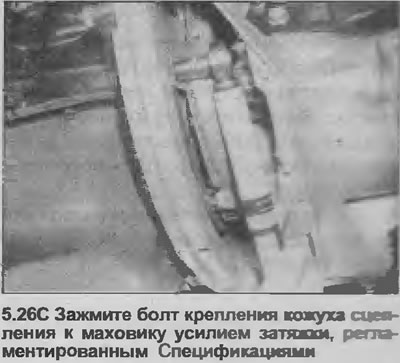
26. With the input shaft in place, position the housing/pressure plate assembly so that the mark on the flywheel aligns with the notch in the clutch housing. Install and tighten the six bolts in a diagonal pattern (and spring washers) fastening the clutch housing to the flywheel (see illustrations). Rotate the crankshaft, placing a wrench on the sprocket bolt to gain access to each bolt in turn, and finally tighten all bolts to the specified tightening torque Specifications.
27. Have an assistant depress the clutch pedal, then remove the three clips from the edges of the housing/pressure plate, again turning the crankshaft to access the clips.
28. Once the clamps are removed, have an assistant release the clutch pedal.
29. Install the socket head cap screw into the end of the input shaft, then install the new snap ring.
30. Using a new gasket, install the transmission end cover and tighten the mounting bolts to the specified torque Specifications. Make sure the bolt securing the ground strap is installed in the correct location (noted upon removal).
31. Install the ground strap to the transmission and tighten the mounting nut.
32. Install the cover on the base of the clutch housing and tighten the mounting bolts. Where applicable, install the wheel arc insert. For models with two overhead camshafts (DOHC), install the lower engine guard plate.
33. Install the wheel, then lower the vehicle to the ground and tighten the wheel bolts completely. Install the hubcap where applicable.
34. Check the clutch cable adjustment as described in Chapter 3.
35. Check and, if necessary, top up the transmission oil level as described in Section 1.
Visitor comments