


Removal
1. A specific feature of the models under consideration is that they can replace the pressure and driven clutch discs, release bearing, clutch release lever bushings and bearing guide seal without removing the engine or gearbox from the car.
2. The manufacturer recommends using special tools for this work, but in principle you can do it without them.
3. Some of the operations are best carried out by working under the front of the vehicle, so apply the handbrake and jack up and support the front of the vehicle. Unscrew and remove the flywheel housing cover bolts from the base of the clutch housing.
4. Unscrew and remove the plug from the end cover of the gearbox housing (see photos).
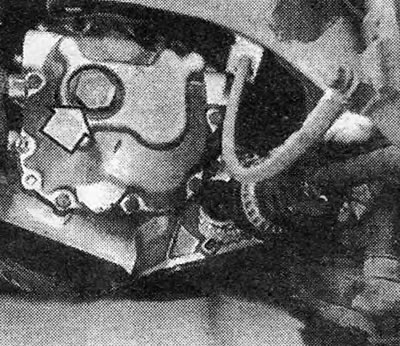
Photo 5.4A. Screw plug on the end cover of the 4-speed gearbox (shown by arrow).
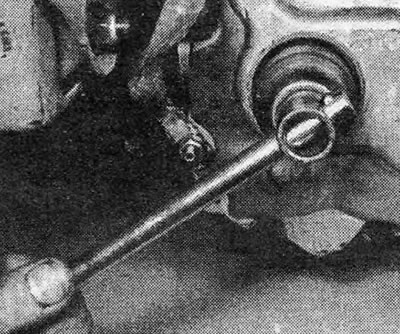
Photo 5.4B. Removing the screw plug (4-speed gearbox).
[Material provided by this website www.OPELBOOK.ru]
5. Using special pliers, remove the retaining ring from the end of the gearbox drive shaft (see photo).
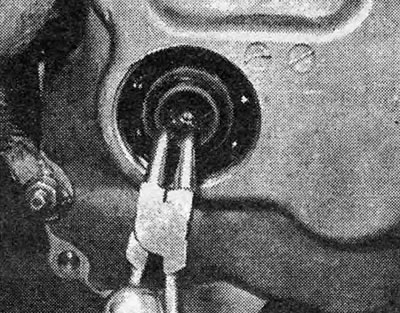
Photo 5.5. Removing the retaining ring from the gearbox drive shaft.
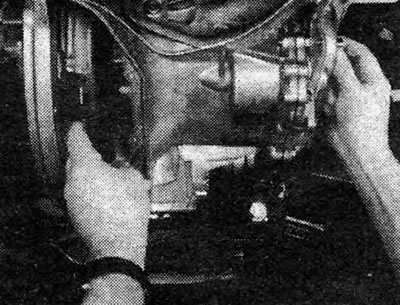
Figure 5.5. Removing the clutch
6. Under the locking ring there is a screw with a 12-sided hole in the head, for removing which you will need a 12-sided wrench (see photos).
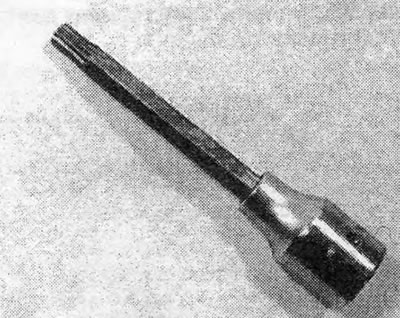
Photo 5.6A. A twelve-sided wrench used to remove special bolts.
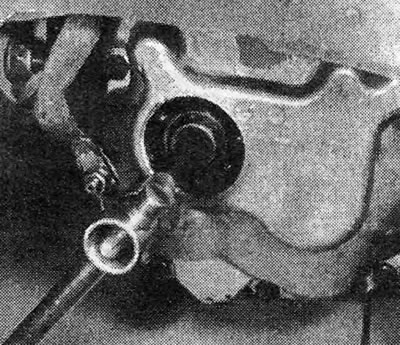
Photo 5.6B. Removing the gearbox input shaft screw.
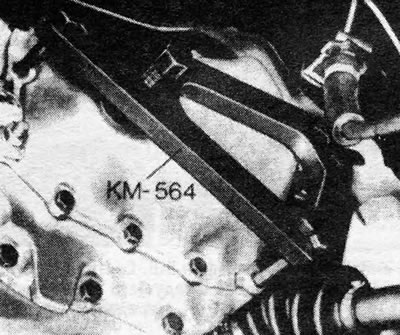
Figure 5.6. Tool KM-564 for installing the gearbox drive shaft into the clutch driven disk
7. In order to pull the transmission drive shaft out of the splined hub of the clutch driven disk, a special tool is required, but you can do without it. Remove one of the 4 bolts securing the gearshift cover to the gearbox housing and, using it as a reference, select a similar bolt, but at least 40.0 mm long. Screw this bolt into the end of the gearbox drive shaft and, holding it, pull the shaft out. When finished, screw the removed bolt back into place (see photos). On some models with a 5-speed transmission, the drive shaft is a very tight fit and will require a special tool or puller to remove it. In extreme cases, a slide hammer can be placed on the end of the shaft and used to remove the shaft.
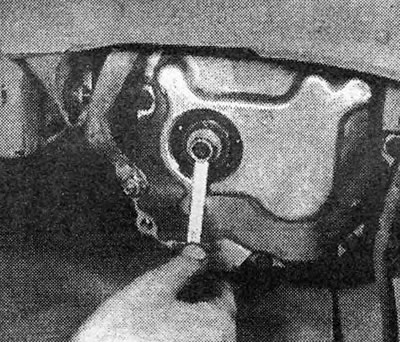
Photo 5.7A. Screw the bolt into the drive shaft.
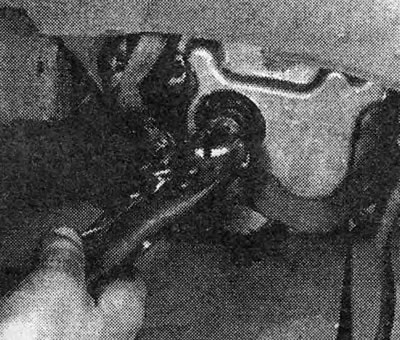
Photo 5.7B. Removing the drive shaft.
8. Before the clutch can be removed, it will be necessary to press the pressure plate against the pressure of the diaphragm spring, since otherwise the dimensions of the clutch basket will not allow it to be pulled out into the gap between the flywheel and the edge of the clutch housing.
9. The manufacturer offers three special clamps (KM526) for pressing the pressure plate, but similar clamps can be made independently from metal strips. The clamps must be U-shaped and meet the following requirements:
- Thickness of metal strip = 3.0 mm
- Distance between clamp legs = 15.0 mm (see photos).
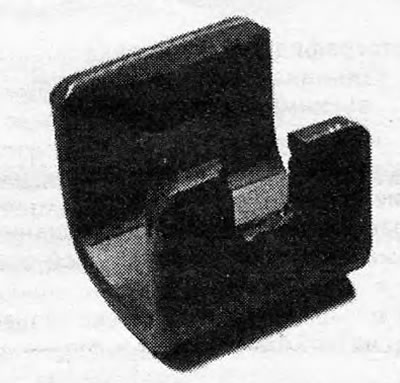
Photo 5.9A. Clamp for holding the clutch basket in a compressed state.
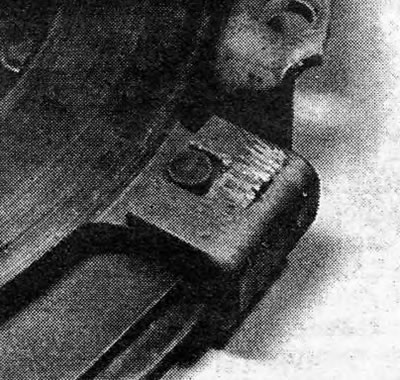
Photo 5.9B. Clamp for holding the clutch basket in a compressed state (view from the pressure plate side).
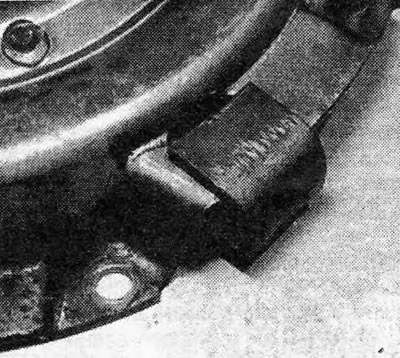
Photo 5.9C. Clamp for holding the clutch basket in a compressed state (view from the clutch housing side).
10. Chamfer the legs of the clamps to make them easier to install. Have an assistant press the clutch pedal all the way down and install the clamps on the clutch basket, inserting them into the holes provided along the edges of the clutch housing. To make this easier, you should turn the crankshaft using a wrench placed on the bolt of its pulley.
11. After installing the clamps, release the clutch pedal.
12. Gradually loosen and remove the 6 bolts securing the clutch housing to the flywheel (see photo).
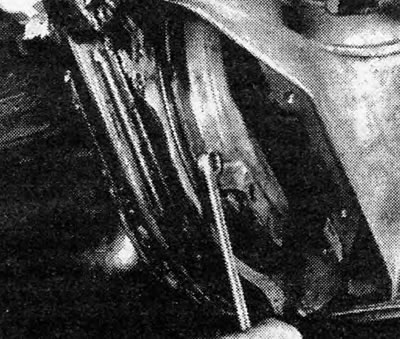
Photo 5.12. Removing the clutch housing bolts.
13. The models in question are not equipped with mounting pins that would fix the position of the clutch housing relative to the flywheel. Instead, you need to ensure that the colored dot on the flywheel is aligned with the notch on the clutch housing rim.
14. Pull the clutch out of the crankcase through the bottom. In order to remove the clamps, you will have to clamp the pressure plate in a vice (see photo).
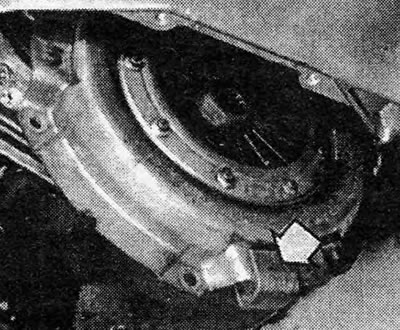
Photo 5.14. Removing the clutch with clamps installed.
Inspection
15. Under normal conditions, clutch overhaul involves installing new pressure and driven discs and a release bearing. Under no circumstances should the diaphragm spring assembly be disassembled. If the clutch basket is faulty, it is replaced as an assembly.
16. Do not attempt to replace the driven disc friction linings. A disc with linings worn down to the rivets or oily must be replaced. If the pads are oiled, you should find and fix the oil leak before installing a new disc (it could be a leaking engine or gearbox seal). The driven disc may also have damage in the form of broken torsion springs or worn disc hub splines.
17. When installing a new clutch, we recommend replacing the release bearing at the same time (see section 7).
18. Inspect the surfaces of the flywheel and pressure plate. If there are grooves on them, the surfaces must be re-sanded. In extreme cases, the flywheel or pressure plate must be replaced. The pressure plate must also be replaced if it has cracks or splits.
Installation
19. In some cases, the new clutch is supplied already compressed, with clamps installed. If clamps are not available, the pressure plate should be clamped in a vice, using linings to avoid damaging the ground surfaces of the plate. Alternatively, you can press the pressure plate using a bolt with a nut and two metal strips with holes drilled in them. After pressing the disc, install the clamps.
20. Apply a small amount of molybdenum disulfide grease to the splines of the driven disk hub and place it against the flywheel with the protruding part of the hub facing away from the flywheel. Holding the driven disc in this position, install the clutch basket (already compressed, with clamps installed).
21. Insert the gearbox drive shaft into the driven disk hub so that its end enters the guide bearing at the end of the crankshaft. Do not hammer the shaft into the driven disk as this may damage the gearbox.
22. If you are unable to install the drive shaft manually, it must be pressed in using a special tool KM-564 (see figure 5.6). A similar tool can be made independently.
23. Fasten the clutch housing to the flywheel with bolts and tighten the bolts to the required torque.
24. Ask an assistant to press the clutch pedal and remove the temporary clamps from the clutch.
25. Screw the screw into the end of the gearbox input shaft and install a new retaining ring.
26. On 4-speed transmission models only, apply sealant to the plug threads and screw it into the transmission end cover. Tighten the plug to the required torque. A properly installed plug should protrude above the end cap surface by no more than 4.0 mm (see photo).
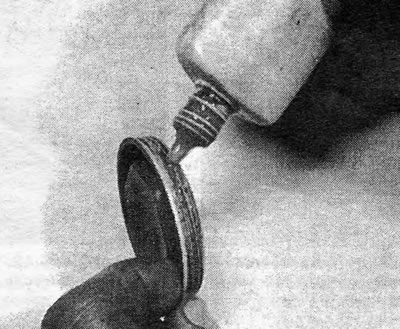
Photo 5.26. Apply sealant to the end cap plug threads (4-speed gearbox).
27. Check the clutch adjustment (see section 2).
28. Install the cover on the flywheel housing.
29. Lower the front of the car to the ground.
Visitor comments