


2. In order to get to the release bearing, it is necessary to remove the clutch (see section 5 or 6).
3. After removing the clutch, unscrew the clamp bolt securing the clutch release fork to the lever shaft. Disconnect the cable from the clutch release lever, pull the lever shaft out of the housing through the top and remove the clutch release fork. Remove the 3 bolts securing the release bearing guide and remove it. Remove the old guide seal. If necessary, you can use a suitable punch to push out the clutch release lever shaft bushings (see photos).
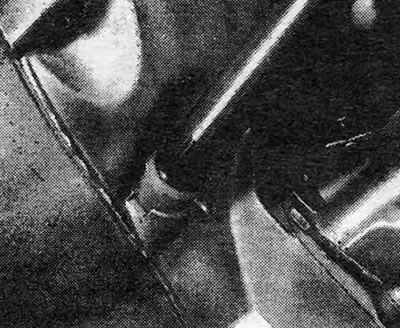
Photo 7.ZA. Removing the clutch release lever shaft.
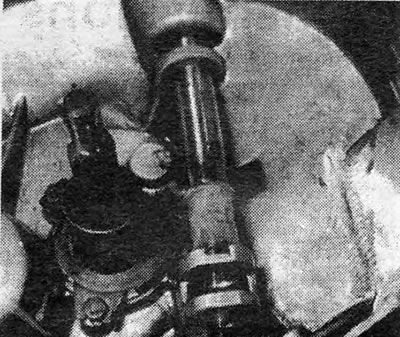
Photo 7.3B. Clutch release lever shaft bushings.
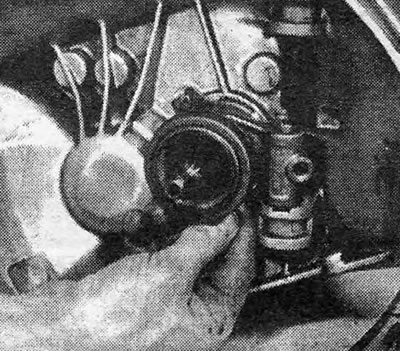
Photo 7.3C. Clutch release bearing.
4. Installation of all specified parts is carried out in the reverse order. Please note the following points:
- a. After installing the new release bearing guide seal, fill the space between the seal lips with a good all-purpose grease (see photo).
- b. When installing a new O-ring into the guide mounting location, do not use any grease or oil as this ring must be installed dry.
- c. Apply a small amount of molybdenum disulfide grease to the surface of the guide along which the release bearing moves and tighten the mounting bolts securely.
- g. When installing new clutch release shaft bushings, check that their mounting tabs fit into the corresponding slots and coat the inner surfaces of the bushings with molybdenum disulfide grease.
- d. Install the release bearing together with the clutch release fork and tighten the fork clamp bolt to the required torque.
- e. Install the clutch (see section 5 or 6).
- g. Check the clutch adjustment (see section 2).
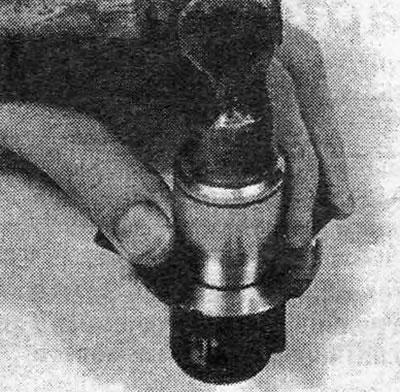
Photo 7.4. Installing a new seal on the release bearing guide.
Visitor comments