
OpelBook.ru
Cars AvtoVAZ Cars Mitsubishi Cars BMW Cars Mercedes Cars Nissan Cars Toyota Cars Chevrolet
English Русский
Български
Беларускі
Український
Српски
Hrvatski
Română
Polski
Slovenský
Magyar
 |  Sitemap  |  Contacts  |    


Main Astra Corsa Insignia Kadett Omega Vectra Zafira Others Articles
Frontera A (1991-1998, petrol) Frontera B (1998-2004) Ascona C (1981-1988) Vivaro A (2001-2014)
  • Main
  • Opel
  • Ascona C
  • Chassis
  • Brake system
  • Vacuum servo unit — removal and installation

Vacuum servo unit — removal and installation (Opel Ascona C)

            0

Contents: Models manufactured before 1985. ⬇ Models manufactured after 1985. ⬇

Models manufactured before 1985.


1. Remove the air cleaner from the carburetor along with the tubes and hoses.

2. Disconnect the vacuum hose from the intake manifold by unscrewing the coupling nut.

3. Disconnect the vacuum hose from the servo unit.

4. Disconnect the low level warning light switch wire located on the master cylinder fluid reservoir.

5. Unscrew the master cylinder from the servo assembly.

6. Carefully pull the master cylinder away from the servo assembly as far as the hydraulic lines will allow.

7. Working from inside the vehicle, remove the cover located under the instrument panel to gain access to the remote control support mounting nuts and bolt located on the inside surface of the bulkhead (Figure 9.46).
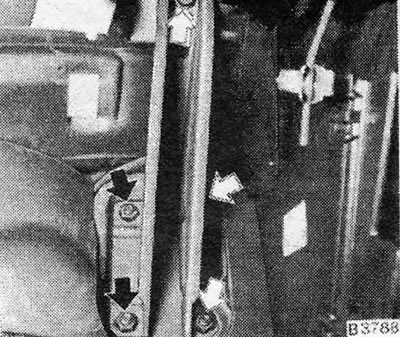
Figure 9.46 - Remote control support mounting nuts and bolts - indicated by arrows

Figure 9.46 - Remote control support mounting nuts and bolts - indicated by arrows


8. Unscrew and remove the nuts and bolt.

9. Disconnect the brake pedal return spring.

10. Remove the snap ring from the clip stud on the brake pedal lever, push the stud out to release the pedal lever from under the servo unit push rod.


11. Still working from the dashboard side, remove the nuts that secure the brake pedal support bracket (Figure 9.47).
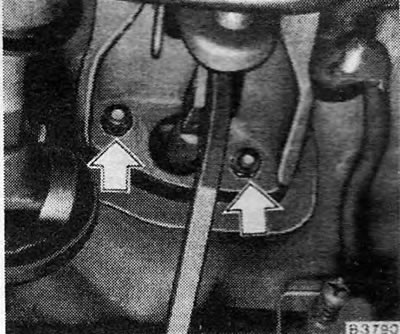
Figure 9.47 - Brake pedal support bracket nuts are indicated by arrows

Figure 9.47 - Brake pedal support bracket nuts are indicated by arrows


12. Working from the engine compartment side, remove the servo assembly and brake remote control assembly from the bulkhead (Figure 9.48).
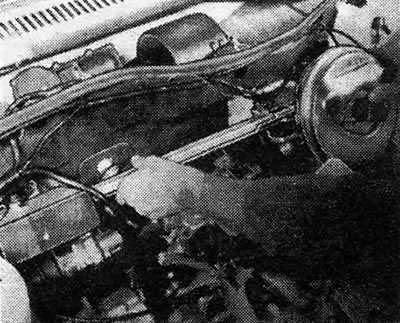
Figure 9.48 - Removing the remote control and servo unit from the bulkhead

Figure 9.48 - Removing the remote control and servo unit from the bulkhead


13. Clamp the remote control rod support in a vice.

14. Move the spring leg of the crank lever away (Figure 9.49). Then remove the snap ring and remove the spring (Figure 9.50).
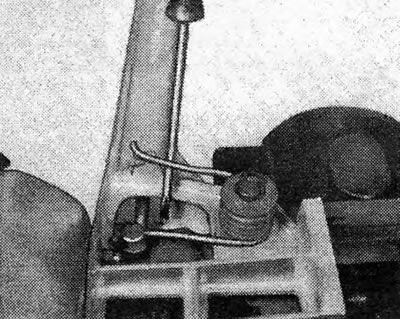
Figure 9.49 - Releasing the crankshaft spring leg

Figure 9.49 - Releasing the crankshaft spring leg


Material published on the website: opelbook.ru
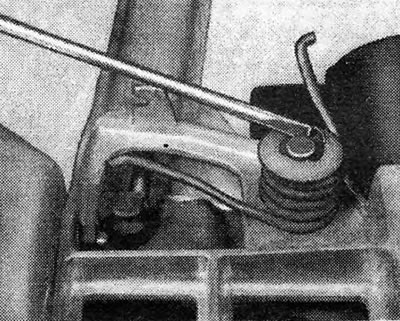
Figure 9.50 - Removing the spring retaining ring

Figure 9.50 - Removing the spring retaining ring


15. Tap to remove the locking pin that holds the crankshaft pivot (Figure 9.51).
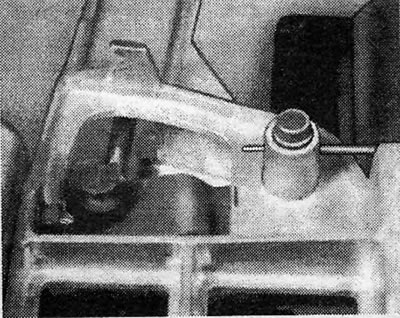
Figure 9.51 - Remove the crankshaft pivot locking pin

Figure 9.51 - Remove the crankshaft pivot locking pin


16. Remove the crankshaft pivot.

17. Remove the spring ring from the remote control assembly pin.

18. Remove the kingpin to disconnect the remote control assembly from the bellcrank on the servo assembly (Figure 9.53).
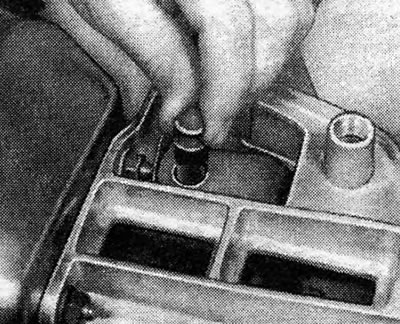
Figure 9.53 - Removing the kingpin from the servo unit

Figure 9.53 - Removing the kingpin from the servo unit


19. Unscrew the mounting nuts and disconnect the servo unit from the remote control rod support (Figure 9.54).
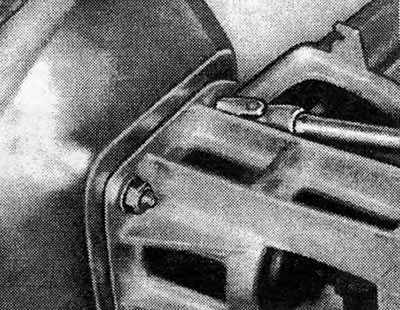
Figure 9.54 - Removing the servo assembly mounting nuts

Figure 9.54 - Removing the servo assembly mounting nuts


20. Support the servo unit and unscrew the nut from the crank arm support (Figure 9.55).
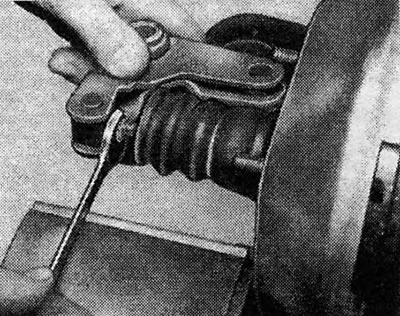
Figure 9.55 - Servo Knuckle Nut

Figure 9.55 - Servo Knuckle Nut


21. Remove the crank arm by unscrewing it from the servo unit push rod.

22. Assembly is carried out in the reverse order, only lubricate the crankshaft pivots with grease and perform the following adjustments. All nuts and bolts must be tightened to the specified torque values.

23. Pull the remote control rod towards the brake servo assembly. Measure the length (A) of the protruding threads on the rod as shown (see Figure 9.57).
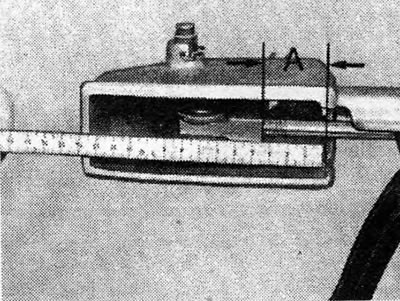


Figure 9.57 — Remote control rod thread measurement diagram A= from 28.5 to 29.5 mm (from 1.12 to…

Figure 9.57 — Remote control rod thread measurement diagram A= from 28.5 to 29.5 mm (from 1.12 to 1.16 d).


24. If adjustment is required, loosen the remote control rod lock nut and turn the rod. After adjustment, install the boot onto the front of the kingpin housing.

25. With the assembly in place on the bulkhead, climb inside the vehicle and loosen the pedal push rod lock nut.

26. Connect the push rod bracket fork to the brake pedal lever.

27. Turn the push rod until the pedal arm rests on the rubber stopper. Tighten the push rod lock nut and then install the pedal return spring.

28. Install the master cylinder to the servo assembly and connect the vacuum hose and low fluid warning light.

Models manufactured after 1985.


29. Beginning in 1985, the servo assembly and master cylinder are mounted on the right side of the bulkhead. To remove the servo assembly, proceed as follows.

30. Remove the air cleaner if necessary for easier access and disconnect the vacuum hose from the servo assembly (photo).
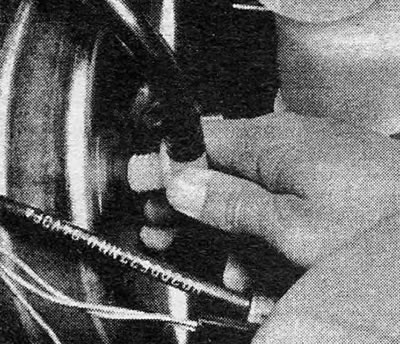
Photo 23.30 Disconnecting the servo unit vacuum hose (models after 1985)

Photo 23.30 Disconnecting the servo unit vacuum hose (models after 1985)


31. Remove the two nuts that secure the master cylinder to the servo assembly. Disconnect the wires from the fluid warning switch and carefully pull the master cylinder forward until it clears the servo assembly pins. Do not stretch hydraulic hoses; if necessary, unhook them from their rings on the partition.

32. Remove the cover located above the pedals from inside the machine. This cover is secured with rings and a strap.

33. Disconnect the return spring and the servo push rod bracket from the brake pedal.

34. Still inside the car, remove the four nuts that secure the servo assembly bracket to the bulkhead.

35. Remove the servo assembly and bracket from the engine compartment by pulling the servo assembly forward and out. Do not move the master cylinder any further than necessary.

36. If the servo unit is to be replaced, unscrew it from its bracket.

37. Assembly is carried out in reverse order. If you have installed a new servo unit, adjust the servo unit push rod at the bracket to create 1.0 mm (0.04 in) clearance at the pedal. Tighten the lock nut when adjustment is complete (photo).
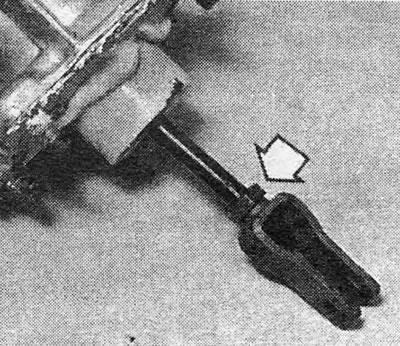
Photo 23.37 Servo unit bracket and lock nut (indicated by the arrow). Note the putty on the flange.
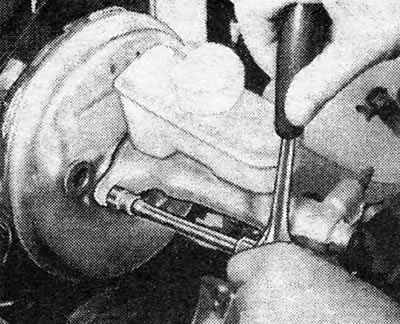
Photo 23.37 Servo unit bracket and lock nut (indicated by the arrow). Note the putty on the flange.


Figure 9.44 - Unscrewing the master cylinder from the servo unit
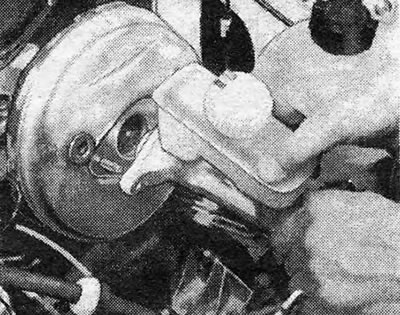
Figure 9.44 - Unscrewing the master cylinder from the servo unit


Figure 9.45 - Removing the master cylinder from the servo assembly
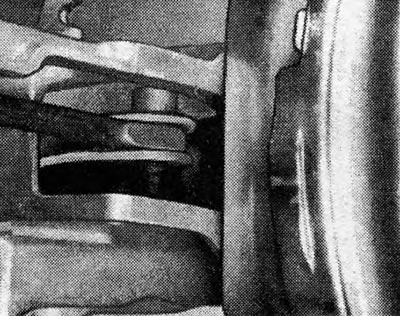
Figure 9.45 - Removing the master cylinder from the servo assembly


Figure 9.52 — Remote control rod pin at servo unit
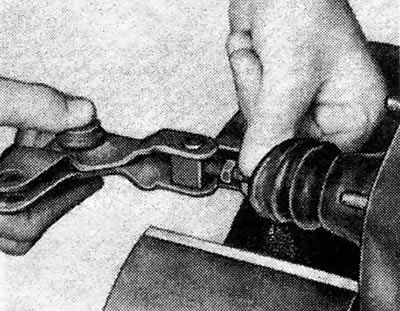
Figure 9.52 — Remote control rod pin at servo unit


Figure 9.56 - Disconnecting the crank arm from the servo unit push rod
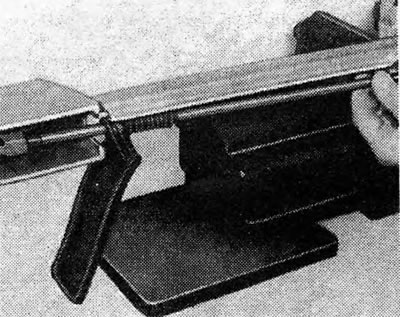
Figure 9.56 - Disconnecting the crank arm from the servo unit push rod


Figure 9.58 — Brake pedal kingpin housing boot
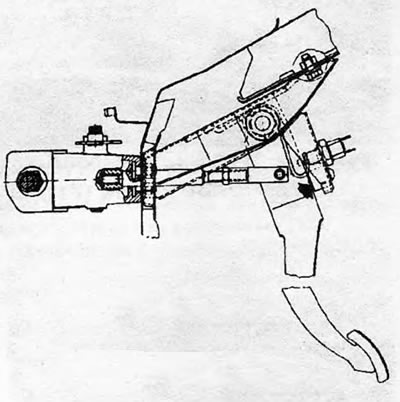
Figure 9.58 — Brake pedal kingpin housing boot


Figure 9.59 - Brake pedal installation diagram. The rubber stopper is indicated by the arrow

Figure 9.59 - Brake pedal installation diagram. The rubber stopper is indicated by the arrow


This article is available at russian, bulgarian, belarusian, ukrainian, serbian, croatian, romanian, polish, slovak, hungarian
Checking the article: Kornev Georgy

Share information:

Previous articles
Opel Ascona C: Brake system
Next articles

Vacuum servo unit (booster) — checking the operation
Vacuum Servo Hose — Replacement
Hydraulic system — blowing
Flexible Hoses and Rigid Tubes — Inspection and Replacement
Pressure Regulating Valves
Master Cylinder (GNF Type) — Inspection
Brake Pedal Remote Control Assembly — Disassembly and Assembly
Brake Pedal Remote Control Rod — Removal and Installation
Handbrake — adjustment
Handbrake Cables — Replacement
Handbrake lever — removal, inspection and installation
Handbrake warning switch — removal and installation


See similar ones from other Opel car manuals:
▶ Removal and installation the brake booster servo vacuum… Opel Astra G (1998-2004)
▶ Replacing and checking the brake booster servo vacuum pump… Opel Corsa B (1993-2000)
▶ Speedometer drive unit, band brake servo regulator,… Opel Kadett E (1984-1995)
▶ Electronic engine control unit Opel Insignia A (2008-2017)
▶ Ignition control unit (models 1.8) — removal and… Opel Omega A (1986-1993)
Link to this page in different formats

Visitor comments


No comments yet


How much will 44 + 34 =


Vivaro A (2001-2014) 
  • General information
  • User manual
  • Power unit
  • Petrol engine F4R
  • Diesel engine F9Q
  • Diesel engine G9U
  • Transmission
  • Clutch and drive shafts
  • Manual gearbox
  • Chassis
  • Front suspension
  • Rear suspension
  • Brake system
  • Body
  • Exterior
  • Interior
  • Electrical equipment
  • Heating and ventilation
  • Air conditioner
  • Equipment and devices
  • Electrical diagrams
Ascona C (1981-1988) 
  • General information
  • Maintenance
  • Power unit
  • Gasoline engines
  • Diesel engines
  • Cooling system
  • Fuel and exhaust system
  • Contact ignition system
  • Contactless ignition system
  • Transmission
  • Clutch
  • Mechanical gearbox
  • Automatic gearbox
  • Drive shafts
  • Chassis
  • Steering
  • Brake system
  • Car suspension
  • Body
  • Exterior
  • Interior
  • Doors and windows
  • Electrical equipment
  • Equipment and devices
  • Power devices
  • Electrical circuits
Frontera B (1998-2004) 
  • General information
  • User manual
  • Maintenance
  • Power unit
  • Petrol engines 2.2 l
  • Petrol engines 3.2 l
  • Diesel engines 2.2 l
  • Cooling system
  • Fuel system (petrol)
  • Fuel system (diesel)
  • Ignition system
  • Transmission
  • Clutch
  • Manual gearbox MUA5C
  • Automatic gearbox 4L30E
  • Chassis
  • Suspension and axles
  • Steering
  • Brake system
  • Body
  • Exterior
  • Interior
  • Doors, locks and windows
  • Heating and air conditioning
  • Electrical equipment
  • Power devices
  • Equipment and devices
  • Lighting and signaling
  • Electrical diagrams
Frontera A (1991-1998, petrol) 
  • General information
  • Introduction to guide
  • User manual
  • Maintenance
  • Power unit
  • Engine repair
  • Lubrication system
  • Cooling system
  • Power and exhaust system
  • Engine electrics
  • Transmission
  • Clutch
  • Mechanical gearbox
  • Cardan shafts
  • Chassis
  • Brake system
  • Front suspension
  • Rear suspension
  • Steering
  • Body
  • Repair and care
  • Electrical equipment
  • Equipment and devices
  • Electrical circuits
OpelBook.ru © 2017–2026 · Mobile version · · Sitemap: EN BG BY UA RS HR RO PL SK HU · Feedback · Site search
Astra F, petrol · Astra G, petrol · Astra G · Astra H · Astra J, petrol · Corsa B · Corsa C, petrol · Corsa C · Insignia A · Kadett D · Kadett E · Omega A · Omega B · Omega B2 · Vectra A, petrol · Vectra A · Vectra B, petrol · Vectra B · Vectra C · Zafira A, petrol · Frontera A, petrol · Frontera B · Ascona C · Vivaro A ·
We want your visit to be comfortable 🤝! We use cookies 🍪 to make that happen.