


Checking the correct functioning
Note: On diesel models, too frequent pressing of the brake pedal at low engine speeds (for example, at stops, when driving in traffic jams, etc.) results in a reduction in vacuum depth and poor brake control. This is not a malfunction - use caution.
2. Without starting the engine, press the foot brake pedal several times. Make sure there is no change in the amount of reserve pedal travel (distance between pedal and floor).
3. Keeping the pedal depressed, start the engine. If the pedal noticeably "falls" immediately after starting, then the brake booster is working properly. Otherwise, on petrol models, disconnect the vacuum hose from the brake booster and, with the engine running, place your finger on the hose opening - check if a vacuum is created in the hose. On diesel models, disconnect the hose from the vacuum pump and check the vacuum at the pump connection nipple.
4. If there is no vacuum, check the tightness of the hose and the quality of tightening of all clamps, replace the hose if necessary. At the service station, you can check the amount of vacuum created using a special device. If all indicators are normal and the hose is tight, replace the amplifier.
Removal and installation
5. Remove the fairing grille (see Chapter 11) and the main brake cylinder (see Section 12).
6. Disconnect the brake lines and vacuum hose shown in the accompanying illustration.
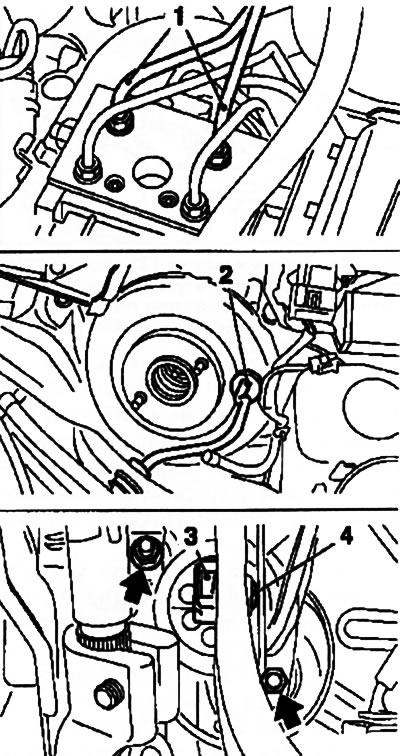
13.6. Nuts (indicated by arrows) vacuum booster mounts: 1. Brake lines; 2. Vacuum hose; 3. Fixing plate; 4. Master cylinder rod axis
7. In the car interior, remove the retaining plate and extract the axle that secures the master cylinder rod to the brake pedal (see illustration 13.6).
8. Loosen the 2 mounting nuts (see illustration 13.6) and remove the amplifier assembly from the passenger compartment bulkhead. The amplifier cannot be repaired and must be replaced if it fails.
9. Installation is carried out in reverse order.
Visitor comments