


Brake system of the car Opel Corsa C (petrol)

General information about the braking system
The car is equipped with anti-lock braking system as standard. Depending on the engine model, this may be either only anti-lock braking system or anti-lock...
The car is equipped with anti-lock braking system as standard. Depending on the engine model, this may be either only anti-lock braking system or anti-lock...

Front brake mechanisms
Depending on the engine model and optional equipment, the vehicle may be equipped with brakes of different sizes. The brake caliper is bolted to the steering...
Depending on the engine model and optional equipment, the vehicle may be equipped with brakes of different sizes. The brake caliper is bolted to the steering...
Rear brakes
In addition to the models for Germany, Austria and Switzerland, the versions with the Z14XEP, Z14XEL and Z16XEP engines are equipped with drum brakes. All...
In addition to the models for Germany, Austria and Switzerland, the versions with the Z14XEP, Z14XEL and Z16XEP engines are equipped with drum brakes. All...
Brake booster
The car is equipped with a two-stage brake booster with an emergency braking function, which in emergency braking situations super-proportionally increases the...
The car is equipped with a two-stage brake booster with an emergency braking function, which in emergency braking situations super-proportionally increases the...

Master brake cylinder
Brake system with new brake master cylinder and new brake booster The operation of the tandem cylinder is based on the "plunger" principle. Unlike a...
Brake system with new brake master cylinder and new brake booster The operation of the tandem cylinder is based on the "plunger" principle. Unlike a...
Checking and adjusting the brake system components
Check the brakes on a dry, clean, fairly smooth and level road. The brake test results will be unreliable if the road is wet, slippery or covered with mud....
Check the brakes on a dry, clean, fairly smooth and level road. The brake test results will be unreliable if the road is wet, slippery or covered with mud....

Checking the brake fluid level in the hydraulic reservoir of the service brake system
The brake fluid reservoir is located in the engine compartment. The reservoir has a transparent body, so the brake fluid level can be monitored from the...
The brake fluid reservoir is located in the engine compartment. The reservoir has a transparent body, so the brake fluid level can be monitored from the...

Bleeding air from the hydraulic drive of the service brake system
Use only fresh DOT 3 or DOT 4 brake fluid. Bleeding (bleeding) the hydraulic drive of the service brake system is necessary to remove air that significantly...
Use only fresh DOT 3 or DOT 4 brake fluid. Bleeding (bleeding) the hydraulic drive of the service brake system is necessary to remove air that significantly...
Brake hoses
Brake hoses provide movable connections between the moving and fixed parts of the vehicle. Brake hoses should be checked at least twice a year. To prevent...
Brake hoses provide movable connections between the moving and fixed parts of the vehicle. Brake hoses should be checked at least twice a year. To prevent...
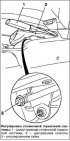
Adjusting the parking brake system
For vehicles with drum brakes: Adjust the drum brakes. Remove the diagnostic connection cover. Remove the parking brake lever from the center console and lift...
For vehicles with drum brakes: Adjust the drum brakes. Remove the diagnostic connection cover. Remove the parking brake lever from the center console and lift...
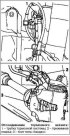
Removal and installation front brake hoses
Removal Fill the brake system hydraulic fluid reservoir to the "MAX" mark and close it using the special tool MKM-558-10. Remove the front wheel. Remove the...
Removal Fill the brake system hydraulic fluid reservoir to the "MAX" mark and close it using the special tool MKM-558-10. Remove the front wheel. Remove the...
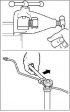
Replacing brake system tubes — removal and installation
Removal Fill the brake system hydraulic fluid reservoir to the "MAX" mark and close it using the special tool MKM-558-10. Note: Brake pipes are generally...
Removal Fill the brake system hydraulic fluid reservoir to the "MAX" mark and close it using the special tool MKM-558-10. Note: Brake pipes are generally...
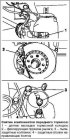
Removal and installation the front brake pad lining
Note: All brake shoe linings on one axle must be replaced. Removal Remove the 2 front wheels. Remove the brake shoe lining sensor from the inner brake shoe...
Note: All brake shoe linings on one axle must be replaced. Removal Remove the 2 front wheels. Remove the brake shoe lining sensor from the inner brake shoe...

Removal and installation the front wheel brake protective cover
Removal Remove the front wheel. Remove the brake disc. Loosen the wheel shaft nut. Hold the wheel hub with the KM-468-B wrench. Disconnect the wire harness...
Removal Remove the front wheel. Remove the brake disc. Loosen the wheel shaft nut. Hold the wheel hub with the KM-468-B wrench. Disconnect the wire harness...
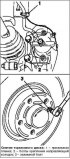
Replacing the front brake disc
Note: In general, always replace both brake discs on the same axle. Removal Remove the front wheel. Release the brake hose from the spring strut mount....
Note: In general, always replace both brake discs on the same axle. Removal Remove the front wheel. Release the brake hose from the spring strut mount....

Removal and installation the rear wheel brake shield
Removal Fill the brake system hydraulic fluid reservoir to the "MAX" mark and close it using the special tool MKM-558-10. Remove the rear wheel. Remove the...
Removal Fill the brake system hydraulic fluid reservoir to the "MAX" mark and close it using the special tool MKM-558-10. Remove the rear wheel. Remove the...

Removal and installation rear wheel brake pads
Removal Remove the rear wheel. Remove the brake drum. Remove the top spring with brake spring pliers. Remove the retaining clamp. Disconnect the adjusting...
Removal Remove the rear wheel. Remove the brake drum. Remove the top spring with brake spring pliers. Remove the retaining clamp. Disconnect the adjusting...

General information about the anti-lock braking system
The Corsa-C model, produced in 2004, uses a new anti-lock braking system ABS 8.0 in combination with all engine variants. The ABS 8.0 system is a modular...
The Corsa-C model, produced in 2004, uses a new anti-lock braking system ABS 8.0 in combination with all engine variants. The ABS 8.0 system is a modular...

Repair instructions for ABS 5.3, ABS 5.3 / PBS, ABS 8.0, ABS 8.0 PZS
The driver can judge braking within the ABS control range by the pulsation of the brake pedal, accompanied by the noise of the pump, which indicates to the...
The driver can judge braking within the ABS control range by the pulsation of the brake pedal, accompanied by the noise of the pump, which indicates to the...
Instructions for repairing the PBS (traction control system)
Traction control is only available with ABS 5.3/PBS, ABS 8.0 PZS and the Z 18 XE engine. The most important input parameter of the PBS is the speedometer...
Traction control is only available with ABS 5.3/PBS, ABS 8.0 PZS and the Z 18 XE engine. The most important input parameter of the PBS is the speedometer...

Removal and installation / replacement of the ABS hydraulic unit (ABS 8.0, ABS 8.0 PZS)
Caution! Before carrying out repair work on the ABS hydraulic unit or the control unit for the ABS hydraulic unit, it is necessary to read the repair...
Caution! Before carrying out repair work on the ABS hydraulic unit or the control unit for the ABS hydraulic unit, it is necessary to read the repair...
This section is available on russian, bulgarian, belarusian, ukrainian, serbian, croatian, romanian, polish, slovak, hungarian
See similar ones from other Opel car manuals:
▶ Chassis: Brake system Opel Vectra A (1988-1995, petrol)
▶ Chassis: Brake system Opel Zafira A (1999-2005, petrol)
▶ Chassis: Brake system Opel Vivaro A (2001-2014)
▶ Chassis: Brake system Opel Insignia A (2008-2017)
▶ Chassis: Brake system Opel Omega B (1993-1999)
▶ Chassis: Brake system Opel Vectra A (1988-1995, petrol)
▶ Chassis: Brake system Opel Zafira A (1999-2005, petrol)
▶ Chassis: Brake system Opel Vivaro A (2001-2014)
▶ Chassis: Brake system Opel Insignia A (2008-2017)
▶ Chassis: Brake system Opel Omega B (1993-1999)
Share information:
- General information
- Introduction to guide
- Troubleshooting
- Vehicle device
- User manual
- Maintenance
- Power unit
- Engine repair
- Cooling system
- Power and exhaust system
- Control system
- Engine electrical equipment
- Transmission
- Clutch
- Mechanical gearbox
- Automatic gearbox
- Drive shafts
- Chassis
- Brake system
- Wheel suspension
- Steering
- Body
- Exterior
- Interior
- Doors and windows
- Heating and air conditioning
- Electrical equipment
- Equipment and devices
- Lamps and lighting
- Electrical circuits
- User manual
- Car access
- Governing bodies
- Seat control
- Heating and air conditioning
- Driving and maintenance
- Engines 1.0 and 1.2 l
- Engine repair
- Cooling and lubrication system
- Injection system
- Engines 1.4, 1.6 and 1.8 l
- Engine repair
- Cooling and lubrication system
- Injection system
- Transmission
- Clutch
- Mechanical gearbox
- Automatic gearbox
- Drive shafts
- Chassis
- Wheels and tires
- Wheel suspension
- Steering
- Brake system
- Body
- Exterior
- Doors and windows
- Electrical equipment
- Equipment and devices
- Lighting system
- Electrical circuits
- General information
- Introduction to guide
- User manual
- Maintenance
- Power unit
- SOHC gasoline engines
- DOHC gasoline engines
- Diesel engines
- Engine repair
- Cooling system
- Supply system
- Injection system (gasoline)
- Injection system (diesel)
- Exhaust systems
- Control system (gasoline)
- Preheat system (diesel)
- Charge and launch system
- Transmission
- Mechanical gearbox
- Automatic gearbox
- Clutch and drive shafts
- Chassis
- Brake system
- Front suspension
- Rear suspension
- Steering
- Body
- Ventilation and heating
- Exterior
- Interior
- Doors and windows
- Electrical equipment
- Equipment and devices
- Lamps and lighting
- Electrical circuits