


Contents: Brake system with new brake master…⬇ Possible malfunctions, their causes…⬇ Circuit failure ⬇
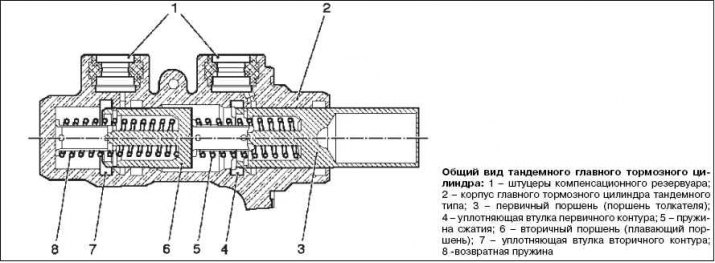
Brake system with new brake master cylinder and new brake booster
The operation of the tandem cylinder is based on the "plunger" principle.
Unlike a conventional master cylinder, the sealing bushings are built into the housing instead of being mounted on the piston as before. The bore in the housing thus directly guides the pistons. This design allows the length of the tandem master cylinder to be reduced by 25%. In addition, the number of units is reduced to 15, thus significantly reducing weight, dimensions and service time.
The tandem-type "plunger" master brake cylinder of the 2nd generation, like almost all brake cylinders, ensures the operation of a dual-circuit braking system. The pressure circuits are arranged in series. The driver's force is transmitted as usual, from the brake booster rod to the primary pistons. The compression spring creating the preliminary pressure is installed at the end of the primary piston, and this ensures virtually simultaneous transmission of force to the secondary piston (floating piston). The combined action of two pistons through one spring provides a reduction in free play and causes the secondary brake circuit to react more spontaneously than occurs in a conventional tandem master cylinder.
In the system used to date, the secondary piston is actuated by the pressure in the primary brake circuit. This results in an increase in free travel because the pressure must first rise to a predetermined value. The second compression spring, located behind the secondary piston, is the return spring. It must be sufficiently rigid to overcome the friction of the sealing bushings, but at the same time soft enough to allow compression by the primary spring when the brakes are applied.
In the initial position, there is an unsealed connection between the tandem brake master cylinder and the compensation reservoir. This ensures pressure and performance compensation in the brake system. When the brake is applied, the cylinder pistons enter the sealing sleeve after a short free stroke. The connection with the unsealed compensation reservoir is then broken. After the rubber elements have provided a seal, the brake fluid volume begins to move and the brake system is pressurized. After the brake is released, the return spring pulls the pistons back until the unsealed connection between the tandem brake master cylinder and the compensation reservoir is restored.
In vehicles equipped with ESP or traction control, the performance of the braking system in the event of system intervention must be ensured by additional supply. Since the time it takes for the ABS pump to reach operating mode depends on the suction resistance in the system, the cross-sections of the holes and channels must be as large as possible.
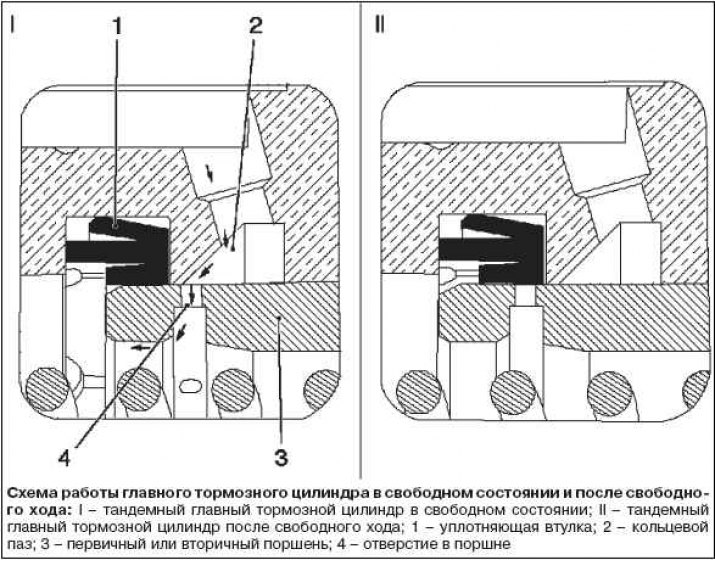
In the event of intervention of the traction control system, the performance of the brake system is ensured by the annular groove, which is located opposite the hole in the piston when the master brake cylinder is in a free state. When the brakes are engaged in the process of regulation, the additional brake fluid that was supplied to the brake mechanisms by the traction control system returns back to the compensation reservoir under pressure. The degree of pressure increase on the return is determined by the instantaneous performance of the brake system and the pressure in the brake system that was created by the traction control system.
If, when the brakes are applied, the control system switches from traction control to anti-lock braking system operation, the compensation hole may open under the pressure in the master cylinder as a result of the need to return brake fluid to the master cylinder during the pressure reduction phase of the anti-lock braking system operation. The backflow pressure to the compensation reservoir depends only on the pressure in the master cylinder controlled by the driver. The amount of fluid that flows back to the reservoir at this time depends essentially on the performance of the brake system and the current control parameters.
The combination of load, overflow and release during brake operation is possible as a system state.
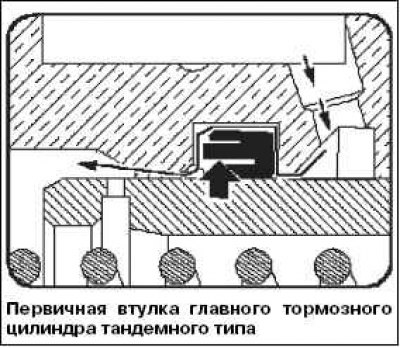
The primary sleeve of the tandem type brake master cylinder remains under pressure created by the excess capacity in the brake circuit until the end position is reached.
The inner lip of the primary bushing is pressurized from both the outer side and the piston side to compensate for the full pressure on the bushing. This prevents damage to the edge of the bushing (sealing edge) when the piston goes beyond the set limits, as happens in a tandem-type master brake cylinder with a compensation hole, where there is a pressure drop on the sleeve.
In principle, the change is due to backfilling (decrease in productivity at constant pressure) is the same as the change when releasing the pedal (pressure drop with reduced productivity), as the edge of the sleeve is in contact with the piston when the performance is reduced.
In the case of ESP operation, however, brake fluid must also be supplied whenever the master cylinder is actuated. In this case, the ABS pump supplies additional brake fluid from the expansion reservoir. The brake fluid then passes through the primary sleeve, causing the sealing lip to fold, creating an annular gap between the piston and the bore. The brake fluid can now reach the corresponding supply nipple.
Arrows indicate the direction of brake fluid flow.
Position arrow – the outer edge of the sealing sleeve is bent inward.
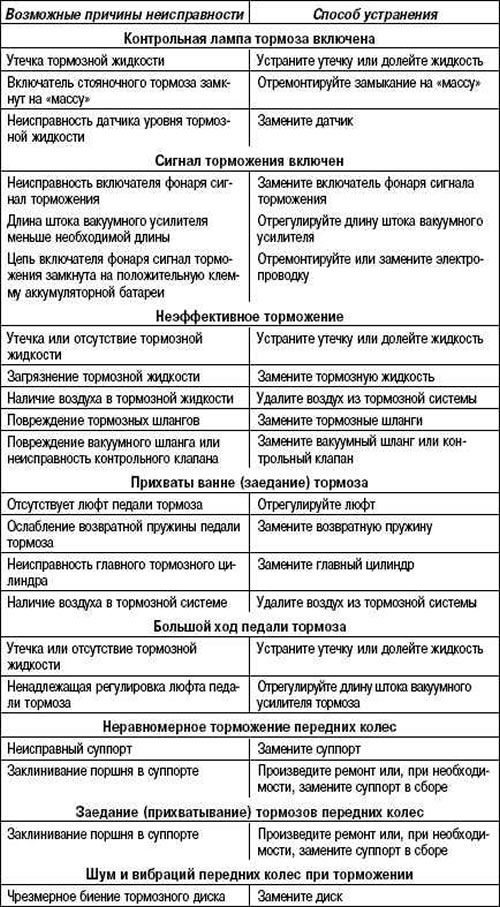
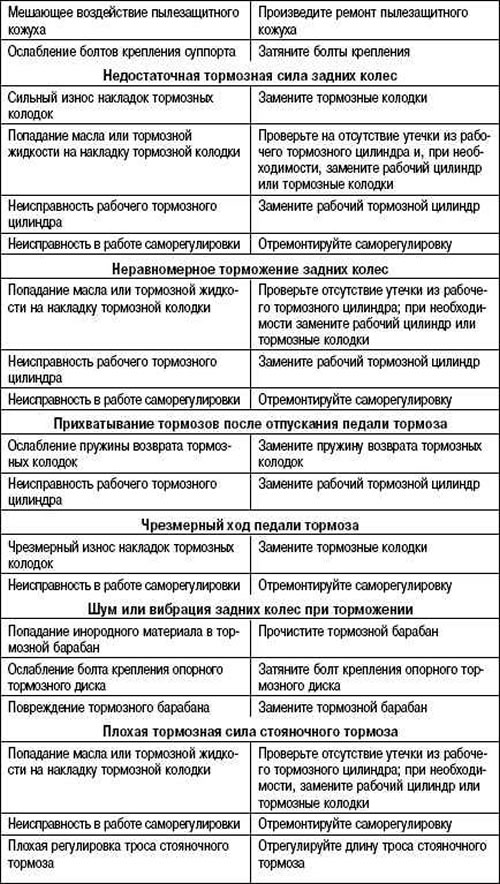
Possible malfunctions, their causes and methods of elimination
Circuit failure
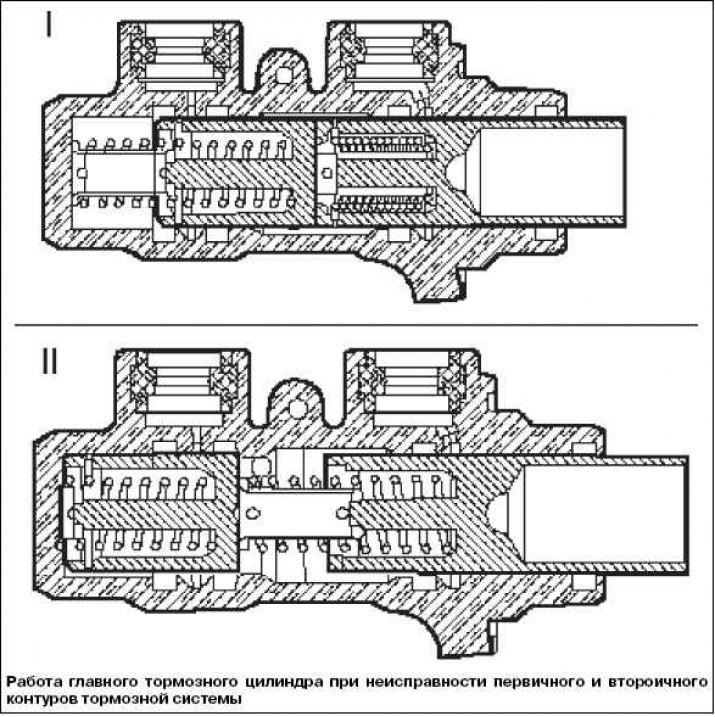
If the brake circuit fails, the free travel increases. If the primary circuit fails, the primary piston rests on the secondary piston, and the brake booster rod sets the latter in motion by means of a mechanical link (I).
When the secondary circuit fails, the secondary piston hits the limiter at the end of the cylinder bore, after which the pressure in the primary circuit rises (II).
(Material copied from this resource: OPELBOOK)
Visitor comments