


2. Using a syringe, remove the brake fluid from the master cylinder reservoir.
3. Disconnect the electrical connector of the brake fluid level sensor.
4. If equipped, disconnect the clutch master cylinder hose (1) from the brake master cylinder reservoir. Close the expansion tank outlet with a cap and plug the clutch master cylinder hose to prevent brake fluid from leaking out and atmospheric moisture from entering it.
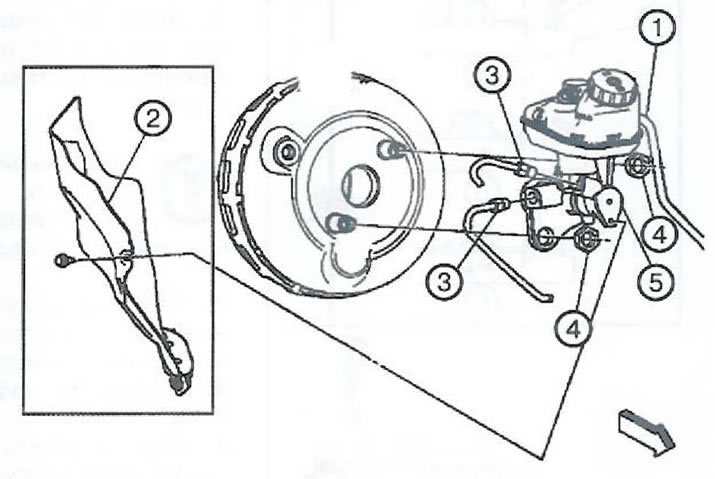
5. If equipped, loosen the mounting bolt and remove the heat shield (2) of the brake master cylinder.
Note: Tightening torque: 9 Nm.
[The article was published on the website www.opelbook.ru]
6. Unscrew the two connections (3) of the brake pipes. Close the terminals of the master brake cylinder with caps, and plug the brake pipes with plugs to prevent the brake fluid from leaking out and atmospheric moisture from getting into it.
Note: Tightening torque for brake pipe connections: 18 Nm.
7. Unscrew the two nuts (4) securing the master brake cylinder.
Note: Replace nuts with new ones after each removal. Tightening torque: 50 Nm.
8. Remove the brake master cylinder (5). When removing the brake master cylinder, make sure that the seal between the vacuum booster and the brake master cylinder is not damaged and is seated correctly in the grooves at the rear of the brake master cylinder. If necessary, replace the seal with a new one.
9. If necessary, remove the expansion tank from the master cylinder.
10. Installation is performed in the reverse order of removal. If a new brake cylinder is installed, it must first be bled on a special stand.
11. Fill the expansion tank with brake fluid and bleed the system.
12. If equipped, calibrate the brake pedal position sensor.
Visitor comments