


Gasoline engines 2.0L car Opel Insignia A

General information
Cylinder block The cylinder block, cast from aluminum alloy, has four cylinders arranged in a row. The cylinders have pressed-in steel liners. In the lower...
Cylinder block The cylinder block, cast from aluminum alloy, has four cylinders arranged in a row. The cylinders have pressed-in steel liners. In the lower...
Checking the compression in the cylinders
1. Check the charge level and, if necessary, recharge the car battery. 2. Turn off the ignition system. 3. Disable the fuel injection system. 4. Remove all...
1. Check the charge level and, if necessary, recharge the car battery. 2. Turn off the ignition system. 3. Disable the fuel injection system. 4. Remove all...

Replacing the accessory drive belt
1. Remove the front engine compartment splash guard. 2. Compress the drive belt tensioner using the EN-6151-A wrench and remove the generator and air...
1. Remove the front engine compartment splash guard. 2. Compress the drive belt tensioner using the EN-6151-A wrench and remove the generator and air...

Replacing the drive belt tensioner for ancillary equipment
1. Remove the accessory drive belt. 2. Loosen the mounting bolt (1) and remove the accessory drive belt tensioner (2). 3. Installation is carried out in the...
1. Remove the accessory drive belt. 2. Loosen the mounting bolt (1) and remove the accessory drive belt tensioner (2). 3. Installation is carried out in the...

Removal the cylinder head cover
1. Loosen the mounting bolts and remove the rear rigging eye. 2. Loosen the mounting bolts and remove the front rigging eye (1). 3. Loosen the mounting bolts...
1. Loosen the mounting bolts and remove the rear rigging eye. 2. Loosen the mounting bolts and remove the front rigging eye (1). 3. Loosen the mounting bolts...

Installing the cylinder head cover
1. Install new bushings and cylinder head cover bolts. 2. Install a new gasket on the cylinder head cover (1). Make sure that the gasket is inserted into the...
1. Install new bushings and cylinder head cover bolts. 2. Install a new gasket on the cylinder head cover (1). Make sure that the gasket is inserted into the...

Gas distribution mechanism drive
1. Timing chain tensioner housing. 2. Timing chain tensioner seal. 3. Timing chain tensioner shoe. 4. Timing chain tensioner shoe bolt. 5. Drive chain. 6....
1. Timing chain tensioner housing. 2. Timing chain tensioner seal. 3. Timing chain tensioner shoe. 4. Timing chain tensioner shoe bolt. 5. Drive chain. 6....

Replacing the primary drive chain (camshaft drive chain)
Removal 1. Remove the timing chain tensioner: Remove the decorative engine cover. Remove the air filter outlet duct. Remove the cylinder head cover. Disconnect...
Removal 1. Remove the timing chain tensioner: Remove the decorative engine cover. Remove the air filter outlet duct. Remove the cylinder head cover. Disconnect...

Adjusting the primary drive chain (camshaft drive chain)
1. Remove the timing chain tensioner: Remove the decorative engine cover. Remove the air filter outlet duct. Remove the cylinder head cover. Disconnect the...
1. Remove the timing chain tensioner: Remove the decorative engine cover. Remove the air filter outlet duct. Remove the cylinder head cover. Disconnect the...

Replacing the secondary drive chain (drive chain of the water pump and balance shafts)
Removal 1. Remove the timing chain tensioner: Loosen the balance shaft drive chain tensioner bolts. Remove the balance shaft drive chain tensioner (1). 2....
Removal 1. Remove the timing chain tensioner: Loosen the balance shaft drive chain tensioner bolts. Remove the balance shaft drive chain tensioner (1). 2....

Cylinder head structure
1. Intake camshaft phase shifter electromagnetic valve. 2. Bolt of the electromagnetic valve of the intake camshaft phase shifter. 3. Bolt of the...
1. Intake camshaft phase shifter electromagnetic valve. 2. Bolt of the electromagnetic valve of the intake camshaft phase shifter. 3. Bolt of the...

Replacing the cylinder head
Removal 1. Disconnect the negative battery terminal. 2. Drain the fluid from the engine cooling system. 3. Loosen the bolt (1) and remove the electromagnetic...
Removal 1. Disconnect the negative battery terminal. 2. Drain the fluid from the engine cooling system. 3. Loosen the bolt (1) and remove the electromagnetic...

Construction of the cylinder block and crank mechanism
1. Sealing between the water pump and the cylinder block. 2. Water pump seal. 3. Water pump. 4. Water pump bolt. 5. Sealing rings of the outlet pipe. 6. Drain...
1. Sealing between the water pump and the cylinder block. 2. Water pump seal. 3. Water pump. 4. Water pump bolt. 5. Sealing rings of the outlet pipe. 6. Drain...

Replacing the crankshaft pulley
Removal 1. Install EN-38122-A holder (1). Note: To prevent the crankshaft from turning, it is necessary to use the EN-43653 flywheel locking device in addition...
Removal 1. Install EN-38122-A holder (1). Note: To prevent the crankshaft from turning, it is necessary to use the EN-43653 flywheel locking device in addition...

Replacing pistons with connecting rods
Removal 1. Remove the cylinder head. 2. Remove the oil pan. 3. Turn the crankshaft so that the connecting rod bolts are most accessible. 4. Mark the connecting...
Removal 1. Remove the cylinder head. 2. Remove the oil pan. 3. Turn the crankshaft so that the connecting rod bolts are most accessible. 4. Mark the connecting...
Cleaning and checking the technical condition of the connecting rod and piston group
See similar section chapters 6a .
See similar section chapters 6a .

Removal and installation the crankshaft
Removal the lower part of the crankcase 1. Loosen the bolts (3) around the perimeter of the lower part of the crankcase. Note: Don't forget the two bolts (4)...
Removal the lower part of the crankcase 1. Loosen the bolts (3) around the perimeter of the lower part of the crankcase. Note: Don't forget the two bolts (4)...
Cleaning and checking the technical condition of the cylinder block
See similar section chapters 6a .
See similar section chapters 6a .

Replacing the turbocharger
Removal Caution: If the turbocharger has failed, it is necessary to carefully remove the gasket residue and excess oil from the intercooler system before...
Removal Caution: If the turbocharger has failed, it is necessary to carefully remove the gasket residue and excess oil from the intercooler system before...

Cleaning and checking the technical condition of the turbocharger
1. Completely check the performance of the turbocharger (1) and all other engine components before replacing the turbocharger. 2. Clean all contact surfaces....
1. Completely check the performance of the turbocharger (1) and all other engine components before replacing the turbocharger. 2. Clean all contact surfaces....

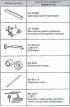


Engine Thread Recovery Map
Cylinder block Front view Rear view Right view Bottom view Left view Top view Lower part of the crankcase Front view Rear view Bottom view Right view Left view...
Cylinder block Front view Rear view Right view Bottom view Left view Top view Lower part of the crankcase Front view Rear view Bottom view Right view Left view...
This section is available on russian, bulgarian, belarusian, ukrainian, serbian, croatian, romanian, polish, slovak, hungarian
See similar ones from other Opel car manuals:
▶ Power unit: Injection system (gasoline) Opel Astra G (1998-2004)
▶ General information: Maintenance (gasoline) Opel Omega B (1993-1999)
▶ Power unit: Petrol engine F4R Opel Vivaro A (2001-2014)
▶ Power unit: Injection system (gasoline) Opel Corsa B (1993-2000)
▶ General information: Maintenance (gasoline) Opel Vectra B (1995-2002)
▶ Power unit: Injection system (gasoline) Opel Astra G (1998-2004)
▶ General information: Maintenance (gasoline) Opel Omega B (1993-1999)
▶ Power unit: Petrol engine F4R Opel Vivaro A (2001-2014)
▶ Power unit: Injection system (gasoline) Opel Corsa B (1993-2000)
▶ General information: Maintenance (gasoline) Opel Vectra B (1995-2002)
Share information:
- General information
- Repair on the road
- Daily checks
- Operation and maintenance
- Safety and tool
- Power unit
- Petrol engines 1.6 l
- Petrol engines 2.0 l
- Diesel engines 2.0 l
- Diesel engines 2.8 l
- Cooling system
- Lubrication system
- Supply system
- Engine management
- Intake and exhaust system
- Engine electrical equipment
- Transmission
- Clutch
- Mechanical gearbox
- Automatic gearbox
- Transfer case
- Drive shafts
- Chassis
- Wheel suspension
- Brake system
- Steering
- Body
- Exterior
- Interior
- Passive safety
- Heater and air conditioner
- Electrical equipment
- Electrical circuits