


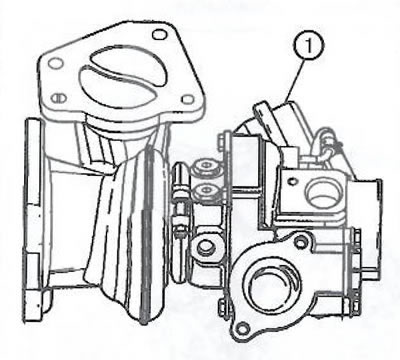
2. Clean all contact surfaces.
3. Check all threaded holes for damage.
4. Check the damper drive rod for damage.
5. Check the compressor and turbine blades for damage or foreign material.
6. Clean the turbocharger inlet contact surfaces.
7. Check the internal contact surfaces of the turbocharger for damage. Replace the turbocharger if damage is found.
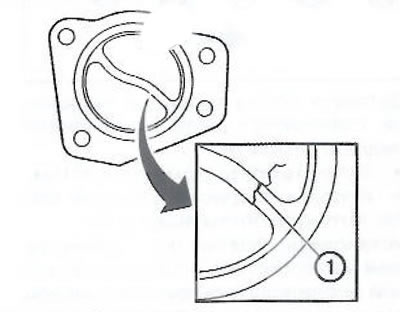
Note: Do not replace the turbocharger with a new one if cracks are found on the inner flange and partially on the walls of the turbocharger. Replacement is only required if the seal is broken.
8. Check the hoses of the electromagnetic hose regulator for damage. If necessary, replace the hoses with new ones.
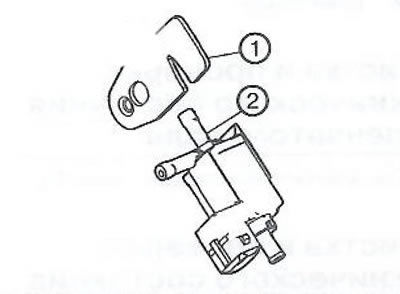
9. Check the turbocharger flap control solenoid valve (2) and bracket (1). Replace if necessary.
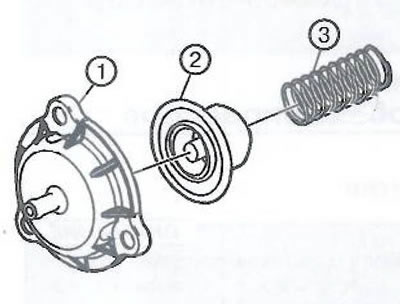
10. Check the turbocharger air bypass diaphragm (2), valve cover (1) and valve spring (3). Replace if necessary.
11. Check the sealing ring (2) of the positive crankcase ventilation system pipeline. Replace the sealing ring with a new one if it is damaged or does not provide a tight seal.
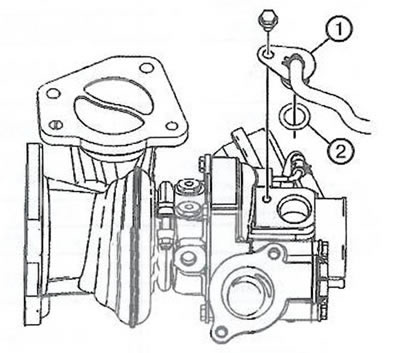
Note: Do not remove the vinyl hose from the bracket to avoid damaging the hose.
12. Check the vinyl hose and fitting (1) for damage. Replace the cylinder head cover if the vinyl hose or fitting is damaged.
Visitor comments