


To complete the work you will need a special 10 mm wrench for pipeline fastening nuts and a rubber bulb (or syringe).
Sequence of execution
1. Prepare the car for work (see "Preparing the car for maintenance and repair").
Note: On Zafira vehicles, the top panel of the engine shield must be removed (see "Front windscreen wiper drive model Zafira - replacement").
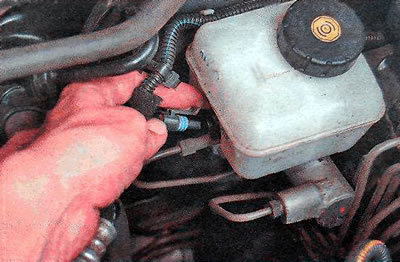
2. Disconnect the wiring harness connector of the brake fluid low level sensor.
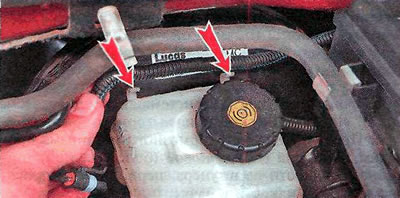
3. Remove the wiring harness from the fasteners on the body of the master brake cylinder reservoir.
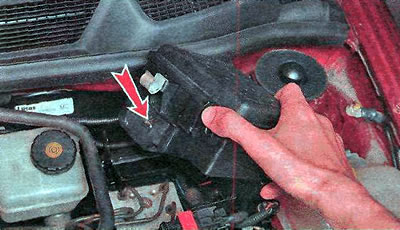
4. To make access easier, remove the fuse and relay box and move it to the side. To do this, press the lock with a slotted screwdriver and pull the box out of the bracket upwards.
5. Pump out the working fluid from the master brake cylinder reservoir (see "Hydraulic brake drive - brake fluid replacement").
6. Using an 11 mm wrench, unscrew the brake pipe fittings from the master brake cylinder.
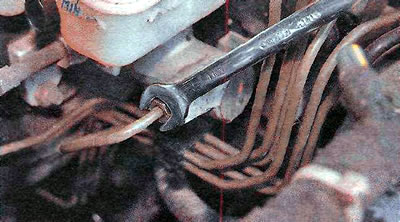
7. Carefully move the tubes away from the cylinder without bending them too much.
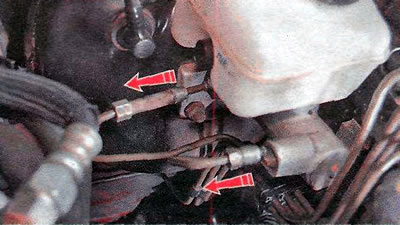
8. Using a 13 mm wrench, unscrew the two nuts securing the master brake cylinder to the vacuum booster housing on the left side...
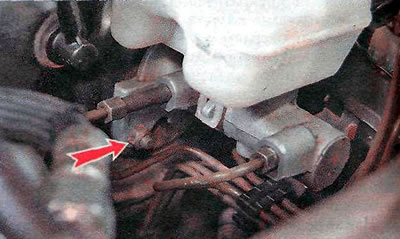
...and on the right side.
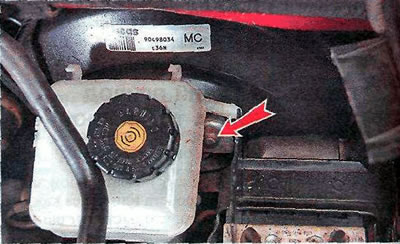
9. Remove the master brake cylinder together with the reservoir.
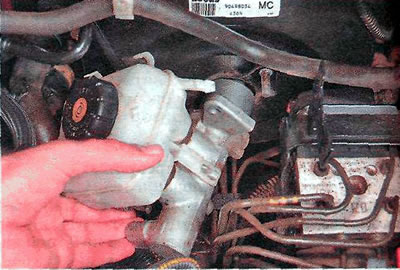
10. If necessary, remove the reservoir from the master brake cylinder by bending back the side fasteners.
11. Remove the master cylinder sealing ring. It must be replaced with a new one during assembly.
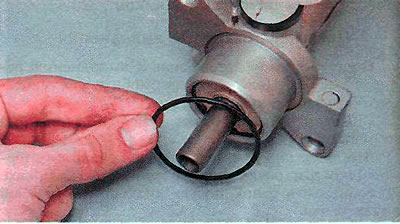
12. Install the master brake cylinder in the reverse order.
Original posted on the website (www.OPELBOOK.ru)
13. Before installing the reservoir on the new brake cylinder, lubricate the reservoir fittings with clean brake fluid.
14. Fill the reservoir with fresh brake fluid and bleed the hydraulic drive of the brake system (see "Hydraulic brake drive - bleeding").
15. Check for fluid leaks at the points where the brake pipes are connected to the master brake cylinder.
Visitor comments