


Contents: Replacing the front brake hose ⬇ Replacing the rear brake hose…⬇ Replacing the rear brake hose…⬇
The necessity of performing this operation should be determined during the process of checking the technical condition of the brake system (see "Brake system - checking technical condition").
Replacing the front brake hose
Note: The operation is shown using the example of the left front brake hose. The right brake hose is replaced in the same way.
1. Prepare the car for work (see "Preparing the car for maintenance and repair").
2. Remove the left front wheel (see "Wheel - replacement").
3. Clean the brake hose tip from dirt and treat the brake pipe fitting with penetrating lubricant.
Warning! When performing the following operation, make sure that when unscrewing the nipple, the tube does not rotate together with the nipple. If the tube is "stuck" in the nipple, replace it.
4. Using a special 11 mm wrench for pipe fastening nuts, unscrew the brake pipe fitting, remove the spring retainer and pull the hose down from the body bracket.
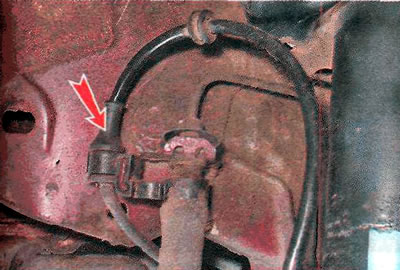
5. To prevent brake fluid from leaking out of the system, place a protective cap on the end of the tube for bleeding the working brake cylinder.
6. Using an 11 mm wrench, unscrew the bolt securing the brake hose tip to the caliper.
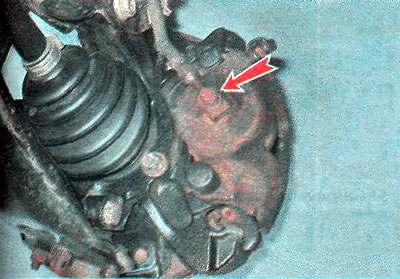
Note: The hose connection to the caliper is sealed with copper rings that cannot be reused.
7. Using pliers, remove the locking bracket and remove the brake hose.
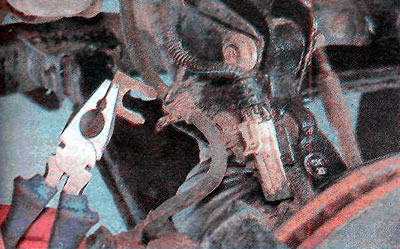
8. Install the brake hose in reverse order.
9. Bleed the brake system (see "Hydraulic brake drive - bleeding") and make sure that the connections of the tips of the new brake hose are tight (see "Service brake system drive - check").
Replacing the rear brake hose (between the main pipe and the rear beam pipe)
Note: The operation is shown using the example of replacing the left rear brake hose. The right brake hose is replaced in the same way.
1. Prepare the car for work (see "Preparing the car for maintenance and repair").
2. Remove the wheel (see "Wheel - replacement").
3. Clean the brake hose tips from dirt and treat the brake pipe fittings with penetrating lubricant.
Warning! When performing the following operation, make sure that when unscrewing the nipple, the tube does not rotate together with the nipple. If the tube is "stuck" in the nipple, replace it.
4. Using a special 10 mm wrench for pipeline fastening nuts, unscrew the fitting of the main brake pipe.
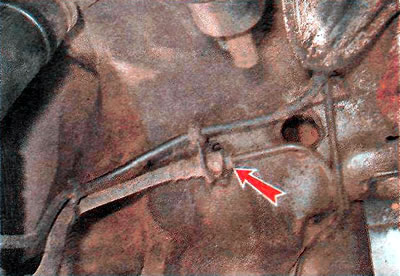
5. To prevent brake fluid from leaking out of the system, place a protective cap on the end of the tube for bleeding the working brake cylinder.
6. Remove the spring retainer of the brake hose tip and remove the brake hose from the body bracket.
Warning! When performing the following operation, make sure that when unscrewing the nipple, the tube does not rotate together with the nipple. If the tube is "stuck" in the nipple, replace it.
7. In the same way, unscrew the fitting of the brake pipe of the rear brake cylinder, remove the spring retainer of the brake hose tip and remove the brake hose from the bracket of the rear suspension beam.
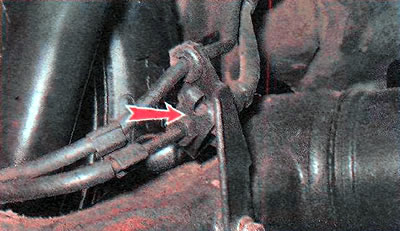
8. Install the brake hose in reverse order.
9. Bleed the brake system (see "Hydraulic brake drive - bleeding") and make sure that the connections of the tips of the new brake hose are tight (see "Service brake system drive - check").
Replacing the rear brake hose (between the rear beam tube and the caliper on vehicles with rear disc brakes)
Replacing the hose is similar to replacing the front brake hose, except that it is disconnected from the steering knuckle.
Visitor comments