


In the latter case, you should first determine and eliminate the cause of air entering the hydraulic drive and only then begin bleeding it. The presence of air in the hydraulic drive of the brake system can be determined by pressing the brake pedal - it becomes "soft" (there is no feeling of support at the end of the pedal stroke) and the pedal stroke increases (the pedal drops below its normal position). Bleeding of brake mechanisms is performed in the following sequence: right rear, left front, left rear, right front.
To complete the work you will need:
- transparent vinyl tube with an internal diameter of 4-5 mm;
- special or open-end wrench for 9 mm for the front caliper nipple;
- special or open-end wrenches of 7 mm or 11 mm for the nipple of the rear brake mechanism (depending on the type - drum or disc);
- brake fluid drain container;
- fresh brake fluid as recommended by the manufacturer (see "Reference data");
- inspection ditch or overpass (desirable).
We perform the work with an assistant.
Sequence of execution
1. Prepare the car for work (see "Preparing the car for maintenance and repair").
2. Remove the master brake cylinder reservoir cover.
Warning! To prevent air from entering the hydraulic drive of the brake system during bleeding, make sure that the brake fluid level in the reservoir does not fall below the MIN mark.
3. Clean the nipple of the rear right wheel brake cylinder and the surface around it from dirt.
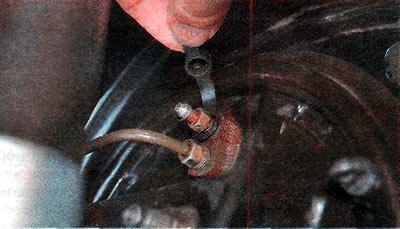
4. Remove the protective rubber cap from the bleed nipple of the rear right wheel:
- drum brake mechanism;
- disc brake mechanism.
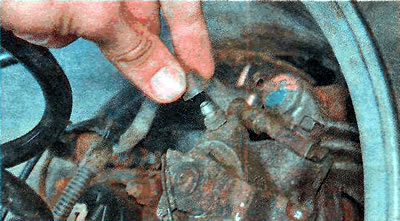
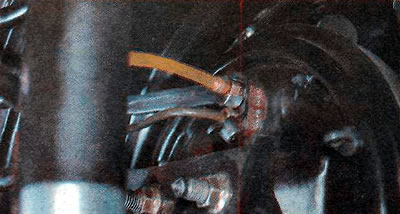
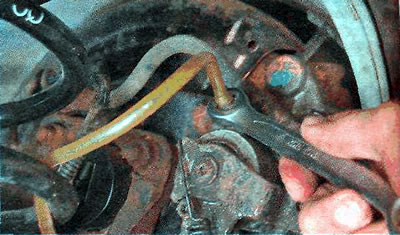
5. Put a special wrench or a 7 mm open-end wrench on the bleed nipple (or 11 mm for disc brakes), and then a transparent vinyl tube. We lower the other end of the tube into a transparent container partially filled with brake fluid.
6. The assistant presses the brake pedal several times and holds it pressed.
7. Unscrew the nipple until liquid starts to come out of it:
- drum brake mechanism;
- disc brake mechanism.
8. After the brake fluid stops coming out of the tube, tighten the fitting.
9. Repeat the steps described in points 6-8 until the brake fluid with air bubbles stops coming out of the cylinder nipple; periodically check the brake fluid level in the master cylinder reservoir.
10. After completely removing air from the rear wheel drive, finally tighten the nipple, remove the vinyl tube and key from the nipple, and put a protective rubber cap on the nipple.
11. According to the established sequence, remove the protective rubber cap from the bleed nipple of the front left wheel brake caliper.
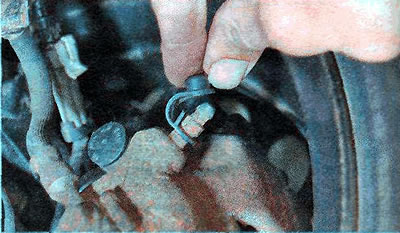
12. Put a special or 9 mm open-end wrench on the bleed nipple, and then a transparent vinyl tube. Lower the other end of the tube into a transparent container partially filled with brake fluid.
13. The assistant presses the brake pedal several times and holds it pressed.
14. Unscrew the nipple until liquid starts to come out of it.
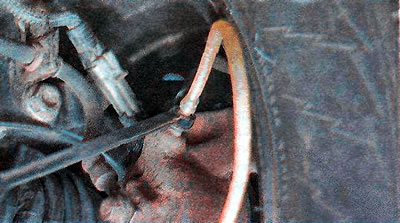
15. After the brake fluid stops coming out of the tube, tighten the fitting.
16. Repeat the steps described in paragraphs 13-15 until the brake fluid with air bubbles stops escaping from the caliper nipple; periodically check the brake fluid level in the master cylinder reservoir.
17. After completely removing air from the front wheel drive, finally tighten the nipple, remove the vinyl tube and key from the nipple, and put a protective rubber cap on the nipple.
18. Next, in a similar manner, bleed the left rear and front right brake mechanisms in the specified order, monitoring the fluid level in the reservoir of the main brake cylinder.
19. Press the brake pedal, check the operation of the hydraulic drive and the absence of fluid leakage from the bleeding nipples. If the pedal is "soft" or it drops below its normal operating position, we again make sure the system is tight and repeat bleeding the hydraulic drive.
Visitor comments