


2. The front and rear hydraulic lines are completely independent, therefore, if the master cylinder has not been removed, or the brake fluid is replaced, it is necessary to bleed only the circuit that was damaged.
3. There are several types of brake bleed kits available. Follow the kit manufacturer's instructions when performing the bleeding procedure (photo).
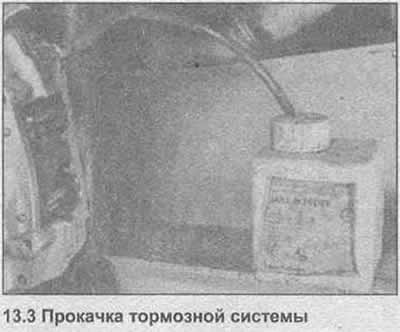
4. When bleeding, do not allow the brake fluid level in the reservoir to drop below the minimum mark and use only new fluid for topping up. Never use the fluid multiple times.
5. Before starting, check that all pipes and flexible hoses are in good condition and that all hydraulic connections are tight.
6. If you don't have a special brake bleeding kit, take a clean reservoir, a plastic or rubber tube of suitable length that fits tightly onto the bleeding nipple, and new brake fluid.
7. Clean the area around the bleeder screw on one of the front brake calipers and remove the dust cap. Connect one end of the tube to the bleeder screw and submerge the other end in the reservoir, pouring in a little brake fluid to submerge the end of the tube.
8. Open the bleeder screw half a turn. Have an assistant press the brake pedal and then slowly release it. Tighten the bleeder screw at the end of each downward stroke of the brake pedal to prevent air and old fluid from getting back into the system. Continue this procedure until only clean brake fluid with no air bubbles comes out of the system. Finally, tighten the bleeder screw.
9. Remove the tube, install the dust cap and repeat this procedure on the remaining front brake caliper.
10. Repeat the procedure on the rear brake calipers, keeping in mind that on models equipped with ABS it will take at least fifteen pedal presses to bleed the rear brake circuit.
11. When bleeding is complete, top up the fluid level in the reservoir and replace the cap.
Visitor comments