


Note: Do not disassemble the master cylinder on vehicles with ABS.
1. Press the brake pedal several times to release the vacuum in the servo motor unit.
2. Disconnect the brake fluid level indicator lamp wiring from the reservoir filler cap.
3. If possible, pump out the brake fluid from the reservoir. This will reduce fluid loss.
4. Place a container under the master cylinder to catch any spilled fluid.
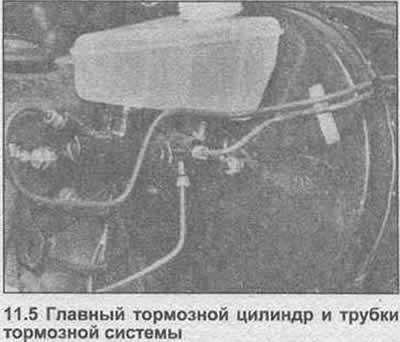
5. Mark the position of the brake line, then loosen the union nuts and disconnect the lines from the master cylinder (photo).
6. Unscrew the front suspension.
7. Remove the mounting nuts and lift the master cylinder out of the mounts on the vacuum servo. Be careful not to let any brake fluid get on the paintwork of the housing.
Article posted on an online resource (www.OPELBOOK.ru)
8. Clean the outer surfaces of the unit, then remove the rubber seals of the feed tank.
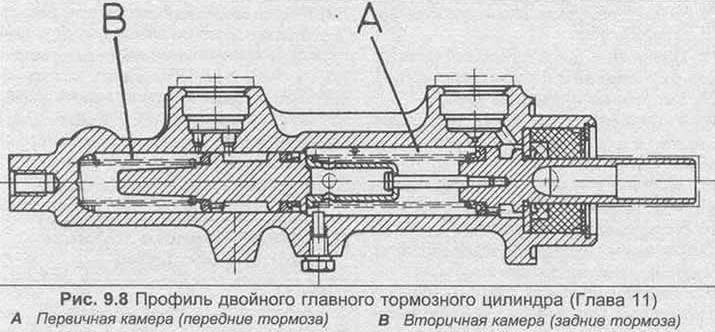
9. Press the primary piston lightly with a screwdriver, then remove the retaining ring from the master cylinder socket.
10. Remove the primary piston assembly.
11. Press the secondary piston and unscrew the lock pin from the cylinder body.
12. Remove the secondary piston assembly.
13. Clean all components in methylated spirits and inspect them for wear and damage. In particular, check the piston surfaces and cylinder bores for scoring and corrosion. If the bore is worn, replace the entire master cylinder or use a repair kit that includes pistons and seals. If the pistons are in good condition, you can replace only the rubber seals.
14. Check the inlet and outlet ports. When installing new seals to the pistons, use only finger force to push them into place. The open ends of the seals should cover the corresponding ends of the pistons.
15. Dip the secondary piston assembly into clean brake fluid and insert into the cylinder. Press the secondary piston and tighten the lock pin on the housing.
16. Dip the primary piston assembly into clean brake fluid and insert into the cylinder. Press the piston and install the retaining ring.
17. Install the rubber seals on the feed tank.
18. If necessary, replace the O-ring on the master cylinder flange.
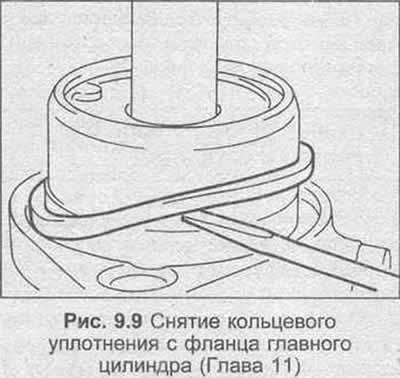
19. Installation is carried out in the reverse order, but tighten the mounting nuts and connecting nuts with the tightening force specified Specification and finally bleed the hydraulic system as described in Chapter 13.
Visitor comments