


2. Inspect the brake shoe linings for wear. Using a steel ruler, check the lining thickness including the backing plate as specified in the Specifications.
3. If any brake pad is worn below minimum thickness, replace all rear pads together with new anti-rattle springs.
4. Note how the anti-rattle spring is positioned, then knock out the pins using a thin punch (photo).
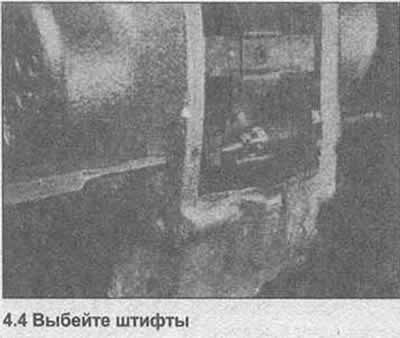
5. Remove the anti-rattle spring.
6. Push the brake pads slightly to create a small gap, then pull them out of the caliper along with the spacers (photo). If they are pinched, use pliers or grips to remove them.
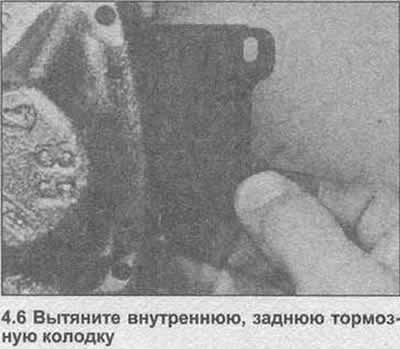
7. Clean dust and dirt from the caliper and spacers, being careful not to breathe it in. Clean rust from the brake disc rib.
8. Press both pistons fully into their cylinders using a piece of wood or the handle of a hammer.
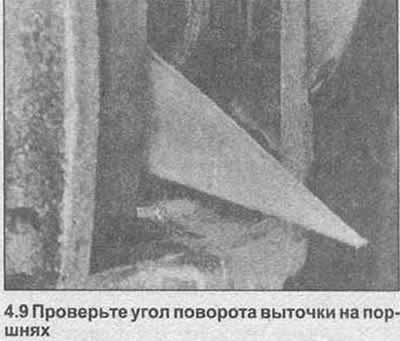
9. Check that the recesses on the pistons are turned downwards by approximately 23° relative to the horizontal position. Remove the old insulation (figure 9.3) and clean the sliding sleeves. Put some grease on the bushings and install new seals on the central grooves (photo). If necessary, turn the pistons to their correct position.
10. Apply a small amount of grease to the top and bottom edges of the shields on the new brake pads.
11. Insert the new brake pads and spacers into the caliper and check that they move freely.
12. Place the anti-rattle spring on the pads. Press the ends of the spring into the caliper.
13. Replace the brake pads on the remaining rear wheel using the procedure given in steps 4-12.
14. Press the brake pedal several times to set the brake pads to their normal position.
15. Install the rear wheels and lower the vehicle to the ground.
Visitor comments