


2. Disconnect the wiring from the brake fluid warning light on the reservoir filler cap.
3. Unscrew the front suspension of the master cylinder.
4. Loosen the master cylinder mounting nuts and separate the unit from the struts on the vacuum servo just enough to allow room to remove the servo unit. Leave the brake lines connected to the master cylinder.
5. Pull or pry the vacuum hose elbow connectors. Move the bulkhead wire harness to one side.
6. Inside the vehicle, disconnect the brake pedal return spring.
7. Remove the spring clip and pull out the pin with a head and a hole for a cotter pin that secures the servo motor pusher to the brake pedal (photo).
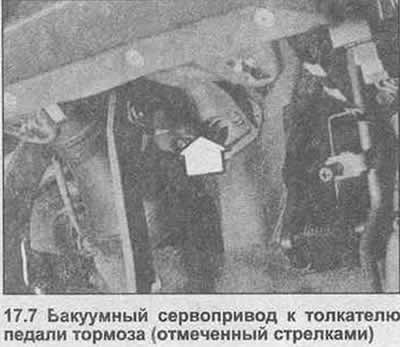
8. Remove the mounting nuts, then tilt the servo motor unit and remove it from the bulkhead into the engine bay. Remove the gasket.
9. Loosen the lock nut and unscrew the clamp from the push rod. Unscrew the lock nut.
10. Loosen the nuts and remove the support hanger and gasket from the servo motor unit.
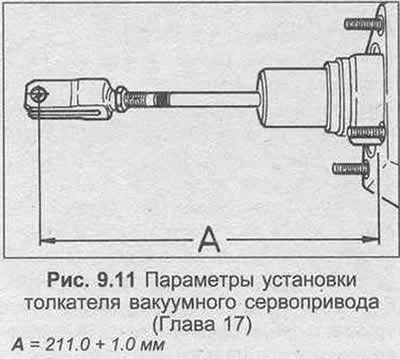
11. First, screw the lock nut and clamp onto the push rod. With the push rod in its original position, adjust the distance between the servo motor mounting surface and the center line of the pin hole. The distance should be within 211.0 + 1.0 mm. Tighten the lock nut.
12. Position the support hanger on the servo motor block with the new gasket. Tighten the nuts.
13. Install the servo motor assembly to the bulkhead using a new gasket. Install and tighten the mounting nuts.
14. Connect the push rod to the brake pedal with a pin with a head and a hole for a cotter pin and secure with a spring clip.
15. Reconnect the brake pedal return springs.
16. Press the vacuum hose elbow connector into the servo motor sealing rubber ring.
17. If necessary, replace the O-ring on the master cylinder flange, then position the unit on the servo motor stands. Tighten the mounting nuts.
Visitor comments