


Checking the free travel of the brake pedal
Free travel of the brake pedal is the pedal travel from its upper position to the start of the brake mechanisms operation. It should be 3-5 mm.
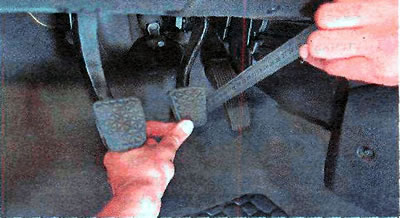
Place a ruler or tape measure near the pedal and measure the distance from the floor to the outer surface of the brake pedal. Press the pedal with your hand, lower it down until you feel an increase in resistance to the pedal movement and repeat the measurement. Based on the difference in the obtained values, determine the free travel of the pedal. To increase the accuracy of the measurement, repeat the operation several times.
Checking the brake booster
1. With the engine not running, press the brake pedal several times until the hissing sound in the brake booster stops.
(Material copied from this resource: «OPELBOOK.ru»)
2. Press the brake pedal and hold it down.
3. Without releasing the pedal, start the engine.
4. If immediately after starting the engine the pedal goes down a little, then the brake booster is working properly.
Otherwise, we check the integrity of the vacuum supply hose to the vacuum booster, the tightness of its connection to the inlet pipe and the vacuum booster.
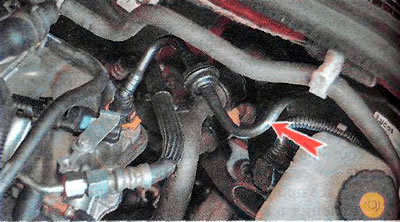
If the hose is in good condition and is tightly connected, then the vacuum booster is faulty and must be replaced (see "Brake booster - replacement").
Checking brake lines
To complete the work you will need to look at a ditch or overpass.
1. Carefully inspect the brake system pipes for cracks, brake fluid leaks and dents. Defective elements must be replaced (see "Brake pipes - replacement").
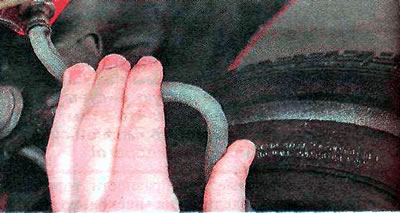
2. Squeezing slightly, inspect the brake hoses for fatigue cracks, abrasions, swelling and brake fluid leaks. Faulty elements must be replaced (see "Brake hoses - replacement").
Visitor comments