


There are two main causes of transmission fluid burning, which causes color change:
1. Restriction of liquid flow through the main and/or auxiliary heat exchanger. This condition is usually the result of faulty or improperly installed check valves, main heat exchanger, or narrowing of the flow area in the tubes caused by clogging with dirt or pinching.
2. Driving a vehicle with a heavy load while towing a trailer. In such cases, the vehicle must be equipped with an additional heat exchanger to cool the transmission fluid and have an appropriate engine/final drive ratio.
Contamination of transmission fluid can be caused by the following reasons:
- Adding the wrong transmission fluid;
- Failure to pre-clean the transmission fluid dipstick or tube;
- Coolant entering the transmission fluid;
- Internal malfunction leading to contamination formation (intensive wear of parts due to overheating of the gearbox);
- Overheating, leading to the formation of slag;
- Installation of uncleaned pipes during repairs;
- Installation of an uncleaned torque converter after repair.
Warning: When checking the transmission fluid level, the vehicle must be parked on a level, horizontal surface.
Drive until the transmission temperature reaches above 30°C.
Park the car on a level, horizontal surface.
Start the engine and let it idle for 3 minutes with the selector lever in position P.
With the engine running, move the selector lever from position P through all positions and back to position P.
Remove the plug from the transmission fluid level inspection hole.
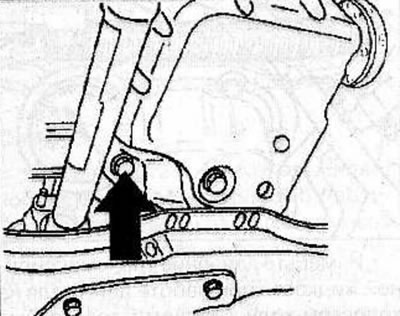
Start the engine and let it idle until the transmission fluid warms up to a temperature of 32-57°C.
Add transmission fluid until it starts to flow out of the check hole.
(Original posted on the website: opelbook.ru)
Install a new sealing ring on the plug and tighten it to a torque of 38 N·m.
Use the TECH 2 device to determine the service life of the transmission oil.
Visitor comments