


Car Air Conditioner Opel Vivaro A
The Opel Vivaro A air conditioner inspection begins with the pressure sensor and compressor status. If cooling is insufficient, the condenser and receiver-dryer are inspected. If the pressure reducer or evaporator requires removal, access and pipe connections are verified. The outside temperature sensor and evaporator sensor affect the system's operating modes, so they are checked together. After repairs, check the compressor operation and the absence of leaks. It is important for the mechanic to maintain cleanliness when working on the circuit and not damage the seals. This overview helps the owner understand which air conditioner components require diagnostics and which only require electrical signal testing.
Removal and installation the capacitor
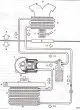
Air conditioning system The air conditioning system diagram is shown in the figure 9.20. Figure 9.20. Air conditioning system diagram: A - Car interior; B -...
Air conditioning system The air conditioning system diagram is shown in the figure 9.20. Figure 9.20. Air conditioning system diagram: A - Car interior; B -...

Removal and installation the receiver-dryer
Removal 1. Disconnect the battery. 2. Using a filling station, drain the refrigerant from the refrigeration circuit. 3. Remove the radiator grille, right...
Removal 1. Disconnect the battery. 2. Using a filling station, drain the refrigerant from the refrigeration circuit. 3. Remove the radiator grille, right...
Removal and installation the compressor
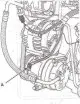
Removal 1. Disconnect the battery. 2. Using a filling station, drain the refrigerant from the refrigeration circuit. 3. Remove the accessory drive belt. 4....
Removal 1. Disconnect the battery. 2. Using a filling station, drain the refrigerant from the refrigeration circuit. 3. Remove the accessory drive belt. 4....

Removal and installation the gearbox
Trafic vehicles are equipped with a gearbox with a calibrated bore (figure 9.25). Figure 9.25. Trafic vehicles are equipped with a gearbox with a calibrated...
Trafic vehicles are equipped with a gearbox with a calibrated bore (figure 9.25). Figure 9.25. Trafic vehicles are equipped with a gearbox with a calibrated...

Pressure sensor
A pressure sensor installed at the condenser inlet provides protection for the refrigeration circuit: low pressure cut-out (3 bar) and high pressure cut-out...
A pressure sensor installed at the condenser inlet provides protection for the refrigeration circuit: low pressure cut-out (3 bar) and high pressure cut-out...

Evaporator sensor
The evaporator sensor shows the temperature at the outlet of the evaporator (figure 9.30). It is a negative temperature coefficient thermistor. Figure 9.30....
The evaporator sensor shows the temperature at the outlet of the evaporator (figure 9.30). It is a negative temperature coefficient thermistor. Figure 9.30....

Removal and installation the outside temperature sensor
The temperature sensor is located in the outside rearview mirror on the right side. Removal 1. Peel off the lower reflective glass from the rear view mirror...
The temperature sensor is located in the outside rearview mirror on the right side. Removal 1. Peel off the lower reflective glass from the rear view mirror...
This section is available on russian, bulgarian, belarusian, ukrainian, serbian, croatian, romanian, polish, slovak, hungarian
Share information:
- General information
- User manual
- Power unit
- Petrol engine F4R
- Diesel engine F9Q
- Diesel engine G9U
- Transmission
- Clutch and drive shafts
- Manual gearbox
- Chassis
- Front suspension
- Rear suspension
- Brake system
- Body
- Exterior
- Interior
- Electrical equipment
- Heating and ventilation
- Air conditioner
- Equipment and devices
- Electrical diagrams
- General information
- Maintenance
- Power unit
- Gasoline engines
- Diesel engines
- Cooling system
- Fuel and exhaust system
- Contact ignition system
- Contactless ignition system
- Transmission
- Clutch
- Mechanical gearbox
- Automatic gearbox
- Drive shafts
- Chassis
- Steering
- Brake system
- Car suspension
- Body
- Exterior
- Interior
- Doors and windows
- Electrical equipment
- Equipment and devices
- Power devices
- Electrical circuits
- General information
- User manual
- Maintenance
- Power unit
- Petrol engines 2.2 l
- Petrol engines 3.2 l
- Diesel engines 2.2 l
- Cooling system
- Fuel system (petrol)
- Fuel system (diesel)
- Ignition system
- Transmission
- Clutch
- Manual gearbox MUA5C
- Automatic gearbox 4L30E
- Chassis
- Suspension and axles
- Steering
- Brake system
- Body
- Exterior
- Interior
- Doors, locks and windows
- Heating and air conditioning
- Electrical equipment
- Power devices
- Equipment and devices
- Lighting and signaling
- Electrical diagrams
- General information
- Introduction to guide
- User manual
- Maintenance
- Power unit
- Engine repair
- Lubrication system
- Cooling system
- Power and exhaust system
- Engine electrics
- Transmission
- Clutch
- Mechanical gearbox
- Cardan shafts
- Chassis
- Brake system
- Front suspension
- Rear suspension
- Steering
- Body
- Repair and care
- Electrical equipment
- Equipment and devices
- Electrical circuits
