


Fuel system (diesel) of the car Opel Frontera B
Bleeding the fuel system of an Opel Frontera B diesel is performed after replacing the filter or repairing the injection pump. This article discusses the high-pressure fuel lines, rail, injectors, high-pressure pump, crankshaft angle sensor, flow meter, and control unit. It also covers glow plugs, a preheater unit, turbocharger, and EGR valve. A mechanic will find safety precautions and draining water from the filter helpful, while the owner will find instructions on how to deal with power loss. Check connections for leaks after assembly.

Technical data
Adjustment data Engine crankshaft speed at idle, min⁻¹ 740-900 Maximum engine crankshaft speed, min⁻¹ 4950-5050 Cylinder firing sequence 1-3-4-2 Tightening...
Adjustment data Engine crankshaft speed at idle, min⁻¹ 740-900 Maximum engine crankshaft speed, min⁻¹ 4950-5050 Cylinder firing sequence 1-3-4-2 Tightening...

How a diesel engine works
In diesel engines, clean air is admitted into the cylinders and is highly compressed. Because of this, the temperature in the cylinders becomes higher than the...
In diesel engines, clean air is admitted into the cylinders and is highly compressed. Because of this, the temperature in the cylinders becomes higher than the...
Precautions when servicing the fuel system
When servicing the fuel system, carefully follow these cleanliness and safety precautions: Ensure good ventilation of the work area as fuel vapors are toxic....
When servicing the fuel system, carefully follow these cleanliness and safety precautions: Ensure good ventilation of the work area as fuel vapors are toxic....

High pressure fuel pipes
Removal Remove the engine cover. Disconnect the hose from the intake manifold that connects it to the intercooler and move it to the side. Disconnect the...
Removal Remove the engine cover. Disconnect the hose from the intake manifold that connects it to the intercooler and move it to the side. Disconnect the...

Fuel rail
Warning: After removing the fuel rails, position them so that they can be installed in their proper places during assembly. Removal Remove the upper section of...
Warning: After removing the fuel rails, position them so that they can be installed in their proper places during assembly. Removal Remove the upper section of...

Fuel injectors
Warnings: After removing the fuel injectors, position them so that they can be installed in their proper places during assembly. After removing the fuel...
Warnings: After removing the fuel injectors, position them so that they can be installed in their proper places during assembly. After removing the fuel...
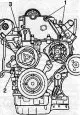
High pressure fuel pump (HPFP)
Removal Disconnect the cable from the negative battery terminal. Remove the engine cover. Disconnect the hose from the intake manifold that connects it to the...
Removal Disconnect the cable from the negative battery terminal. Remove the engine cover. Disconnect the hose from the intake manifold that connects it to the...

Crankshaft angle sensor
Removal Disconnect the cable from the negative battery terminal. Disconnect the connector from the crankshaft position sensor. Remove the lower engine...
Removal Disconnect the cable from the negative battery terminal. Disconnect the connector from the crankshaft position sensor. Remove the lower engine...

Coolant temperature sensor
The coolant temperature sensor is installed in the cylinder head and monitors the coolant temperature. A thermistor is used as a sensor, which is sensitive to...
The coolant temperature sensor is installed in the cylinder head and monitors the coolant temperature. A thermistor is used as a sensor, which is sensitive to...

Oil temperature sensor
Removal Disconnect the cable from the negative battery terminal. Remove the lower engine compartment protection. Place a container under the oil drain plug to...
Removal Disconnect the cable from the negative battery terminal. Remove the lower engine compartment protection. Place a container under the oil drain plug to...

Boost Pressure Sensor
Removal Disconnect the cable from the negative battery terminal. Remove the engine cover. Disconnect the connectors, remove the wiring harness support brackets...
Removal Disconnect the cable from the negative battery terminal. Remove the engine cover. Disconnect the connectors, remove the wiring harness support brackets...

Air flow meter
Removal Disconnect the cable from the negative battery terminal. Disconnect the connector (3) from the air flow meter. Loosen the air duct clamps and...
Removal Disconnect the cable from the negative battery terminal. Disconnect the connector (3) from the air flow meter. Loosen the air duct clamps and...

Engine control unit
Warnings: Before disconnecting the connectors from the engine control unit, turn off the ignition. Do not touch the engine control unit connector contacts....
Warnings: Before disconnecting the connectors from the engine control unit, turn off the ignition. Do not touch the engine control unit connector contacts....

Air Boost Pressure Control Solenoid Valve
Removal Disconnect the cable from the negative battery terminal. Disconnect the connector (2) and vacuum hoses (1) from the boost pressure control solenoid...
Removal Disconnect the cable from the negative battery terminal. Disconnect the connector (2) and vacuum hoses (1) from the boost pressure control solenoid...

Glow plugs
Removal Disconnect the cable from the negative battery terminal. Using special pliers KM-717, disconnect the connectors (1) from the glow plugs. Using a...
Removal Disconnect the cable from the negative battery terminal. Using special pliers KM-717, disconnect the connectors (1) from the glow plugs. Using a...

Engine preheating control unit
Removal Disconnect the connector (2) from the engine preheating control unit (1). Remove the engine preheating control unit from the bracket (3). Installation...
Removal Disconnect the connector (2) from the engine preheating control unit (1). Remove the engine preheating control unit from the bracket (3). Installation...

Bypass manifold
Removal Disconnect the cable from the negative battery terminal. Remove the lower engine compartment protection. Disconnect the front exhaust pipe from the...
Removal Disconnect the cable from the negative battery terminal. Remove the lower engine compartment protection. Disconnect the front exhaust pipe from the...

Turbocharger — removal and installation
Removal Disconnect the cable from the negative battery terminal. Loosen the clamps (1) and disconnect the three air intake pipes (2) from the turbocharger....
Removal Disconnect the cable from the negative battery terminal. Loosen the clamps (1) and disconnect the three air intake pipes (2) from the turbocharger....

Accelerator Pedal Position Sensor
Removal Disconnect the cable from the negative battery terminal. Disconnect the connector (1) from the accelerator pedal position sensor. Remove the bolts and...
Removal Disconnect the cable from the negative battery terminal. Disconnect the connector (1) from the accelerator pedal position sensor. Remove the bolts and...

Removal air from the fuel system
Warning! Air must be removed from the fuel system using a bleeding device (external fuel pump) KM-948 (1) together with adapters KM-948-120-1 (2) and...
Warning! Air must be removed from the fuel system using a bleeding device (external fuel pump) KM-948 (1) together with adapters KM-948-120-1 (2) and...

Draining water from the fuel filter
Note: The Frontera-B fuel filter is located on the left side chassis crossmember. Clean the fuel filter. Place a suitable container under the fuel filter....
Note: The Frontera-B fuel filter is located on the left side chassis crossmember. Clean the fuel filter. Place a suitable container under the fuel filter....

Replacing the fuel filter element
Removal Using the special tool KM-796-A, disconnect the fuel supply (2) and return (1) hoses from the fuel filter housing, then close the hoses with KM-6015...
Removal Using the special tool KM-796-A, disconnect the fuel supply (2) and return (1) hoses from the fuel filter housing, then close the hoses with KM-6015...

Exhaust gas system
The exhaust system consists of an exhaust pipe with a catalytic converter and mufflers. The exhaust system ensures the removal of exhaust gases into the...
The exhaust system consists of an exhaust pipe with a catalytic converter and mufflers. The exhaust system ensures the removal of exhaust gases into the...

Exhaust Gas Recirculation System Valve
Warning! Diesel-powered vehicles are equipped with two exhaust gas recirculation valves - mechanical and electromagnetic. Replacing the mechanical exhaust gas...
Warning! Diesel-powered vehicles are equipped with two exhaust gas recirculation valves - mechanical and electromagnetic. Replacing the mechanical exhaust gas...
This section is available on russian, bulgarian, belarusian, ukrainian, serbian, croatian, romanian, polish, slovak, hungarian
See similar ones from other Opel car manuals:
▶ Power unit: Power and exhaust system Opel Corsa C (2000-2006)
▶ Power unit: Fuel system Opel Omega B2 (1999-2003)
▶ Power unit: Fuel supply (carburetor) Opel Astra F (1991-1998, petrol)
▶ OHC power unit: Supply system Opel Kadett E (1984-1995)
▶ Power unit: Supply system Opel Insignia A (2008-2017)
Share information:
- General information
- User manual
- Power unit
- Petrol engine F4R
- Diesel engine F9Q
- Diesel engine G9U
- Transmission
- Clutch and drive shafts
- Manual gearbox
- Chassis
- Front suspension
- Rear suspension
- Brake system
- Body
- Exterior
- Interior
- Electrical equipment
- Heating and ventilation
- Air conditioner
- Equipment and devices
- Electrical diagrams
- General information
- Maintenance
- Power unit
- Gasoline engines
- Diesel engines
- Cooling system
- Fuel and exhaust system
- Contact ignition system
- Contactless ignition system
- Transmission
- Clutch
- Mechanical gearbox
- Automatic gearbox
- Drive shafts
- Chassis
- Steering
- Brake system
- Car suspension
- Body
- Exterior
- Interior
- Doors and windows
- Electrical equipment
- Equipment and devices
- Power devices
- Electrical circuits
- General information
- User manual
- Maintenance
- Power unit
- Petrol engines 2.2 l
- Petrol engines 3.2 l
- Diesel engines 2.2 l
- Cooling system
- Fuel system (petrol)
- Fuel system (diesel)
- Ignition system
- Transmission
- Clutch
- Manual gearbox MUA5C
- Automatic gearbox 4L30E
- Chassis
- Suspension and axles
- Steering
- Brake system
- Body
- Exterior
- Interior
- Doors, locks and windows
- Heating and air conditioning
- Electrical equipment
- Power devices
- Equipment and devices
- Lighting and signaling
- Electrical diagrams
- General information
- Introduction to guide
- User manual
- Maintenance
- Power unit
- Engine repair
- Lubrication system
- Cooling system
- Power and exhaust system
- Engine electrics
- Transmission
- Clutch
- Mechanical gearbox
- Cardan shafts
- Chassis
- Brake system
- Front suspension
- Rear suspension
- Steering
- Body
- Repair and care
- Electrical equipment
- Equipment and devices
- Electrical circuits
