


2. Inspect the brake surface of the disc for deep scratches or tiny cracks. If this occurs, the disc must be replaced or treated. Any treatment of both surfaces of the disc must not make the disc thickness less than the minimum permissible. Small, fine scratches are normal for brake discs.
3. If you think the brake disc is warped, check it for wear using a digital tool or feeler gauge (between the disk and a fixed point during disk rotation).
4. If the wear exceeds the specified limit, replace the disc.
5. In order to remove the brake disc, you must first remove the pads as indicated in Section 3.
6. Remove the small retaining screw and then tilt the disc and remove it from the hub.
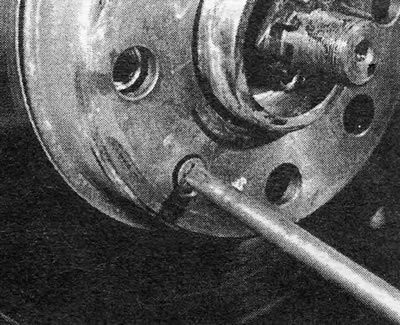
Photo 6.6 Removing the brake disc retaining screw.
7. It is recommended that both brake discs be treated or replaced at the same time to maintain smooth braking.
8. Assembly is carried out in reverse order.
9. For vehicles equipped with wheels made of light alloys, a face cuff is installed on the shoulder of the brake disc.
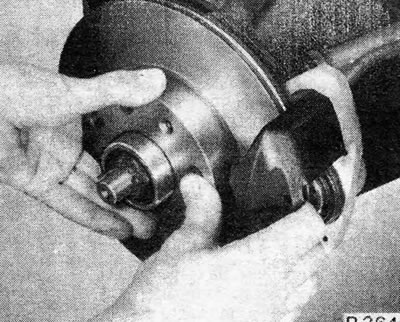
Figure 9.17 - Removing the brake disc from the hub
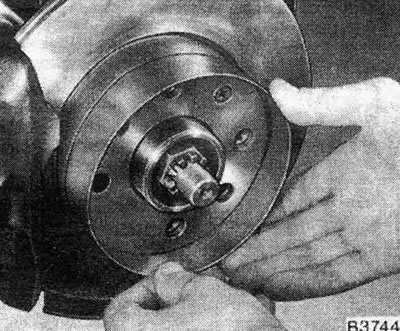
Figure 9.18 — Brake disc face seal
Visitor comments