


Warning: New bolts and nuts must be used to secure the connecting rod lower end.
1. On 1.6L petrol engines, remove the cylinder head, oil pan and oil pick-up pipe.
2. On DOCH 1.8L and 2.0L engines, remove the cylinder head, oil pan and oil pickup pipe. Unscrew the screws and remove the bulkhead from the base of the cylinder block.
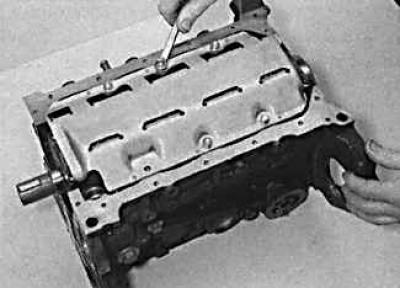
3. On 1.7L diesel engines, remove the cylinder head, oil pan and oil pickup pipe. Unscrew the bolts and remove the bulkhead from the base of the cylinder block.
Material taken from an internet portal OPELBOOK.ru
4. On 2.0L diesel engines, remove the cylinder head, oil pan and oil pickup pipe.
5. On all models, if there is carbon deposits on the top of the cylinder, remove them with a soft scraper. The presence of a step on the top of the cylinder indicates excessive cylinder wear and the need to rebore the engine cylinder.
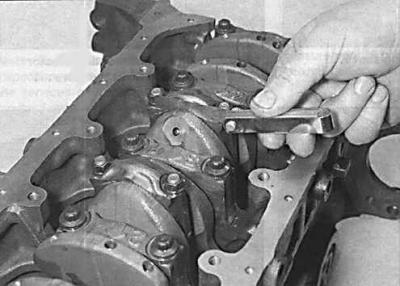
6. Check the side clearance of all connecting rod lower ends.
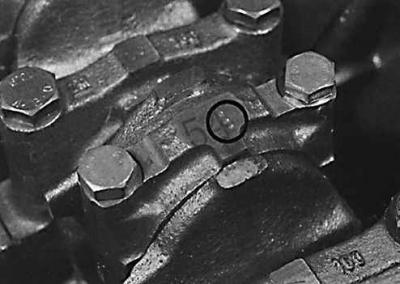
7. Using a hammer and center punch or paint, mark the position of the small end cap and the cylinder number.
8. Turn the crankshaft so that the pistons of the first and fourth cylinders are at the bottom dead center.
9. Unscrew the nuts (diesel engines 1.7 l) or bolts (other engines) fastening the cover of the lower connecting rod head of the first cylinder. Remove the lower connecting rod cover.
10. Using the handle of a hammer, push the piston up the cylinder block and remove it from the cylinder block.
11. Install the connecting rod cap onto the lower connecting rod head and screw it on with nuts, which will keep them together and prevent them from getting mixed up.
12. Remove the piston of the fourth cylinder in the same way.
13. Turn the crankshaft 180° to set the pistons of the second and third cylinders to the bottom dead center and remove the pistons in the same way.
Visitor comments