


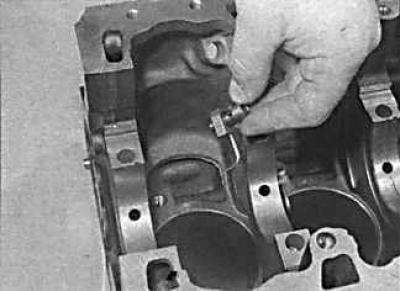
2. On diesel engines, remove the oil sprayers on the inside of the pistons. On 1.7L engines, the oil sprayers are pressed into the cylinder block, while on 2.0L engines, they are bolted on.
3. Remove all traces of gaskets from the mating surfaces of the engine block.
4. Remove all oil line plugs. Use new plugs when installing.
5. Clean the dirtiest areas with steam.
6. Clean all oil holes and oil lines. Flush all internal passages with warm water until the water runs clear. It is necessary to completely dry the cylinder block and lubricate all mating surfaces with a thin layer of oil to prevent corrosion. Also lubricate the engine cylinders. If compressed air is available, use it to speed up the drying process and blow out all oil holes and lines.
7. Thoroughly clean all threaded holes using a tap with the appropriate thread size, then blow out the holes with compressed air.
8. Install the plugs into the oil line in the engine block and tighten them securely.
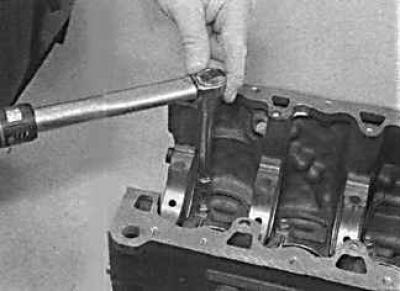
9. On diesel engines, install oil sprayers.
(Source is on this resource: www.opelbook.ru)
10. If the engine is not to be reassembled immediately, cover the cylinder block with a large plastic bag to protect it from contamination.
11. Visually inspect the cylinder block for corrosion. Check the integrity of the threads in the threaded holes.
12. Check the engine cylinder bore for wear by looking for a step at the top of the cylinder.
13. If you have a measuring tool, measure the bore diameter of each cylinder at the top (under the wear step) in the center and at the base parallel to the crankshaft axis. Then make the same measurements perpendicular to the crankshaft axis and compare them with the technical data. Repeat the measurement procedure on the remaining cylinder liners. If the wear exceeds the permissible values, it is necessary to bore the cylinders and install new pistons of a larger size. The larger piston size (0.5 mm) is available for all engines except the 1.7 l diesel engine.
Visitor comments