
OpelBook.ru
Cars AvtoVAZ Cars Mitsubishi Cars BMW Cars Mercedes Cars Nissan Cars Toyota Cars Chevrolet
English Русский
Български
Беларускі
Український
Српски
Hrvatski
Română
Polski
Slovenský
Magyar
 |  Sitemap  |  Contacts  |    


Main Astra Corsa Insignia Kadett Omega Vectra Zafira Others Articles
Frontera A (1991-1998, petrol) Frontera B (1998-2004) Ascona C (1981-1988) Vivaro A (2001-2014)
  • Main
  • Opel
  • Frontera A
  • General information
  • Maintenance
  • Checking the power steering fluid level

Checking the power steering fluid level (Opel Frontera A)

            0

1. Check the power steering fluid level periodically to avoid vehicle handling problems such as damage to the steering pump. Proceed as follows:

Caution: Do not keep the steering wheel turned all the way to one side or the other for more than five seconds. This may damage the steering pump.
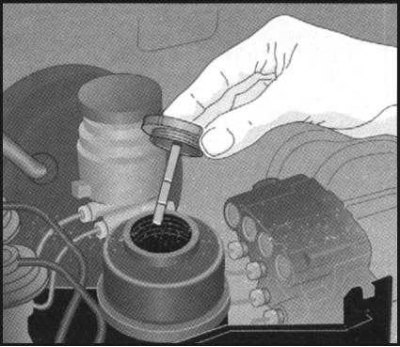

2. The power steering system reservoir has a screw-on cap with a measuring probe built into it.


2. The power steering system reservoir has a screw-on cap with a measuring probe built into it.

3. Park the vehicle on a level surface and apply the parking brake.
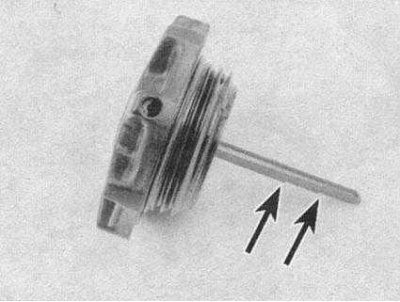
4. Start the engine and warm it up to normal temperature. With the engine idling, turn the steering…


4. Start the engine and warm it up to normal temperature. With the engine idling, turn the steering wheel from lock to lock several times to bleed air from the steering system. Turn off the engine, remove the reservoir cap by turning it counterclockwise, wipe the dipstick dry and close the cap. Open the lid again and check the fluid level. It should be between the two marks.


5. Add liquid in small amounts until it reaches the desired level.

Caution! Do not allow liquid to overflow. If this does happen, remove the excess with a clean syringe. Close the lid.


6. If frequent fluid additions are required, check the power steering hoses and fittings for signs of wear and leaks (see section Checking the condition and replacing the engine compartment hoses).

7. Check the condition and tension of the drive belt (see section Checking the condition, adjusting the tension and replacing the drive belt (only for motors with tension control)).

The article was published on the website: www.opelbook.ru


This article is available at russian, bulgarian, belarusian, ukrainian, serbian, croatian, romanian, polish, slovak, hungarian
Checking the article: Meshcheryakov Damir

Share information:

Previous articles
Opel Frontera A: Maintenance
Next articles

Changing engine oil and oil filter
Checking the condition of the tires and their pressure
Checking fluid levels
Information about car setup
Routine car maintenance
Schedule of current maintenance
Wheel rotation
Checking the condition and replacing the engine compartment hoses
Checking the condition, adjusting the tension and replacing the drive belt (only for engines with tension adjustment)
Checking and adjusting engine idle speed and CO levels
Checking battery condition, care and charging
Checking and replacing spark plugs


See similar ones from other Opel car manuals:
▶ Checking the fluid level in the power steering reservoir Opel Astra G (1998-2004, petrol)
▶ Checking the power steering fluid level Opel Corsa C (2000-2006, petrol)
▶ Checking the level and topping up the power steering fluid Opel Insignia A (2008-2017)
▶ Checking the power steering fluid level Opel Zafira A (1999-2005, petrol)
▶ Power Steering Fluid Level Opel Vectra A (1988-1995, petrol)
Link to this page in different formats

Visitor comments


No comments yet


How much will 47 + 14 =


Vivaro A (2001-2014) 
  • General information
  • User manual
  • Power unit
  • Petrol engine F4R
  • Diesel engine F9Q
  • Diesel engine G9U
  • Transmission
  • Clutch and drive shafts
  • Manual gearbox
  • Chassis
  • Front suspension
  • Rear suspension
  • Brake system
  • Body
  • Exterior
  • Interior
  • Electrical equipment
  • Heating and ventilation
  • Air conditioner
  • Equipment and devices
  • Electrical diagrams
Ascona C (1981-1988) 
  • General information
  • Maintenance
  • Power unit
  • Gasoline engines
  • Diesel engines
  • Cooling system
  • Fuel and exhaust system
  • Contact ignition system
  • Contactless ignition system
  • Transmission
  • Clutch
  • Mechanical gearbox
  • Automatic gearbox
  • Drive shafts
  • Chassis
  • Steering
  • Brake system
  • Car suspension
  • Body
  • Exterior
  • Interior
  • Doors and windows
  • Electrical equipment
  • Equipment and devices
  • Power devices
  • Electrical circuits
Frontera B (1998-2004) 
  • General information
  • User manual
  • Maintenance
  • Power unit
  • Petrol engines 2.2 l
  • Petrol engines 3.2 l
  • Diesel engines 2.2 l
  • Cooling system
  • Fuel system (petrol)
  • Fuel system (diesel)
  • Ignition system
  • Transmission
  • Clutch
  • Manual gearbox MUA5C
  • Automatic gearbox 4L30E
  • Chassis
  • Suspension and axles
  • Steering
  • Brake system
  • Body
  • Exterior
  • Interior
  • Doors, locks and windows
  • Heating and air conditioning
  • Electrical equipment
  • Power devices
  • Equipment and devices
  • Lighting and signaling
  • Electrical diagrams
Frontera A (1991-1998, petrol) 
  • General information
  • Introduction to guide
  • User manual
  • Maintenance
  • Power unit
  • Engine repair
  • Lubrication system
  • Cooling system
  • Power and exhaust system
  • Engine electrics
  • Transmission
  • Clutch
  • Mechanical gearbox
  • Cardan shafts
  • Chassis
  • Brake system
  • Front suspension
  • Rear suspension
  • Steering
  • Body
  • Repair and care
  • Electrical equipment
  • Equipment and devices
  • Electrical circuits
OpelBook.ru © 2017–2026 · Mobile version · · Sitemap: EN BG BY UA RS HR RO PL SK HU · Feedback · Site search
Astra F, petrol · Astra G, petrol · Astra G · Astra H · Astra J, petrol · Corsa B · Corsa C, petrol · Corsa C · Insignia A · Kadett D · Kadett E · Omega A · Omega B · Omega B2 · Vectra A, petrol · Vectra A · Vectra B, petrol · Vectra B · Vectra C · Zafira A, petrol · Frontera A, petrol · Frontera B · Ascona C · Vivaro A ·
We want your visit to be comfortable 🤝! We use cookies 🍪 to make that happen.