


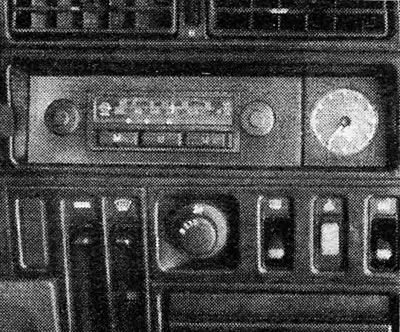
Figure 12.74. Location of the radio receiver
1. A radio or tape recorder is a very expensive piece of electrical equipment and will only work best if it is installed correctly. It is pointless to expect the same sound quality that you might get in a concert hall from a receiver hanging on the dashboard and speakers located near the rear seat or on the rear shelf. If you do not want to install the equipment yourself, there are many workshops that will help you with this issue.
2. Make sure that the receiver you purchase has the same polarity as your vehicle. For polarity-adjustable receivers, be sure to ensure the polarity is set correctly for your vehicle before installing the receiver.
3. It is very difficult to give detailed instructions for installing the receiver, speakers and antenna, since this question is decided only in accordance with the wishes and possibilities of the owner, but the following points contain recommendations applicable to all types of installation of such equipment.
Radio receivers
4. Most radios have standard dimensions - 18 cm long and 5 cm wide. In this case, they will fit the dimensions of the hole provided in the car. Alternatively, you can purchase a special console that is installed between the dashboard and the floor, or on the transmission tunnel. These same consoles can be used to accommodate additional switches if needed.
5. Some radios are supplied with a mounting bracket and corresponding instructions; others will require the fabrication of drilled and bent metal strips that form the support brackets. These strips can be purchased at most auto specialty stores. It is necessary to properly ground the receiver by running a separate ground wire between the radio housing and the vehicle body.
6. Follow the manufacturer's instructions when connecting the radio to the vehicle's electrical circuit. It is necessary to install a 1-2 Amp fuse on the receiver power supply wire; a choke may also be required (see next section). Take the power wire from the bottom of the hazard warning switch (see Figure 12.75).
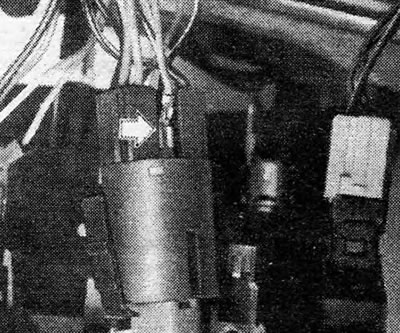
Figure 12.75. Receiver power wire going to the hazard warning switch - indicated by the arrow
7. The type of antenna used in each specific case depends solely on the individual wishes of the owner. Generally speaking, the higher the antenna, the better the reception. It is best to install an antenna that can be easily removed, especially if you use a mechanical car wash or live in an area where cars are often vandalized. In this case, the electric antennas can be raised or lowered automatically, in accordance with the switching on or off of the radio receiver. However, they can present more problems than conventional hand-operated antennas.
8. When choosing the location of the antenna, the following points should be taken into account:
- (a) The antenna wire should be the shorter the better; this means that it is better to install the antenna on the front of the car
- (b) The antenna should be installed as far as possible from the ignition distributor and high-tension wires
- (c) The part of the antenna that is below the mounting point must not touch the wheels or anything else
- (d) If possible, the antenna should be positioned so that its center wire does not pass through the engine compartment
- (d) The plane of the panel on which the antenna mount is located shall not be at an angle such that the antenna cannot be positioned vertically (if you look at it in relation to the car). Most antennas have some degree of adjustment
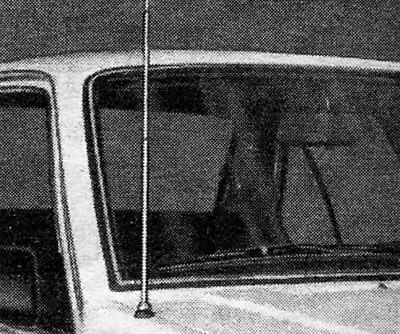
Figure 12.76. Antenna location on the front wing
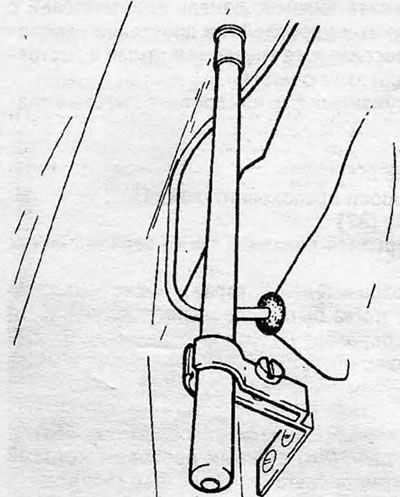
Figure 12.77. The lower antenna support and the rubber cap of the wire going into the cavity in the area of the lower right front part of the car
9. Having decided on the location of the antenna installation, it is necessary to make a relatively large hole in the panel. The exact size of the hole will depend on the type of antenna, although in general the diameter of the hole is 19 mm. Once you have made the required hole, sand the edges and then coat them with a special paint to prevent corrosion.
10. Install the antenna according to the manufacturer's instructions. If the antenna is too tall, or if it protrudes too far below the mounting panel, you can install a support for it. Such a support can be made from the metal strips mentioned earlier. This support should be secured in place properly. To ensure the best reception, it is recommended to install a ground wire between the antenna and the vehicle body.
11. You will probably need to drill one or two holes in the car body in order to pass the antenna wire through them and into the car. If so, make sure the holes have rubber caps on them to protect the wire and prevent corrosion.
12. The placement and installation of speakers depends mainly on their type. Generally speaking, the speakers fit into the air vents on the front panel. In such cases, simply remove the protective grilles from their places and attach the speakers with bolts or screws. Be especially careful not to damage the speaker diaphragm when doing this. It's also a good idea to install a spacer between the speaker frame and the mounting plate. To prevent vibration, some speakers come pre-equipped with such a pad.
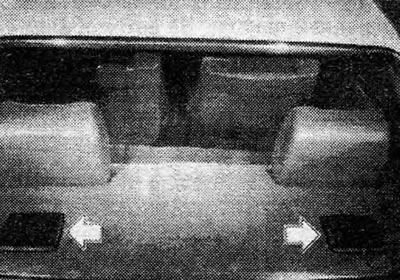
Figure 12.81. Rear Speaker Layout - Saloon
13. If the receiver is equipped with speakers that can be installed nearby, simply attach them to the mounting panel using self-tapping screws.
14. When connecting a rear mounted speaker to the receiver, the wires should be routed through the vehicle under the carpet or floor mats, preferably along the sides where passengers cannot step on them. Make the appropriate connections according to the manufacturer's instructions.
15. For best results, insert the speakers so that they are flush with the interior surfaces (for example, doors or luggage compartment).
16. When installing speakers on the front doors, make sure in advance that there is enough space for them and that they will not touch the lock or window lift mechanism. Place the speaker against the door trim and trace around its perimeter. Then, with the speaker removed, draw a second line inside the first one so that you can provide good support for the back of the speaker, but at the same time provide a solid support for its flange. Once you are confident that the line you have drawn is correct, drill several small holes around its perimeter. Then insert a jigsaw blade into one of the holes and cut along the line you drew until the center piece can be removed.
17. Sand the edges of the resulting hole and cover them with paint to prevent corrosion. Cut a suitable hole in the inner door trim panel so that it can then be completely covered by the speaker grille. Now drill a hole in the edge of the door and in the door frame. These holes will be needed to run the speaker wiring. Route the speaker wires through the holes in the door and door frame. Don't forget to install the rubber caps. After completing the wiring, reinstall the interior door trim panel and secure the speaker to the door using self-tapping screws.
18. Now you have several meters of additional electrical wiring in your car. Secure it properly with PVC tape. Do not leave any dangling wires.
19. The receiver should now work. However, before you put away your tools, you need to adjust the antenna. Unless specifically instructed by the manufacturer, proceed as follows: Find a station with low signal strength in the medium wave range and slowly turn the tuning knob until the loudest sound is reached. The radio is now aligned with the antenna.
Tape recorders
20. The instructions for installing stereo tape recorders are the same as for installing radio receivers. Tape recorders are generally not subject to interference to the same extent as receivers, although it can happen, so their location requirements are not as restrictive. If possible, it is better to place the tape recorder on a flat surface. The driver must also have easy access to the tape recorder, provided that he (the driver) is wearing a seat belt.
Manufacturer-installed radios
21. If the vehicle is equipped with a factory-installed radio, the radio may be removed for repairs before removing the dash panel (refer to Chapter 11).
22. Disconnect the battery.
23. Remove the ashtray and center switch panel (including 6 switches) from the front panel.
24. Remove the mounting screws from the bracket that supports the receiver.
25. Pull the receiver forward so that you can disconnect the power, antenna and speaker wires from it.
26. On some models, the rear speakers are installed in the side panels of the rear shelf (see photo 46.26).
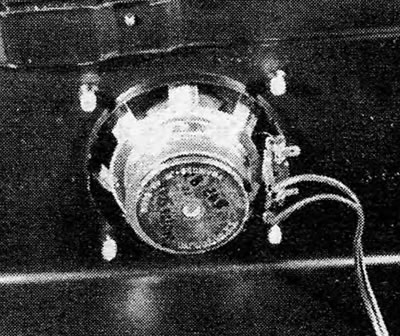
Photo 46.26 Typical rear speaker mount
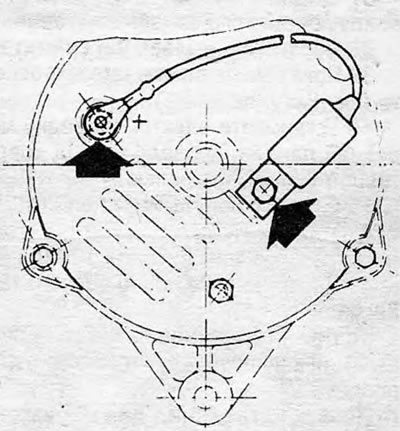
Figure 12.82. Interference suppressor installed on a Detco-Remy generator
Visitor comments