


The crankshaft is supported by five bearings, the central bearing has flanges for adjusting lateral play.
The connecting rods are attached to the crankshaft by bearings, and to the pistons by piston pins, which are fixed in the upper head of the connecting rod. The pistons are aluminum and contain three piston rings: two compression rings and a third - an oil scraper ring.
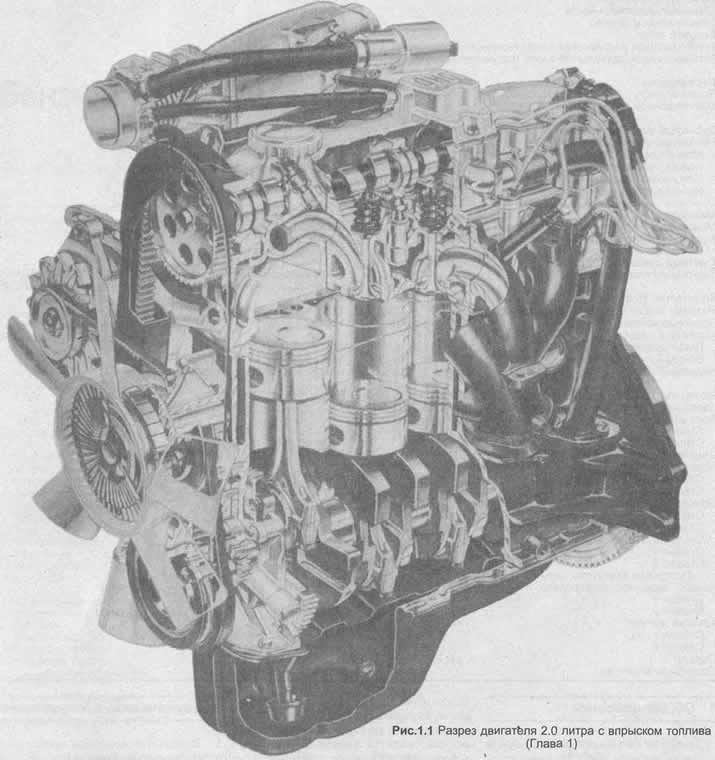
The camshaft is driven by a toothed belt from the crankshaft and controls the valves via rocker arms. The rocker arms rest on hydraulic self-adjusting valve tappets, which automatically eliminate any gap between the rocker arm and the valve stem. The intake and exhaust valves are closed by a single spring and move in guides that are pressed into the cylinder head.
The article was published on the website OPELBOOK
Engine lubrication is provided by a pump housed in a housing attached to the front end of the cylinder block. The oil pump is driven by the crankshaft, while the distributor rotor and, on carbureted models, the fuel pump, are driven by the camshaft. Crankcase gases are fed into the camshaft housing through a pipe and then into the intake manifold.
Visitor comments