
OpelBook.ru
Cars AvtoVAZ Cars Mitsubishi Cars BMW Cars Mercedes Cars Nissan Cars Toyota Cars Chevrolet
English Русский
Български
Беларускі
Український
Српски
Hrvatski
Română
Polski
Slovenský
Magyar
 |  Sitemap  |  Contacts  |    


Main Astra Corsa Insignia Kadett Omega Vectra Zafira Others Articles
Frontera A (1991-1998, petrol) Frontera B (1998-2004) Ascona C (1981-1988) Vivaro A (2001-2014)
  • Main
  • Opel
  • Ascona C
  • Chassis
  • Car suspension
  • Control Bracket Support — Removal and Installation

Control Bracket Support — Removal and Installation (Opel Ascona C)

            0

Contents: All models. ⬇ Short type support - 1.3, 1.6 except…⬇ Long type support - 1.6 GLS and 1.8. ⬇

All models.


1. The check bracket is usually removed during engine, gearbox or drive shaft disassembly, and the operations described here are aimed at accomplishing just that purpose. However, if you are removing the support for replacement or repair, then you must first disconnect the control bracket from it by unscrewing the corresponding bolts.

2. Raise the front of the car and remove the road wheel.

3. Disconnect the anti-roll rod from the control bracket by unscrewing the nuts on the link at the end of the rod.

Short type support - 1.3, 1.6 except GLS


4. Unscrew the two smaller bolts that secure the support to the underbody (photo).
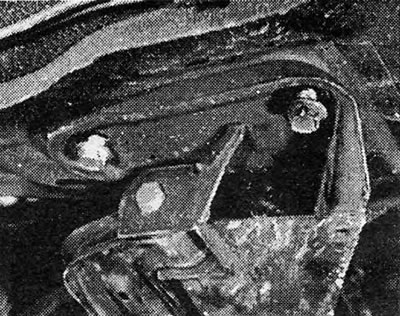
Photo 9.4 The smaller control bracket support bolts have been unscrewed.

Photo 9.4 The smaller control bracket support bolts have been unscrewed.


5. Unscrew the larger bolt from underneath where it is located in the center, but do not remove it.

6. The support is located on the positioning dowel and you will now need an extractor to remove it.

7. A suitable tool can be made by modifying a two-legged extractor as shown (photo). The important detail is the shape of the anchor bolt heads, which must be inserted into the small rectangular recesses located at the bottom of the support. Then they need to be turned 90 degrees to provide reliable support for the tool (photo).
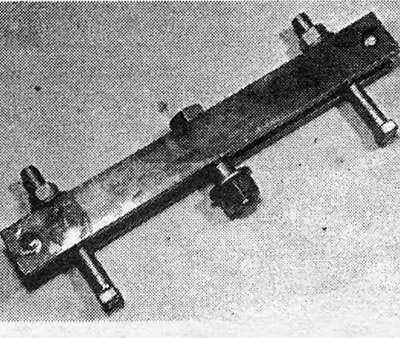


Photo 9.7A Tool for removing the control bracket support.
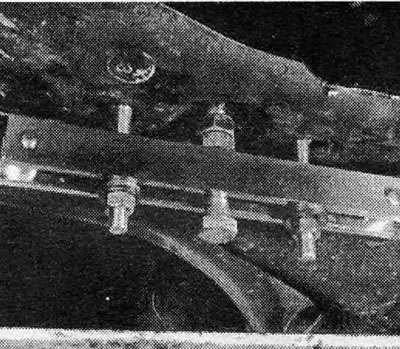
Photo 9.7A Tool for removing the control bracket support.


Photo 9.7B Removing the control bracket support.

Photo 9.7B Removing the control bracket support.


8. If the extractor bolt is now positioned opposite the head of the larger support bolt and you tighten it, this will cause the support to jump off the dowel and hang on the partially unscrewed center bolt (photo).
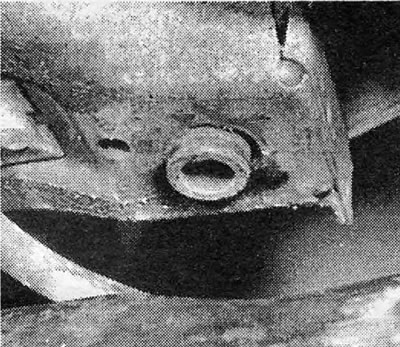
Photo 9.8 Position pin of the short type control bracket support.

Photo 9.8 Position pin of the short type control bracket support.


9. Remove the central bolt and lower the support (photo).
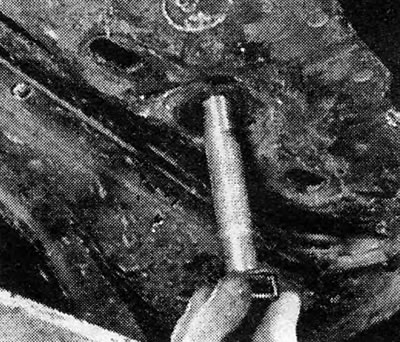
Photo 9.9 Removing the large control bracket support mounting bolt.

Photo 9.9 Removing the large control bracket support mounting bolt.


10. Assembly is carried out in the reverse order, but all threaded holes at the bottom must be cleaned of the old mixture blocking the threads. Always use new bolts that come already treated with a thread locking compound.

11. Tighten the support bolts to the specified torque value (photo).
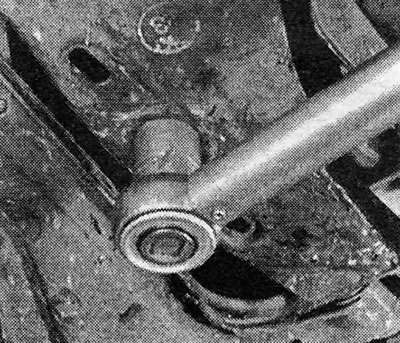
Photo 9.11 Tightening the larger control bracket support mounting bolt to the specified torque…

Photo 9.11 Tightening the larger control bracket support mounting bolt to the specified torque value.


Long type support - 1.6 GLS and 1.8.


12. On these models the control bracket support is held in place by six bolts and is not located on a dowel like the short type support just discussed (photo).
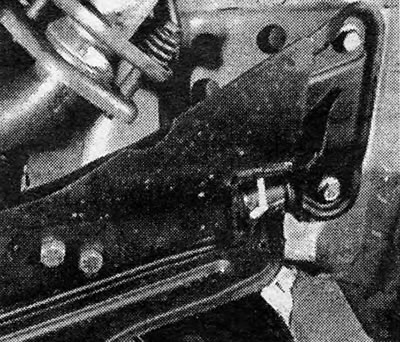


Photo 9.12A Center and rear control bracket support bolts (long type).
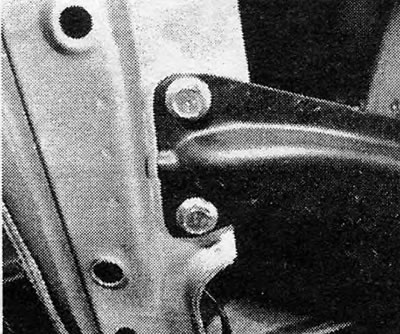
Photo 9.12A Center and rear control bracket support bolts (long type).


Photo 9.12B Front bolts on control bracket support (long type).

Photo 9.12B Front bolts on control bracket support (long type).


13. Apart from this, and the fact that you do not need any special tools, the removal and installation operations are similar to those just described; but before removing the support, sketch out the support positions front and back to ensure proper assembly later.

14. Bolt threads must be cleaned and lubricated with fresh thread locking compound before they can be tightened to the specified torque values.
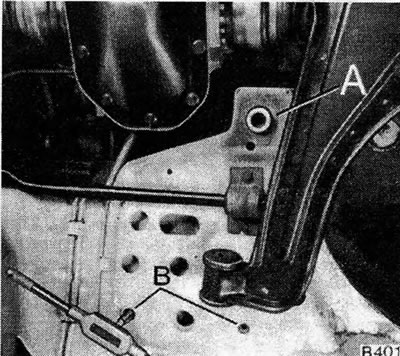
Figure 10.11. Installing the suspension control bracket support: A - Fastening dowel.; B - Cleaning…

Figure 10.11. Installing the suspension control bracket support: A - Fastening dowel.; B - Cleaning the threaded holes of the mounting bolts.


This article is available at russian, bulgarian, belarusian, ukrainian, serbian, croatian, romanian, polish, slovak, hungarian
Checking the article: Kornev Georgy

Share information:

Previous articles
Opel Ascona C: Car suspension
Next articles

Control Bracket Ball Joint — Replacement
Control Bracket Bushings — Replacement
Front Suspension Control Bracket — Removal and Installation
Front Suspension Strut — Inspection
Front Hub Bearing — Replacement
Front suspension struts — removal and installation
Front anti-roll bar
Rear hub bearings — lining
Rear Hub Bearings — Replacement
Rear shock absorber — removal, inspection and installation
Rear anti-roll bar — removal and installation
Rear Coil Spring — Removal and Installation


See similar ones from other Opel car manuals:
▶ Rear bench seat backrest support bracket (Corsa C) Opel Corsa C (2000-2006)
▶ Replacing the front bumper center support bracket Opel Insignia A (2008-2017)
▶ Exhaust gas toxicity control Opel Astra F (1991-1998, petrol)
▶ Electronic control and measuring devices Opel Kadett E (1984-1995)
▶ Temperature, fuel and control lamps Opel Omega A (1986-1993)
Link to this page in different formats

Visitor comments


No comments yet


How much will 31 + 25 =


Vivaro A (2001-2014) 
  • General information
  • User manual
  • Power unit
  • Petrol engine F4R
  • Diesel engine F9Q
  • Diesel engine G9U
  • Transmission
  • Clutch and drive shafts
  • Manual gearbox
  • Chassis
  • Front suspension
  • Rear suspension
  • Brake system
  • Body
  • Exterior
  • Interior
  • Electrical equipment
  • Heating and ventilation
  • Air conditioner
  • Equipment and devices
  • Electrical diagrams
Ascona C (1981-1988) 
  • General information
  • Maintenance
  • Power unit
  • Gasoline engines
  • Diesel engines
  • Cooling system
  • Fuel and exhaust system
  • Contact ignition system
  • Contactless ignition system
  • Transmission
  • Clutch
  • Mechanical gearbox
  • Automatic gearbox
  • Drive shafts
  • Chassis
  • Steering
  • Brake system
  • Car suspension
  • Body
  • Exterior
  • Interior
  • Doors and windows
  • Electrical equipment
  • Equipment and devices
  • Power devices
  • Electrical circuits
Frontera B (1998-2004) 
  • General information
  • User manual
  • Maintenance
  • Power unit
  • Petrol engines 2.2 l
  • Petrol engines 3.2 l
  • Diesel engines 2.2 l
  • Cooling system
  • Fuel system (petrol)
  • Fuel system (diesel)
  • Ignition system
  • Transmission
  • Clutch
  • Manual gearbox MUA5C
  • Automatic gearbox 4L30E
  • Chassis
  • Suspension and axles
  • Steering
  • Brake system
  • Body
  • Exterior
  • Interior
  • Doors, locks and windows
  • Heating and air conditioning
  • Electrical equipment
  • Power devices
  • Equipment and devices
  • Lighting and signaling
  • Electrical diagrams
Frontera A (1991-1998, petrol) 
  • General information
  • Introduction to guide
  • User manual
  • Maintenance
  • Power unit
  • Engine repair
  • Lubrication system
  • Cooling system
  • Power and exhaust system
  • Engine electrics
  • Transmission
  • Clutch
  • Mechanical gearbox
  • Cardan shafts
  • Chassis
  • Brake system
  • Front suspension
  • Rear suspension
  • Steering
  • Body
  • Repair and care
  • Electrical equipment
  • Equipment and devices
  • Electrical circuits
OpelBook.ru © 2017–2026 · Mobile version · · Sitemap: EN BG BY UA RS HR RO PL SK HU · Feedback · Site search
Astra F, petrol · Astra G, petrol · Astra G · Astra H · Astra J, petrol · Corsa B · Corsa C, petrol · Corsa C · Insignia A · Kadett D · Kadett E · Omega A · Omega B · Omega B2 · Vectra A, petrol · Vectra A · Vectra B, petrol · Vectra B · Vectra C · Zafira A, petrol · Frontera A, petrol · Frontera B · Ascona C · Vivaro A ·
We want your visit to be comfortable 🤝! We use cookies 🍪 to make that happen.