


Contents: Removal ⬇ Installation ⬇
Remove the cylinder head without removing the engine.
Signs of a bad head gasket include: loss of power, loss of coolant, loss of oil, or coolant in the engine oil.
In addition, a defective cylinder head gasket is determined by the presence of bubbles in the coolant. To do this, remove the cap from the expansion tank and start the engine. Bubbling coolant is a sign of a defective cylinder head gasket.
Removal
Caution: Remove the head on a cold engine (at room temperature approximately 20°C).
Disconnect the ground cable from the battery.
Remove the air filter with the heating hose, see paragraph 4.44.
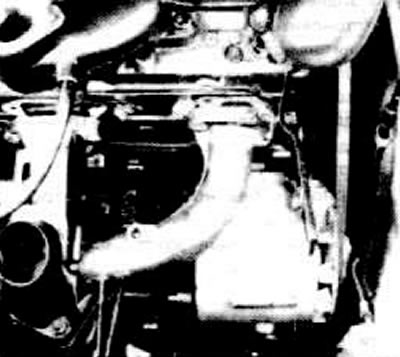
Remove the exhaust manifold from the cylinder head, press it down and tie it up.
Drain the coolant into a container of suitable size, see p. 3.2.
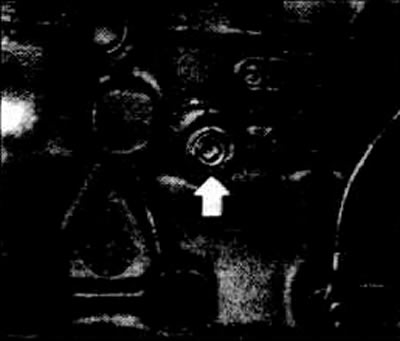
Remove the coolant drain plug from the cylinder block.
Note: Immediately after draining, cover the plug with sealant (for example, Curil), screw in and tighten.
Mark and remove all cable drives and electrical connectors from the carburetor.
Remove the carburetor.
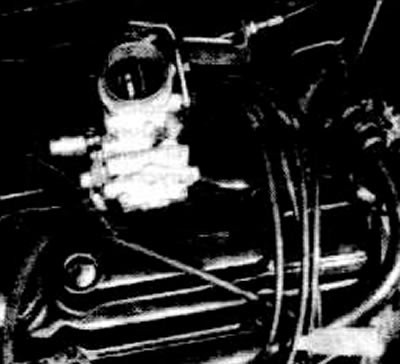
Remove the intake pipe.
Remove the upper and lower coolant hoses from the thermostat housing and water pump.
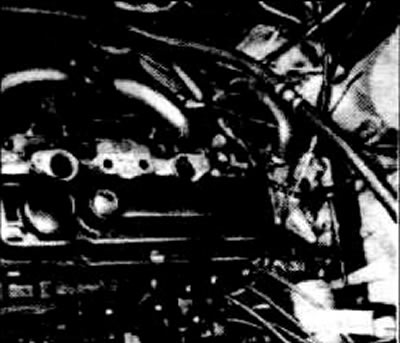
Remove the heater hoses at the coolant pump and cylinder head.
Loosen the generator tensioner bracket and remove the V-belt.
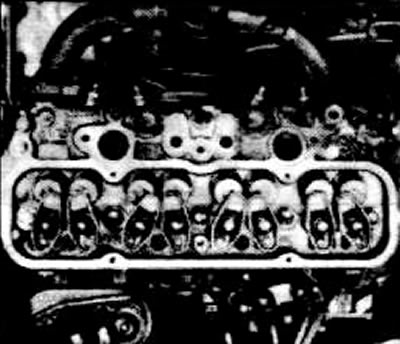
Remove the cylinder head cover.
Loosen the rocker arm nuts to allow the pushrods to be removed.
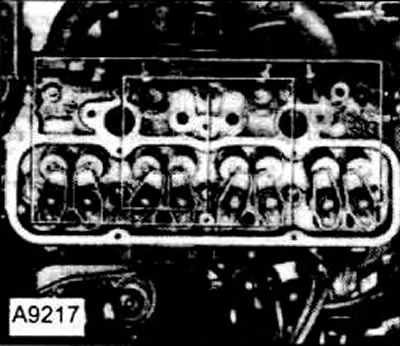
Caution: Before removing the cylinder head, it is imperative to remove the pushrods because they may fall into the oil pan.
Unscrew the cylinder head bolts in a spiral from the inside to the outside, see the figure. First unscrew all the bolts by 1/2 turn, then unscrew them completely.
Remove the bolts.
Remove the cylinder head.
Installation
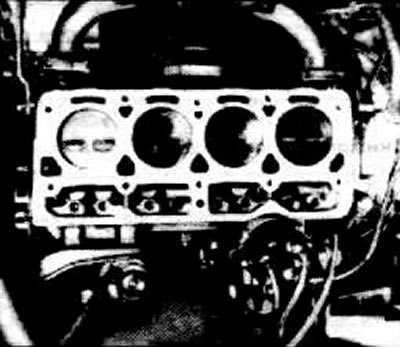
Clean the mating surfaces of the block and cylinder head.
Check the evenness of the cylinder block surface, see p. 1.20.
Check the evenness of the cylinder head surface, see paragraph 1.19.
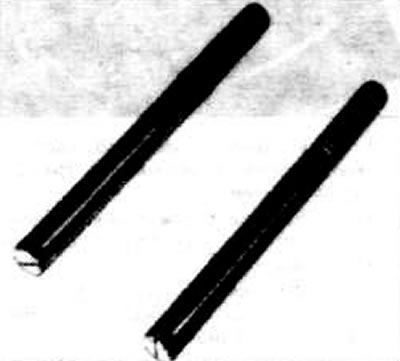
Make two guide rods (cylinder head bolts with cut off head), see figure.
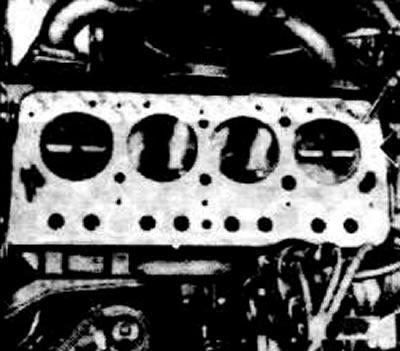
Screw the guide rods into the cylinder block.
Apply a new cylinder head gasket without sealant, paying attention to the "Oben" (top) mark, see arrow in the figure.
Install the cylinder head.
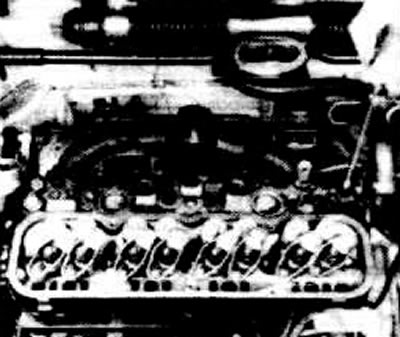
Tighten the cylinder head bolts by hand until the bolt heads are flush.
Caution: Use new cylinder head bolts for every repair.
Remove the guide rods and replace them with cylinder head bolts.
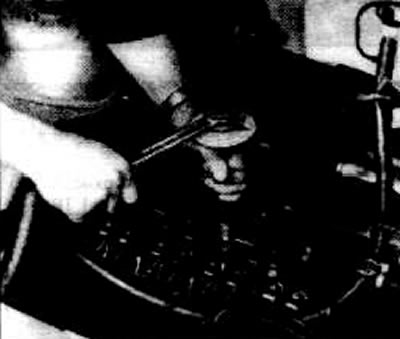
Tighten the head bolts in a spiral from the inside to the outside with a force of 25 Nm, see the section "Removal".
Then tighten the cylinder head bolts in three passes in a spiral from the inside to the outside.
On the second pass, tighten the bolts with a wrench by 60° in a spiral from the inside to the outside, see Figure A9217.
On the third pass - another 60° in a spiral. Make a 60° mark on the cylinder head cover in advance. To do this, put the key on the bolt and make a mark at an angle of 60°.
On the fourth pass, tighten the bolts in a spiral another 60°.
Note: Further tightening is not required after 1000 km.
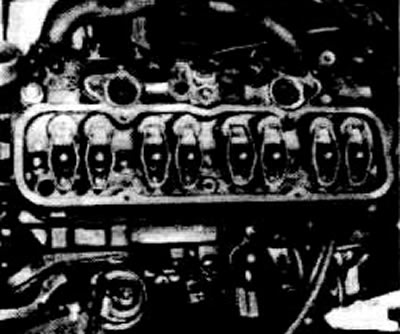
Insert the lubricated push rods.
Install the rocker arm and hand tighten the nut.
Caution: After installing the cylinder head, the valves must be adjusted on a cold engine.
Valve clearances: intake 0.15, exhaust 0.25 mm.
Adjust the valve clearances. To do this, set the piston of the 1st cylinder to TDC.
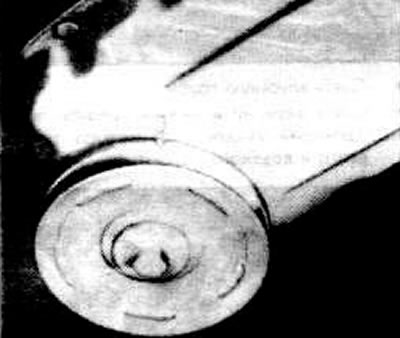
The piston of the first cylinder will be at TDC when the convex mark on the timing cover is opposite the spline on the crankshaft pulley, and if the distributor rotor points to the mark on the distributor housing.
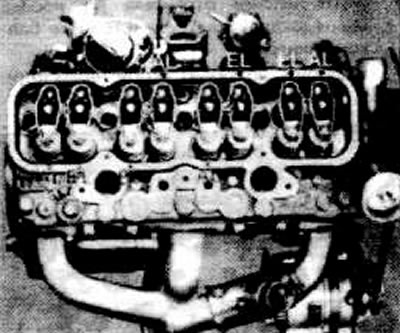
The location of the valves can be seen in the figure.
If the piston of the 1st cylinder is in the 8th ignition position, the following valves can be adjusted:
- 1st cylinder - intake and exhaust valve
- 2nd cylinder - intake valve 3rd cylinder - exhaust valve.
Check the valve clearance with a suitable feeler gauge. The feeler gauge should move with difficulty between the rocker arm and the end of the valve stem. Otherwise, adjust the clearance, see paragraph 1.18.
Turn the crankshaft a full revolution (360°) using a wrench on the crankshaft pulley.
Now you can check and adjust the clearance of the following valves:
Set the valve clearance:
- 4th cylinder - intake and exhaust valve
- 3rd cylinder - intake valve
- 2nd cylinder - exhaust valve
Note: After adjustment, check the valve clearances again with the engine warm and adjust if necessary, see paragraph 1.18.
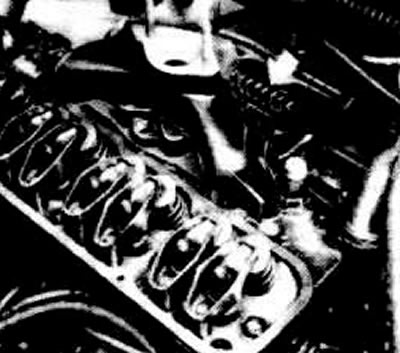
Screw on the intake manifold with a new gasket and tighten to 23 Nm.
Note: Pay attention to the ignition wire holder, see arrow in the figure.
Screw the exhaust manifold with a new gasket to the cylinder head and tighten the bolts to 23 Nm.
Screw the exhaust pipe bracket to the rear engine mount.
Install and tighten the timing cover with a new gasket.
Install the carburetor with a new gasket and tighten to 18 Nm.
Connect all electrical wires to the carburetor.
Install all cable drives without tension, see item 4.
Connect the ignition cable.
Put on and tighten the V-belt, see item 22.2.
Connect the upper and lower coolant hoses to the thermostat housing and water pump housing.
Connect the heater hose to the water pump.
Fill the coolant through the expansion tank until it comes out of the heater hose branch, see p. 3.2.
Secure the air filter, see paragraph 4.44.
Connect the ground cable to the battery.
Start the engine and check the seals for leaks.
Note: Check the valve clearance again when the engine is warm, see paragraph 1.18.
Visitor comments