


The KADETT D is equipped with either an OHC or OHV engine (with overhead valves). In an OHV engine, the cylinder block and cylinder head are made of cast iron. The engine contains a camshaft that operates the valves from the tappets via rocker arms. It is driven by the crankshaft via a roller chain.
All engines with a cylinder capacity of 1.3 liters and above (both versions have 1.2-liter engines) type ONS. The camshaft is located in the cylinder head, made of light metal. The camshaft is driven by the crankshaft through a toothed belt, and in turn, through levers, it drives the vertical intake and exhaust valves. Hydraulic valve clearance compensators automatically select the gap. The engine is lubricated by an oil pump, which is mounted in front of the cylinder block and is driven by the crankshaft. From the pump, oil is supplied through holes and channels to the crankshaft and camshaft bearings, as well as to the cylinder mirror.
The coolant pump is located at the front of the cylinder block and is driven by a toothed belt.
To prepare the combustible mixture, there is a carburetor or fuel injection system, which operate, as a rule, without requiring maintenance. The ignition spark is formed by an electronic ignition system (except for 1-liter and partially 1.2-liter OHV engines), which operates virtually maintenance-free. Setting the ignition timing is only necessary in the contact ignition system of all one-liter engines, as well as OHV engines 1.2-liter.
The OPEL KADETT D is also available with a diesel engine. A separate chapter is devoted to the diesel engine, and special instructions for diesel engines are also given in other chapters.
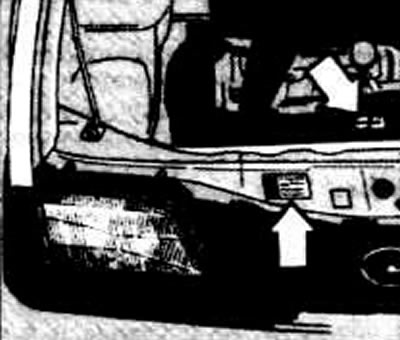
The engine number is stamped on the front wall of the engine block (top arrow)
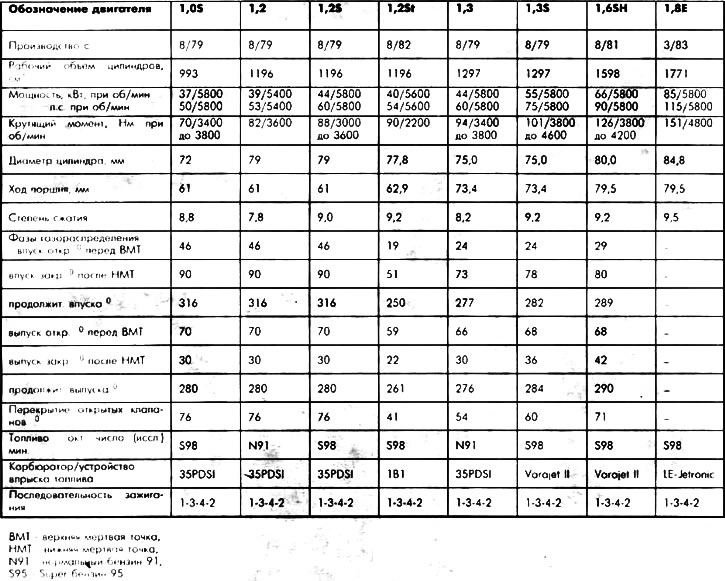
1.1 Main characteristics of the engine
[Text copied from an internet website www.OpelBook.ru]
Visitor comments