


Contents: Position P (parking) ⬇ Position R (reverse) ⬇ Position N (neutral) ⬇ Position D (moving forward) ⬇ Forced downshifting ⬇ Selecting a driving mode ⬇ Mode D (moving forward) ⬇ 3 (third gear) ⬇ 2 (second gear) ⬇ 1 (first gear) ⬇ If there is a malfunction ⬇ Starting off on a steep incline ⬇ A safety mechanism that prevents the…⬇ Drive switching ⬇
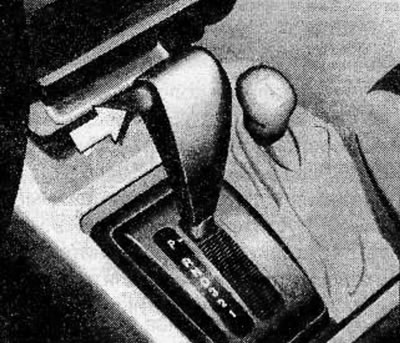
R - Parking
R - Reverse
N - neutral position
The engine can only be started after moving the selector lever to position P or N.
To move the selector lever from position P, turn on the ignition and press the brake pedal.
To move the selector lever to position P or R, press the button located on the side of the selector lever handle.
R: Move the selector lever with the vehicle stopped, after applying the parking brake.
R: Move the selector lever with the vehicle stopped and the engine idling.
Warnings:
- Do not press the accelerator pedal if the selector lever is in the R position or any forward position and the brake pedal is depressed. The idle speed of a cold engine is high, so be careful when moving the selector lever as the engine warms up.
- Never move the selector lever to the P (Park) or R (Reverse) position while the vehicle is moving. This may result in an accident.
- Shifting the selector lever into the forward or reverse position while the engine is running at a speed higher than the idle speed may damage the automatic transmission.
Position P (parking)
In position P of the selector lever, the gearbox is locked and prevents the rotation of the vehicle's drive wheels. Before moving the lever to this position, be sure to wait until the vehicle has come to a complete stop.
Warning. Moving the lever to the P (Park) position while the vehicle is moving will cause the drive wheels to lock and the vehicle will become uncontrollable.
Position R (reverse)
In position R of the selector lever, the vehicle moves in reverse only. Before moving the selector lever to position R, make sure the vehicle is completely stopped and the engine is idling.
Position N (neutral)
In the N position of the selector lever, the automatic transmission is not locked, but the car will roll down even a slight incline unless the brake pedal is pressed or the parking brake is applied.
Position D (moving forward)
Always use this position for normal forward movement.
Forced downshifting
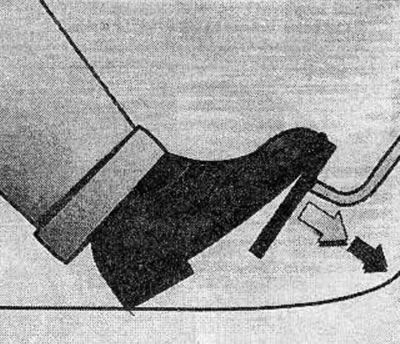
To achieve more power, for example when overtaking or climbing a steep hill, press the accelerator pedal all the way down, which will force the transmission to shift to the next lower gear.
Selecting a driving mode
D - automatically shifts gears from 1st to 4th
3 - gears are automatically shifted from 1st to 3rd
2 - gears are automatically switched from 1st to 2nd
1 - only 1st gear is engaged
Move the selector lever to position 1, 2 or 3 when high traction is required, or when climbing a steep slope.
Mode D (moving forward)
D is the normal position of the selector lever for forward movement. From the moment you start moving, the gearbox will automatically shift up to 4th gear.
To achieve more power, for example when overtaking or climbing a steep hill, press the accelerator pedal all the way down, which will force the transmission to shift to the next lower gear.
3 (third gear)
Move the selector lever to this position when climbing a hill while towing a trailer.
This operating mode also allows the use of engine braking on descents, while the automatic transmission will not shift above third gear.
2 (second gear)
Use 2 (second gear) to overcome climbs and to enhance engine braking on descents. This position also helps reduce wheel spin on slippery road surfaces. When the automatic transmission lever is in position 2 (second gear), the automatic transmission will not shift above second gear.
1 (first gear)
Move the selector lever to this position when high traction force is required, or when climbing a steep slope.
If there is a malfunction
If the indicator light is flashing
 , this means that there is a malfunction in the gearbox, and the electronic control of the gearbox switches to the backup program. In this case, manual gear shifting will be required.
Select 1st gear when starting off and climbing steep hills, and when engine braking is needed.
Select 2nd gear when the vehicle is moving at a speed of more than 25 km/h.
Select 3rd gear or D when the vehicle is moving at speeds greater than 80 km/h.
Contact your Opel dealer at the earliest opportunity to have the gearbox checked and repaired.
If the O! warning light comes on while the vehicle is moving, the transmission fluid temperature is very high or the transmission fluid needs to be replaced.
In this case, without stopping the vehicle, select the Sport program, reduce the load on the engine and move the selector lever to position 3 or 2. Do not stop the vehicle.
If the indicator lamp does not go out or flashes while driving, contact your Opel dealer to have the transmission checked and repaired.
Starting off on a steep incline
To move the vehicle from a standstill on a steep incline, press the brake pedal and move the selector lever to position D (moving forward).
Depending on the weight of the load being transported and the steepness of the slope, select the appropriate gear ratio and release the parking brake. Gently press the accelerator pedal while releasing the service brake.
Additionally:
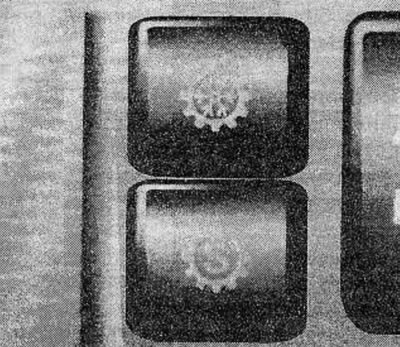
 - Sport mode;
  - Winter mode
When driving with the selector lever in position D, press the SPORT button. This will provide more energetic engine acceleration and improved braking.
A safety mechanism that prevents the selector lever from being moved inadvertently to position P, R, 2 or 1
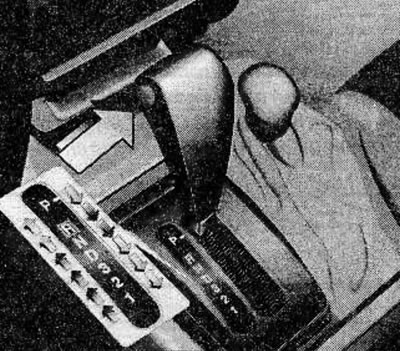
To move the selector lever to one of the above positions, press the button located on the side of the selector lever handle
 .
.
To move the selector lever from position R to position 3 or from position 1 to position N, it is not necessary to press the button on the selector lever handle
 .
.
As a safety precaution, when moving the selector lever from position P, it is necessary to turn on the ignition and press the brake pedal.
Drive switching
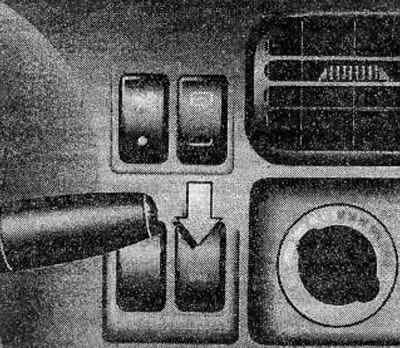
Click - four-wheel drive
Press again - two-wheel drive
Switching can be done with the engine running, whether the vehicle is stationary or moving. If the shifting is performed on a moving vehicle, the vehicle must be moving in a straight line at a speed of no more than 96 km/h.
When the all-wheel drive is engaged, the indicator lights up
 .
.
Visitor comments