


When bleeding, only add clean, unused brake fluid of the recommended type; never reuse brake fluid that has just been drained from the hydraulic system. Before you begin, make sure you have enough liquid.
If you believe that the hydraulic system is filled with a fluid of a non-recommended type, the brake system components and circuit must be flushed with clean fluid of the recommended type and all seals in the system must be replaced.
If brake fluid has leaked from the hydraulic system or air has entered the system as a result of a leak, correct the cause of the problem before bleeding the brake system.
Remove the cap from the brake system replenishment reservoir and screw a container filled with brake fluid onto the reservoir.
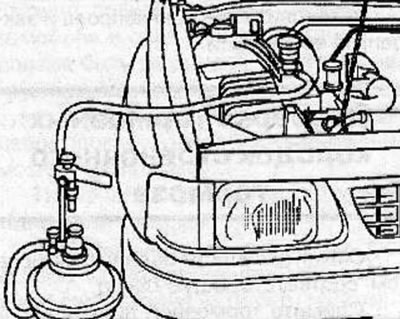
When bleeding under pressure, follow the bleeding equipment manufacturer's recommendations. When using a pressure bleeding kit, 15-20 psi of compressed air is required.
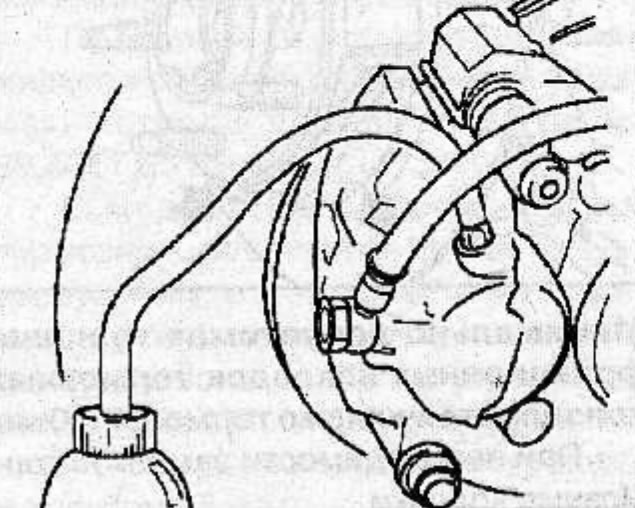
Remove the cap from the caliper bleed nipple and attach one end of the transparent hose to it, and insert the other end of the hose into a glass container of sufficient volume. Make sure the end of the hose is immersed in the liquid.
[The article was published on the website: OPELBOOK]
Bleeding begins after unscrewing the bleed nipple by half a turn.
After the brake fluid with air bubbles stops leaking and only clean brake fluid starts leaking, tighten the bleed screw all the way.
This method requires a large amount of brake fluid to prevent air from entering the master cylinder during the bleeding process, which often occurs if the fluid level in the reservoir is not maintained.
Pressure bleeding is effective when the system is difficult to bleed or when a complete system bleeding is performed during a routine brake fluid change.
Warnings:
- On vehicles equipped with anti-lock brake system (ABS), to properly bleed the brake system, disconnect the ABS connector from the fuse block mounted on the battery support. Do not press the brake pedal when the engine is not running, otherwise the servo may be damaged.
- If bleeding of the entire hydraulic brake system is required, start bleeding from the brake mechanism located farthest from the replenishment reservoir.
Remove the equipment for bleeding the hydraulic brake drive under pressure.
Add brake fluid to the reservoir and check the brake hydraulics for leaks.
Visitor comments