


2. Install the axle gears and satellites, spring discs and satellite axle into the differential box.
3. Install new retaining rings.
4. If you removed the speedometer pinion gear, heat the new pinion gear in hot water to 80°C and use a tube to drive it onto the differential case until it snaps into place. Check that the protrusions on the gear housing align with the cutouts in the differential box.
5. Heat the driven gear of the main transmission to 80°C and install it on the differential box. Insert new bolts and tighten them to the specified torque.
6. Install new tapered roller bearings on the differential box (if they were removed during disassembly).
7. If not already done, install the outer bearing races into the gearbox housing.
8. Install new drive shaft seals into the gearbox housing (if it hasn't been done yet) and fill the space between their lips with lubricant.
9. Lower the differential into the gearbox housing.
10. Install the sealing ring and oil seal on the bearing adjusting ring. Apply grease to the seal lips and to the threads of the adjusting ring (see photos).
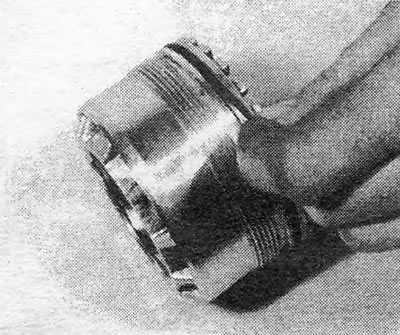
Photo 14.10A. Bearing adjusting ring seal.
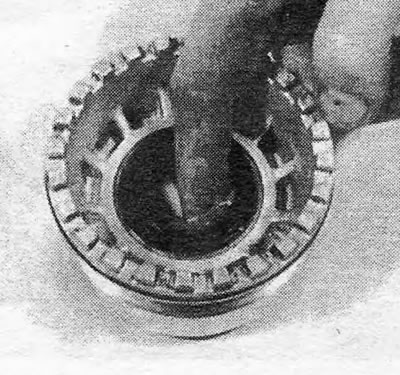
Photo 14.10B. Fill the space between the seal lips with grease.
11. Screw the adjusting ring into the gearbox housing and tighten it manually at this stage (see photo).
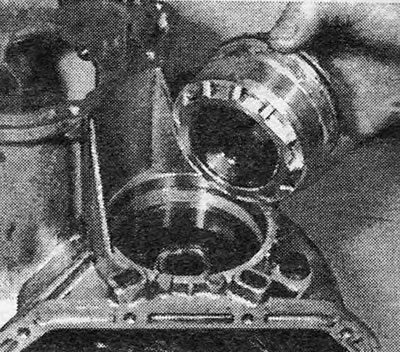
Photo 14.11. Installing the bearing adjusting ring.
12. Adjust the bearing using one of the following methods: (depending on whether the bearings were replaced or not).
13. Old bearing: screw in the adjusting ring so that the alignment marks made during disassembly of the box are aligned with each other. If there is an axial clearance, the ring can be additionally screwed in until a torque of 5.3-8.9 lb-ft is obtained (see fig. below, as for the case of a new bearing).
14. New bearing: The preload of the bearing must be adjusted by means of an adjustment ring so that a torque of 13.3-15.9 lb-ft is required for the slow rotation of the main drive gear and the bearing. If you do not have a special device for determining the torque, you should insert a wooden stick tapering on the cone (made of soft wood) into the splines of the semi-axial gear wheel, wrap the stick with twine and attach the other end of the twine to the spring scales. If the radius of the stick where the string comes off is about 1.0 inch, you will get a fairly accurate torque reading. Adjust the position of the adjusting ring until the desired torque is obtained.
15. Install the adjusting ring lock plate, being careful not to disturb its position. The hole for the locking plate bolt is made elongated specifically for this purpose.
16. Bolt the pressed steel cover with a new gasket to the gearbox housing.
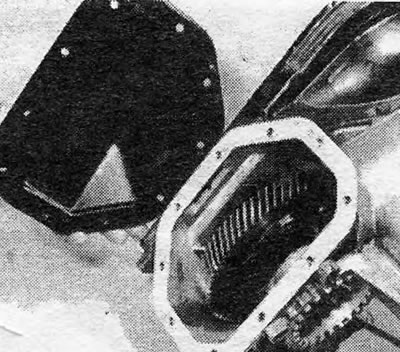
Photo 14.16. Installing the pressed steel cover with a new gasket.
17. Install the reverse intermediate gear shaft into the end cover of the gearbox, checking that the locking ball is in place.
18. Secure the 1/2 gear fork with a pin to its stem, but leave the pin protruding by approximately 2.0 mm.
19. Assemble and engage the driven shaft, drive shaft and reverse gear blocks so that the 1/2 gear fork, installed on its rod, is in the groove on the 1/2 gear synchronizer.
20. Install the assembled unit into the end cap. The job will be much easier if you have an assistant. Install the plunger rod lock (see photos).
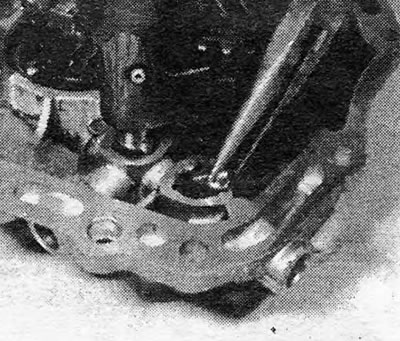
Photo 14.20A. Installing the short locking plunger.
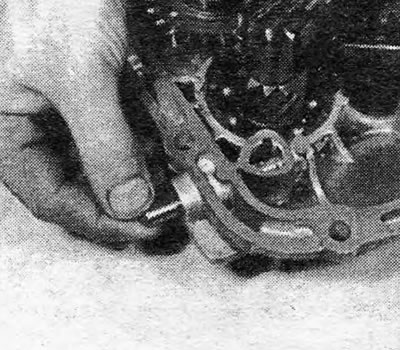
Photo 14.20B. Installing the long locking plunger.
21. Install the retaining rings holding the driven and driving shafts in the gearbox housing. Check that the rings fit into the grooves intended for them. Install the thrust washer onto the reverse idler gear. Install a magnet to collect metal dust (see photos).
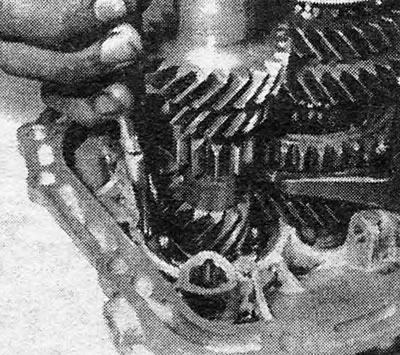
Photo 14.21 A. Installing the drive shaft retaining ring into the groove on the gearbox housing.
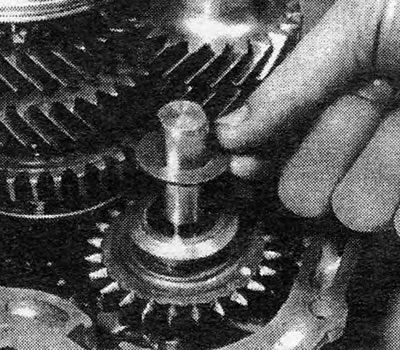
Photo 14.21B. Thrust washer of the reverse intermediate gear.
22. Check that the 1/2 gear synchronizer clutch is in neutral position and install the 3/4 gear and reverse gear forks and rods (see photos).
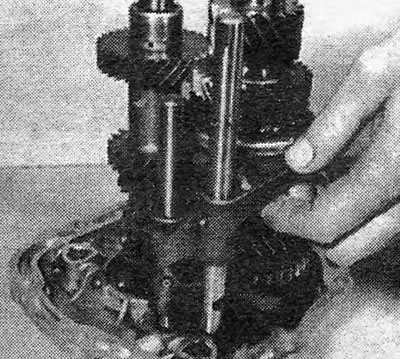
Photo 14.22A. Installing the 3/4 gear fork and rod.
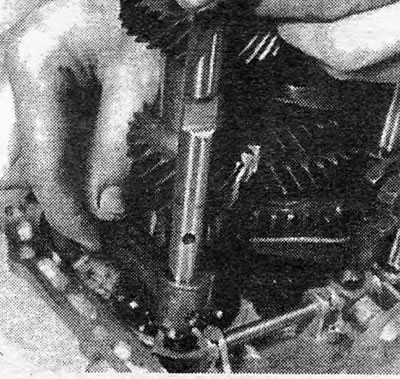
Photo 14.22B. Installing the reverse fork and rod.
Material was taken from a resource [OPELBOOK.ru]
23. Secure the forks with pins on their rods (see photos).
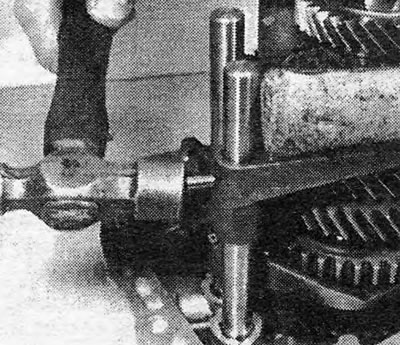
Photo 14.23A. Installing the pin securing the 1/2 gear fork to its rod.
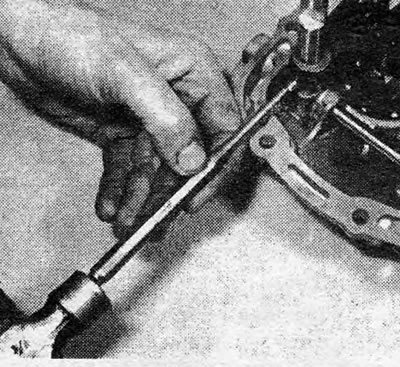
Photo 14.23B. Installing the pin securing the reverse fork to its rod.
24. Install plungers and retainer springs. If the sealing plugs of the retainers do not hold well enough, they should be replaced with larger plugs.
25. Using a screwdriver, move the clutch of the corresponding synchronizer so as to engage 2nd gear.
26. Install a new gasket on the gearbox housing, securing it in place with grease, and install the end cover together with the gear blocks. Insert the mounting bolts and nuts and tighten them to the required torque (see photo).
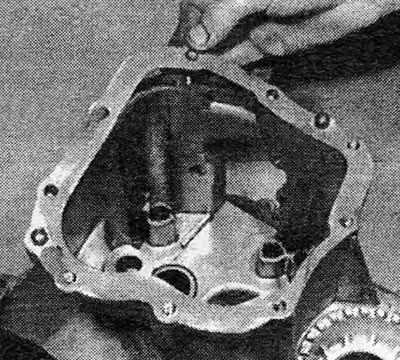
Photo 14.26. Installing the gearbox housing gasket.
27. Install the speedometer driven gear and its locking plate. Secure the locking plate with bolts.
28. Screw in the reverse light switch and tighten it to the required torque.
29. Set the transmission to neutral and install a new gearshift cover gasket, securing it in place with grease (see photo).
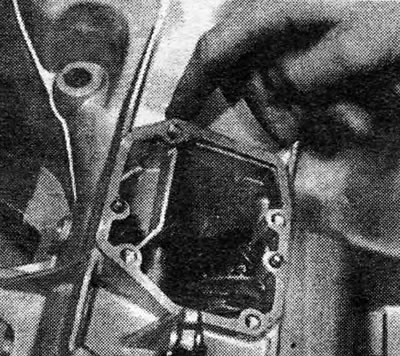
Photo 14.29. Installing the gearshift cover gasket.
30. Replace the gearshift cover and secure it with bolts. Tighten the bolts to the specified torque.
31. Install the box on the car, connect it to the engine and fill the box with oil.
Visitor comments