


2. After the head is returned from the workshop, the valves and associated components will already be installed in it.
3. On diesel engines lubricate the valve stems with liquid oil and insert them into their guide bushings. Install the valve spring seats.
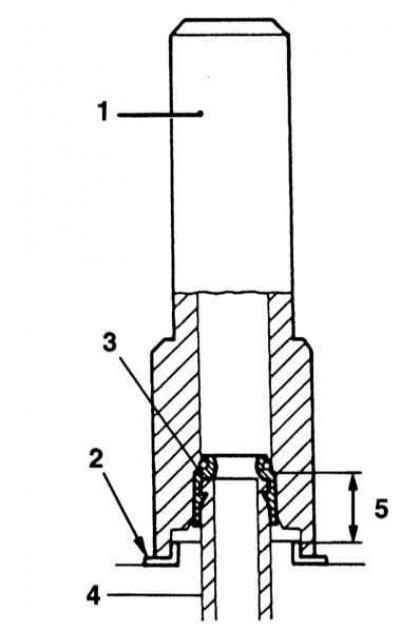
4. On gasoline engines install the spring seats. Lubricate the inside of the new valve stem seal (3) with engine oil and fit it onto the valve stem using the drift (1).
Be careful not to damage the working edges of the cap. Place the cap on the guide (4) with light pressure so that the bulge of the cap fits into the groove of the guide.
The cap cannot be pushed through the groove, as this will lose the sealing effect.
5. On dOHC engines 1.4 and 1.6 l lubricate the inside of the cap with engine oil and, using a drift, push it on with light hammer blows until it stops.
The valve stem seal is fitted using a suitable cylindrical mandrel
6. On diesel engines repeat the procedures (the oil deflector cap is first placed on the valve stem, then on the guide sleeve).
7. Using a special tool, compress the spring by lowering the plate, then install the split lock crackers into the open upper groove on the valve stem. In order to temporarily fix the crackers until the tool is released, lubricate them from the inside with consistent grease. Slowly release the spring and make sure that the crackers are securely seated.
Typically, springs are installed in coils with a reduced pitch towards the head.
8. On dOHC engines install the valve lifters and camshafts in place.
9. On sOHC engines install the camshaft, hydraulic tappet assemblies and valve actuator levers.
10. Make sure that the old components removed from the head and intended for further use are installed strictly in their original places.
Visitor comments