
OpelBook.ru
Cars AvtoVAZ Cars Mitsubishi Cars BMW Cars Mercedes Cars Nissan Cars Toyota Cars Chevrolet
English Русский
Български
Беларускі
Український
Српски
Hrvatski
Română
Polski
Slovenský
Magyar
 |  Sitemap  |  Contacts  |    


Main Astra Corsa Insignia Kadett Omega Vectra Zafira Others Articles
Frontera A (1991-1998, petrol) Frontera B (1998-2004) Ascona C (1981-1988) Vivaro A (2001-2014)
  • Main
  • Opel
  • Ascona C
  • Power unit
  • Gasoline engines
  • Cylinder head — removal and installation

Cylinder head — removal and installation (Opel Ascona C)

            0

The cylinder head can be removed together with the intake/exhaust manifolds and associated fuel system components, or all of this can be disconnected from the head before removal. You must decide in advance which method you will use, which is determined by the extent to which the head needs to be disassembled. The procedure for removing and installing the cylinder head on carburetor engines is described below. Removal and installation of the corresponding elements of the injection system are described in chapter 3.

1. The cylinder head can only be removed from a cold engine, otherwise it may become deformed.

2. Disconnect the battery ground wire.

3. Drain the coolant (see chapter 2), saving it for later use.
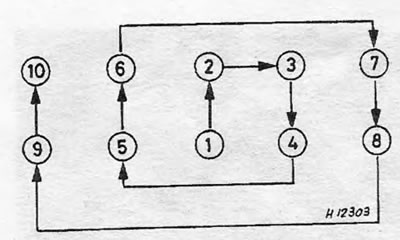
Figure 1.3. Cylinder head bolt tightening sequence - tightening in a spiral sequence.

Figure 1.3. Cylinder head bolt tightening sequence - tightening in a spiral sequence.


4. On carburetor models, remove the air cleaner. On injection models, disconnect the air intake duct at the throttle body.

5. Disconnect the fuel lines leading to the fuel pump (carburetor models) or fuel manifold and fuel pressure regulator (injection models). Be prepared for fuel spillage.

6. Disconnect the control cables and electrical wiring from the carburetor or throttle body (depending on the model).


7. Disconnect the heater hoses and vacuum tube from the intake manifold.

8. Disconnect the wire from the temperature sensor on the intake manifold or throttle body (depending on the model) (see photo).
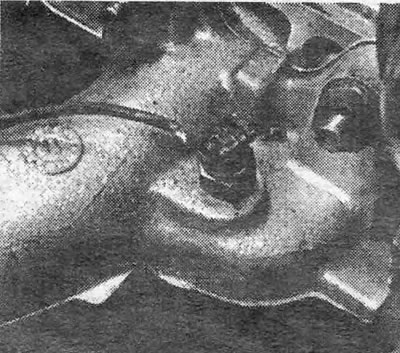
Photo 8.8. Cooling system thermal switch wiring (engine 1.3).

Photo 8.8. Cooling system thermal switch wiring (engine 1.3).


9. Remove the alternator drive belt (see chapter 2).

10. Remove the camshaft belt cover and set piston N1 to the ignition stroke of the mixture, as described in section 5.

11. Remove the distributor or disconnect the distributor cap and low voltage wire connector. On the latest injection models, disconnect the high-voltage wire from the coil so that the distributor can be removed together with the cylinder head.

12. Remove the camshaft cover.

13. Check that the mark on the camshaft sprocket matches the mark on the camshaft housing.

14. Disconnect the exhaust downpipe from the manifold.

15. Loosen the water pump bolts, move it to reduce the tension of the timing belt and remove the belt from the sprockets.

16. Remove the cylinder head bolts in the reverse order to that shown in Figure 1.3. First loosen all the bolts by 1/4 turn, then loosen them by 1/2 turn each time in the same sequence until the pressure is relieved from them. Follow this procedure carefully, otherwise the cylinder head or camshaft housing may be damaged. During assembly, the head bolts will need to be replaced with new ones.


17. Remove the camshaft housing (installed on pins - lift strictly vertically when removing).

18. Remove the cylinder head. If it doesn't go well, you can gently tap it with a plastic-headed hammer.

(Original posted on the website: opelbook.ru)

19. Remove and discard the cylinder head gasket.

20. Remove the rockers and thrust pads from the cylinder head. Remove the hydraulic lifters and immediately place them in a container of clean engine oil to prevent them from drying out. Lay out all the parts in the order they were removed. If you are going to completely disassemble the head and grind the valves, please contact section 30. Check if the head is deformed.

21. Carefully scrape off any carbon deposits and traces of the old gasket from the block and cylinder head. Be careful not to damage the cylinder head, which is made of light alloy and is easily scratched. Cover the cooling system passages and other openings with cloth or masking tape to prevent dirt and soot particles from getting into them. Remove oil from the bolt holes: If oil remains in the holes, the cylinder block may crack under hydraulic pressure when tightening the bolts.

22. After cleaning, install a new gasket on the block so that the OBEN inscription faces upwards.

23. Install the hydraulic lifters, thrust pads and rockers in place. If you are installing new lifters, you should first soak them in clean engine oil and squeeze them (by hand) several times to charge them.

24. Install the cylinder head on the block so that the mounting pins enter the holes provided for them.


25. Apply a bonding compound to the flanges of the cylinder head and camshaft housing and install the housing on the head, making sure that the alignment marks are aligned.

26. Install new cylinder head bolts and tighten them in the sequence shown in Figure 1.3, following the steps specified in the Specifications. To tighten the bolts to a certain angle, you can use an angle template or a special device for angle tightening (see photo).
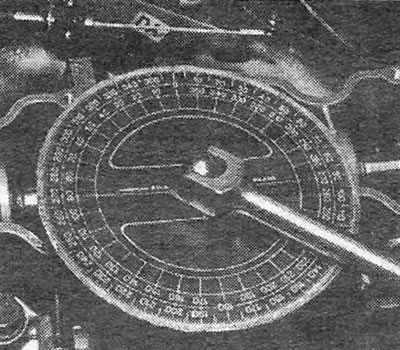
Photo 8.26. A special device used to tighten cylinder head bolts to a certain angle.

Photo 8.26. A special device used to tighten cylinder head bolts to a certain angle.


27. Install and tension the timing belt (see section 5), and then replace the belt cover.

28. Install the camshaft cover with a new gasket (see photo).
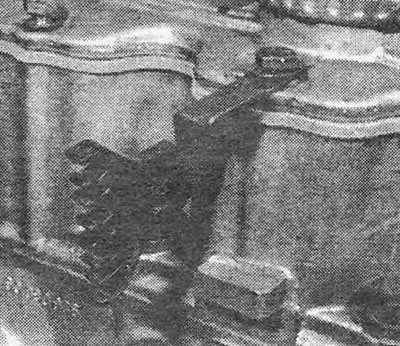
Photo 8.28. Mounting clamps of ignition wires on the camshaft housing cover.

Photo 8.28. Mounting clamps of ignition wires on the camshaft housing cover.


29. Install and tension the alternator drive belt (see chapter 2).

30. The remaining operations are performed in reverse order. When finished, fill the system with coolant and bleed it (see chapter 2).

31. Start the engine and check for fuel or coolant leaks. After the engine has warmed up to normal operating temperature, check and adjust idle speed if necessary (see chapter 3) and retighten the cylinder head bolts (step 5).


This article is available at russian, bulgarian, belarusian, ukrainian, serbian, croatian, romanian, polish, slovak, hungarian
Checking the article: Kornev Georgy

Share information:

Previous articles
Opel Ascona C: Gasoline engines
Next articles

Camshaft — removal (engine is on the car)
Front camshaft oil seal — replacement (engine is still on the car)
Timing Belt — Replacement
Oil Pressure Regulator Valve — Removal and Installation
Work possible without removing the engine
Engine — Routine Maintenance
Camshaft housing and camshaft — disassembly and assembly
Pallet — removal and installation
Oil pump — removal and installation
Connecting rod and piston groups — removal and installation
Flywheel — removal and installation
Front crankshaft oil seal (pulley side) — replacement


See similar ones from other Opel car manuals:
▶ Cylinder head — removal and installation Opel Astra F (1991-1998, petrol)
▶ Removal and installation the cylinder head Opel Corsa B (1993-2000)
▶ Cylinder head cover Opel Insignia A (2008-2017)
▶ Cylinder head specifications Opel Kadett E (1984-1995)
▶ Cylinder head — removal and installation with engine in car Opel Omega A (1986-1993)
Link to this page in different formats

Visitor comments


No comments yet


How much will 14 + 19 =


Vivaro A (2001-2014) 
  • General information
  • User manual
  • Power unit
  • Petrol engine F4R
  • Diesel engine F9Q
  • Diesel engine G9U
  • Transmission
  • Clutch and drive shafts
  • Manual gearbox
  • Chassis
  • Front suspension
  • Rear suspension
  • Brake system
  • Body
  • Exterior
  • Interior
  • Electrical equipment
  • Heating and ventilation
  • Air conditioner
  • Equipment and devices
  • Electrical diagrams
Ascona C (1981-1988) 
  • General information
  • Maintenance
  • Power unit
  • Gasoline engines
  • Diesel engines
  • Cooling system
  • Fuel and exhaust system
  • Contact ignition system
  • Contactless ignition system
  • Transmission
  • Clutch
  • Mechanical gearbox
  • Automatic gearbox
  • Drive shafts
  • Chassis
  • Steering
  • Brake system
  • Car suspension
  • Body
  • Exterior
  • Interior
  • Doors and windows
  • Electrical equipment
  • Equipment and devices
  • Power devices
  • Electrical circuits
Frontera B (1998-2004) 
  • General information
  • User manual
  • Maintenance
  • Power unit
  • Petrol engines 2.2 l
  • Petrol engines 3.2 l
  • Diesel engines 2.2 l
  • Cooling system
  • Fuel system (petrol)
  • Fuel system (diesel)
  • Ignition system
  • Transmission
  • Clutch
  • Manual gearbox MUA5C
  • Automatic gearbox 4L30E
  • Chassis
  • Suspension and axles
  • Steering
  • Brake system
  • Body
  • Exterior
  • Interior
  • Doors, locks and windows
  • Heating and air conditioning
  • Electrical equipment
  • Power devices
  • Equipment and devices
  • Lighting and signaling
  • Electrical diagrams
Frontera A (1991-1998, petrol) 
  • General information
  • Introduction to guide
  • User manual
  • Maintenance
  • Power unit
  • Engine repair
  • Lubrication system
  • Cooling system
  • Power and exhaust system
  • Engine electrics
  • Transmission
  • Clutch
  • Mechanical gearbox
  • Cardan shafts
  • Chassis
  • Brake system
  • Front suspension
  • Rear suspension
  • Steering
  • Body
  • Repair and care
  • Electrical equipment
  • Equipment and devices
  • Electrical circuits
OpelBook.ru © 2017–2026 · Mobile version · · Sitemap: EN BG BY UA RS HR RO PL SK HU · Feedback · Site search
Astra F, petrol · Astra G, petrol · Astra G · Astra H · Astra J, petrol · Corsa B · Corsa C, petrol · Corsa C · Insignia A · Kadett D · Kadett E · Omega A · Omega B · Omega B2 · Vectra A, petrol · Vectra A · Vectra B, petrol · Vectra B · Vectra C · Zafira A, petrol · Frontera A, petrol · Frontera B · Ascona C · Vivaro A ·
We want your visit to be comfortable 🤝! We use cookies 🍪 to make that happen.