


Contents: Removal ⬇ Installation ⬇
Removal
All engines
1. Disconnect the negative battery cable. Set the parking brake, then jack up the front of the vehicle and support it. If equipped, remove the engine guard.
2. Drain the engine oil (see Chapter Routine maintenance), then install a new sealing washer and screw the drain plug into place and tighten it to the required torque.
Engines 1.7 l
On 1.7L SOHC models, dismantling the oil pan involves removing the bridge of the crankshaft main bearing caps. When installing the bridge, its mounting bolts must be replaced without fail.
1. Remove the bolts securing the lower section of the oil pan to the main casting. Separate the lower section of the oil pan and remove it from the engine.
2. On 1.7L SOHC engines to remove the main cast section of the pan, disconnect the electrical wiring from the oil temperature sensor installed in its front part, on 1.7L DOHC engines - remove the exhaust pipe (see Chapter Power and exhaust systems).
3. Remove the bolt securing the dipstick guide tube to the cylinder block/sump casting section.
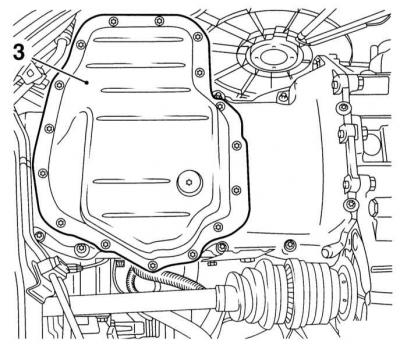
4. On 1.7L SOHC engines remove the guide tube from the main casting section of the pan.
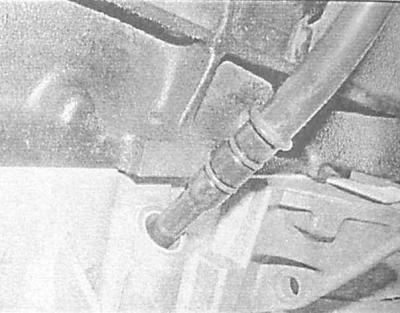
5. Then unscrew the connecting bolt and disconnect the turbocharger oil return pipe from the casting section of the pan. Remove the sealing washers.
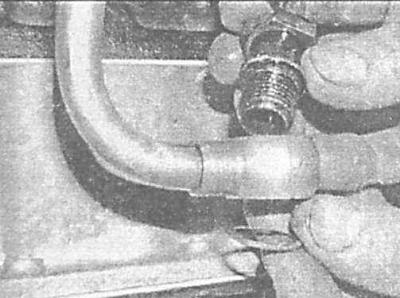
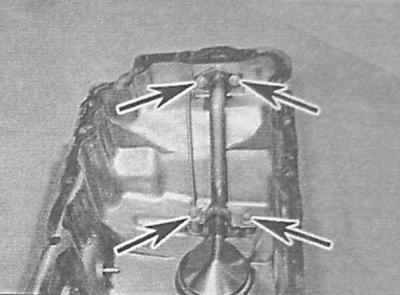
6. Unscrew the two bolts securing the oil intake to the sump casting and remove the tube. Note that the oil intake is equipped with two sealing rings.
7. Gradually loosen and unscrew the bolts and nuts securing the cast section of the pan to the cylinder block/cover or oil pump housing, transmission housing. If the pan is "stuck" to the gasket, tap it with a soft-faced hammer.
On 1.7L SOHC models, the released oil pan should be moved toward the front subframe.
8. On 1.7L SOHC models unscrew the bolts securing the main bearing cap bridge and remove the latter together with the sump casting.
9. On 1.7L DOHC engines remove the oil deflector plate attached to the cylinder block from below.
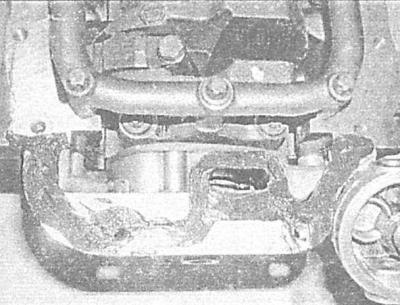
2.0L Engines
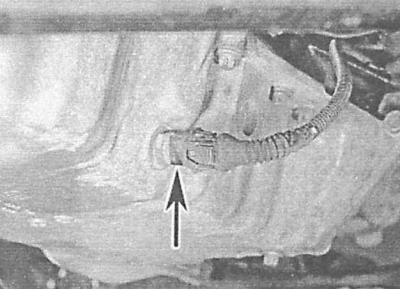
1. Disconnect the electrical wiring from the oil temperature sensor and (with appropriate equipment) oil level sensor.
2. Unscrew the bolts securing the oil pan flange to the manual transmission housing.
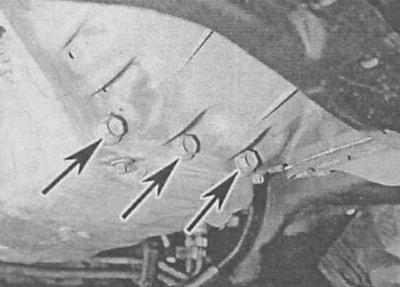
3. Gradually loosen and unscrew the bolts securing the oil pan to the base of the cylinder block/oil pump. If necessary, lightly tap the oil pan with a soft-faced hammer, separate it from the engine and remove it from under the vehicle.
All engines
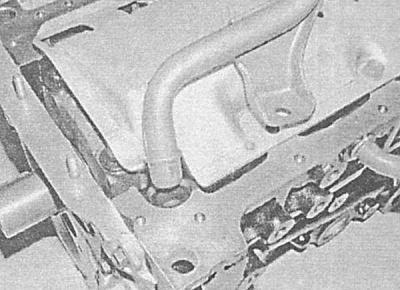
1. Check the condition of the oil intake mesh filter - if necessary, remove it together with the sealing ring and wash it in solvent.
Installation
Engines 1.7L SOHC
1. Thoroughly clean the mating surfaces of the lower and main sections of the oil pan. Apply a bead of suitable sealant to the mating surface where it meets the oil pump cover and rear main bearing cover.
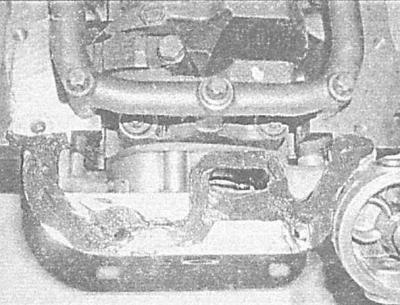
2. Place a new seal on the mating surface of the main pan casting and place the latter on the front subframe.
3. Reinstall the main bearing cap bridge, install NEW mounting bolts and tighten to specified torque.
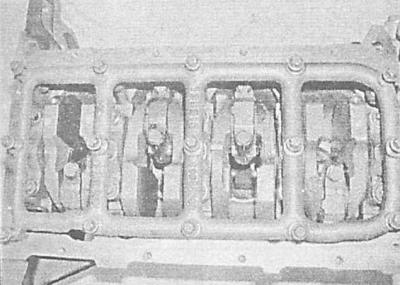
4. Press the cast section of the pan against the engine, screw in and hand tighten all the bolts that secure it.
5. Tighten the mounting bolts to the required torque.
If the cast oil pan section is installed on an engine that has been removed from the vehicle and separated from the transmission, it is necessary to ensure that the section's flywheel-side flange is aligned with the corresponding cylinder block flange.
6. Tighten the oil pan casting mounting bolts to the transmission housing to the required torque.
7. Connect the turbocharger oil return pipe to the pan using new seals. Tighten the pipe mounting bolt to the required torque.
8. Insert the dipstick guide tube into the cast section of the pan, replacing the sealing rings, and connect the tube to the block. Tighten the tube support bracket bolt to the block to the required torque.
9. Connect the wiring to the crankshaft position and oil temperature sensors. Secure the wiring to the support bracket.
10. Install the O-rings onto the end of the oil pickup tube and connect the tube to the oil pan casting. Tighten the NEW tube retaining bolts to the specified torque.
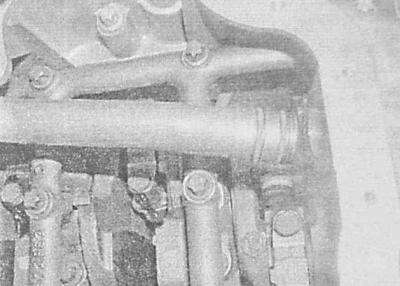
11. Carefully clean the mating surfaces of the main and lower sections of the pan, completely freeing them from traces of oil and dirt.
12. Using a new gasket, install the lower pan section onto the main section casting. Install and tighten the mounting bolts to the required torque.
13. Install the crankcase guard, lower the vehicle to the ground and fill the engine with fresh engine oil (see Chapter Routine maintenance).
Engines 1.7L DOHC
1. Remove all traces of dirt, oil and sealant from the mating surfaces of both pan sections and, if removed, from the oil pickup.
2. If necessary, replace the oil pickup sealing ring and install the latter into the cylinder block base. Screw in the oil pickup mounting bolt and tighten it to the required torque. Install the oil deflector plate.
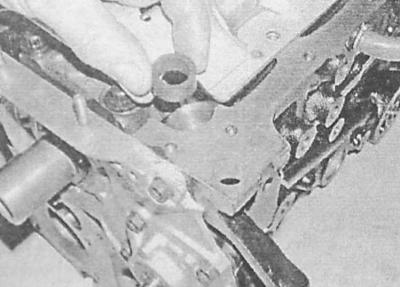
3. Ensure that the mating surfaces of the cylinder block and the main casting section of the oil pan are absolutely clean and dry. Lubricate the upper mating surface on the upper main section of the oil pan with a suitable sealant.
4. Install a new rubber sealing gasket for the dipstick guide tube onto the oil pan casting.
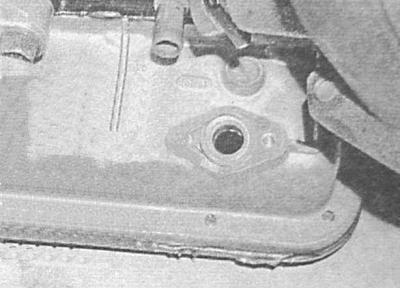
5. Install the oil pan casting section and tighten the bolts and nuts. Note that the four long bolts are screwed into the holes in the rear of the oil pan casting. If the oil pan was removed with the engine removed and separated from the transmission, make sure that the rear surfaces of the cylinder block and the oil pan casting are aligned. Tighten the oil pan casting bolts evenly to the required torque, moving from the center to the edges, diagonally.
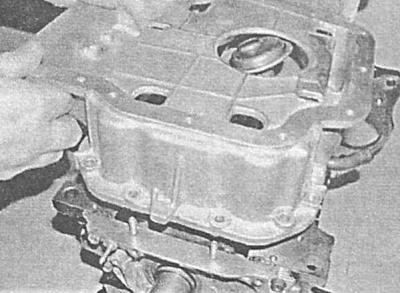
6. Screw in the bolts securing the oil pan casting to the transmission housing and tighten them to the required torque.
7. Make sure that the dipstick guide tube is installed correctly, tighten the bolts that secure it and tighten them to the required torque.
8. Install the exhaust pipe (see Chapter Power and exhaust systems).
9. Make sure that the mating surfaces of the main and lower sections of the tray are absolutely clean and dry. Apply a layer of suitable sealant to the mating surface of the lower section. Press the lower section of the tray against the upper section, screw in and tighten the mounting bolts to the required force.
10. If equipped, reinstall the crankcase guard. Lower the vehicle to the ground and fill with fresh engine oil (see Chapter Routine maintenance).
2.0L Engines
1. Thoroughly clean the mating surfaces of the cylinder block/oil pan and, if removed, the oil pickup.
2. If necessary, replace the sealing ring, install the oil intake on the pan, tightening its mounting bolts with the required force.
3. Apply a coat of suitable sealant to the mating surface of the cylinder block where it meets the oil pump housing and the rear crankshaft support cover.
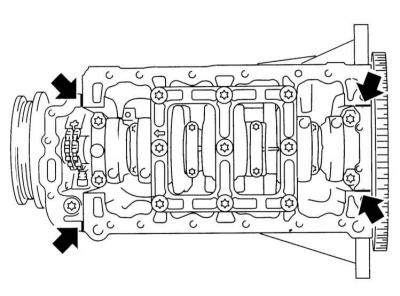
4. After replacing the sealing gasket, press the pan against the cylinder block, screw in and hand tighten the mounting bolts.
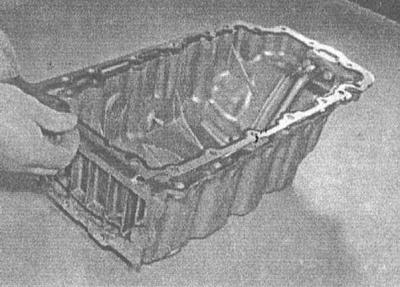
5. Working from the center outward, in a diagonal pattern, tighten the oil pan to cylinder block/oil pump mounting bolts evenly to the required torque.
6. Tighten the oil pan flange mounting bolts to the transmission housing with the required force.
7. Connect the wiring to the oil temperature sensor and (if installed) oil level sensor.
8. If equipped, reinstall the engine sump guard. Lower the vehicle to the ground and fill the engine with fresh engine oil (see Chapter Routine maintenance).
Visitor comments