


Removal
Prevent dirt from entering the fuel system and high-pressure fuel pump!
The head must be removed from a completely cooled engine. Prepare a new cylinder head gasket in advance.
Engines 1.7L SOHC
1. Disconnect and remove the battery (see Chapter Engine electrical equipment).
2. Drain the cooling system. Unscrew the mounting bolts and remove the air cleaner assembly with the air ducts and air mass meter (see Chapter Cooling and heating systems).
3. Disconnect the alternator from the adjuster bar and the upper rear support bracket. Loosen the lower alternator mounting bolt, remove the alternator drive belt and rotate the alternator rearward.
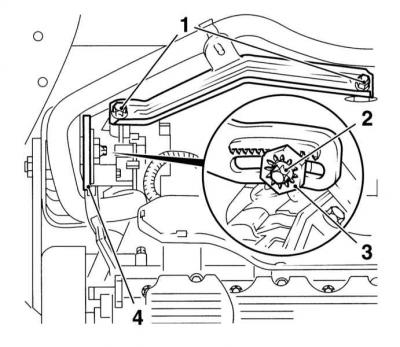
1 - Upper bracket mounting bolts
2 - Adjusting bolt
3 - Adjusting bolt nut
4 — Adjusting bar
4. Remove the timing cover (see Removal and installation the timing cover).
5. Release the air hoses located between the turbocharger and intercooler and the intercooler and the intake manifold from the clamps (see Chapter Power and exhaust systems).
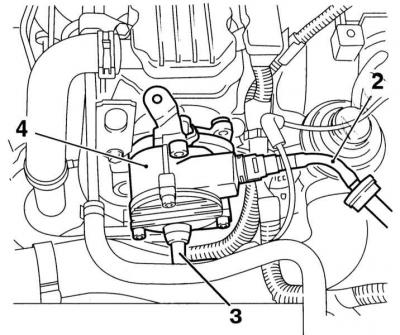
6. Disconnect the brake booster servo tube and vacuum line (2) and (3) from the vacuum pump (4) on the left side of the timing case.
7. Disconnect the wiring from the coolant temperature sensor, boost pressure sensor and EGR solenoid valve.
8. Disconnect the electrical wiring from the timing case and move it to the side.
9. Loosen the mounting clamps and disconnect the upper radiator hose from the flange and radiator connections.
10. Disconnect the fuel supply and return lines from the valve body.
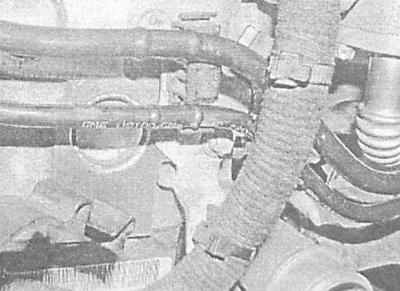
11. Loosen the clamps and disconnect the expansion tank hose from the upper front pipe of the thermostat housing and the timing case. Move the hose to the side.
12. Remove the fastening elements of the fuel lines - try to remember the installation position of the components.
13. Wipe clean the injector and high-pressure fuel pump outlet union connectors (4 pieces), then loosen their union nuts. While loosening the fuel pump union connector nuts, hold the unions from turning with a second wrench. After loosening the nuts, remove the fuel pipes from the engine one by one. Use a clean rag to collect any traces of spilled fuel. To prevent dirt from getting into the fuel system, plug the injectors, unions and pipe tips with clean plastic plugs. Disconnect the fuel return line from the first injector.
14. Remove the two nuts and disconnect the electrical wiring from the glow plugs of the 2nd and 3rd cylinders.
15. Loosen the union connector and disconnect the turbocharger oil feed pipe from the cylinder block (see Chapter Power and exhaust systems).
16. Disconnect the oil feed pipe from the turbocharger (see Chapter Power and exhaust systems).
17. Remove the mounting bolt and disconnect the turbocharger oil return pipe from the top of the oil pan. Remove the sealing washers.
18. Disconnect the exhaust manifold support bracket from the cylinder block and the exhaust manifold. Unscrew the mounting nuts and disconnect the exhaust system inlet pipe from the exhaust manifold.
19. Remove the mounting bolt and disconnect the electrical wiring and fuel return pipe support bracket from the left rear of the cylinder head.
20. Remove the two mounting bolts and remove the thermostat housing from the right rear of the cylinder head. Separate the housing from the metal coolant pipe at the rear of the cylinder block - note the two O-rings - and set it aside along with the heater hose.
21. Proceeding in the reverse order to that indicated, gradually, half a turn at a time, evenly loosen the ten head mounting bolts until it becomes possible to loosen them manually.
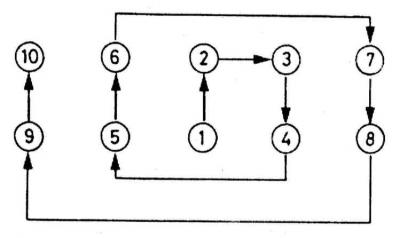
22. Remove the head mounting bolts together with the washers.
23. Remove the valve timing case from the head, prepare eight clean polyethylene bags or plastic cups and mark them according to the valve numbering. Remove the valve drive levers, the shaped washers that secure them and the hydraulic compensators - arrange the components in bags/cups according to the markings.
24. With the help of an assistant, remove the fairly heavy cylinder head from the block. Remove the sealing gasket - try not to lose the two guide bushings installed in the cylinder block. If the bushings are loose and can be easily removed, remove them and put them in a safe place. Do not throw away the old gasket - it can be used as a sample when purchasing a new one.
For a description of the procedure for disassembling the cylinder head if it needs to be repaired, see. General and major engine repairs.
Engines 1.7L DOHC
1. Drain the cooling system. Unscrew the mounting bolts and remove the air cleaner assembly with the air ducts and air mass meter (see Chapter Cooling and heating systems).
2. Remove the camshaft gear (see Removal and installation the timing belt tensioner and timing gears (1.7L engines).
3. Unscrew the bolts securing the rear cover of the timing mechanism to the timing mechanism housing and the cylinder head.
4. Remove the timing case (see Removal and installation the timing case (1.7L DOHC engines), remove the camshafts. Prepare 16 clean polyethylene bags or plastic cups and mark them according to the valve numbering. Remove the tappets from their seats in the cylinder head and place them together with the adjusting washers in the appropriately marked bags/cups.
5. Remove the three mounting bolts and remove the heat shield from the exhaust manifold.
6. Remove the bolts and nuts securing the exhaust manifold to the cylinder head. Remove the washers. Using a TORX head, remove the two manifold mounting studs and pull the manifold off the engine. An alternative method for removing the exhaust manifold is described in Chapter Power and exhaust systems.
7. Loosen the mounting bolts and remove the EGR valve.
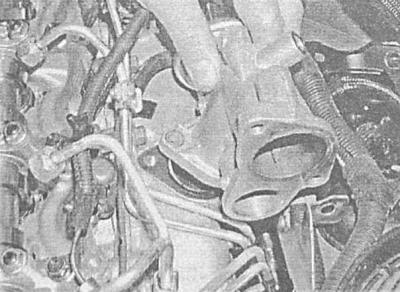
8. Disconnect the fuel pipes from the injectors (see Chapter Power and exhaust systems). Wipe the outlet nipple connectors of the high-pressure fuel pump (4 pieces) clean, then loosen their union nuts. While loosening the nuts of the nipple connections of the high-pressure fuel pump, hold the nipples from turning with the second wrench. After loosening the nuts, remove the fuel pipes from the engine one by one. Use a clean rag to collect traces of spilled fuel. To prevent dirt from getting into the fuel system, plug the injectors, nipples and pipe tips with clean plastic plugs. Disconnect the fuel return line from the first injector.
9. Disconnect the vacuum hose and electrical connector from the EGR solenoid valve.
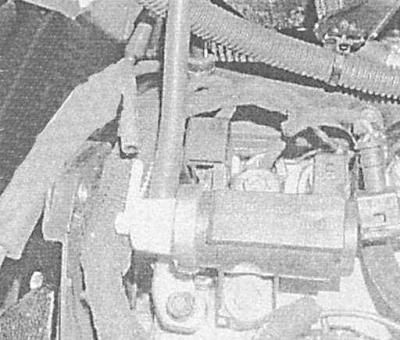
10. Disconnect the fuel return hose from the high-pressure fuel pump.
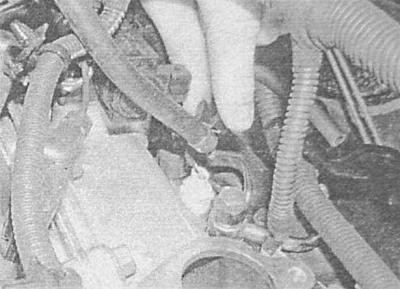
11. Disconnect the electrical wiring from the boost pressure sensor located behind the EGR valve on the intake manifold.
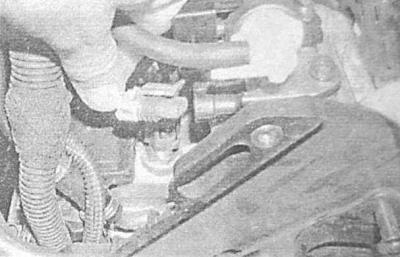
12. Disconnect the electrical wiring from the glow plugs (see Chapter Engine electrical equipment).
13. Loosen the clamp and disconnect the coolant hose from the left rear of the cylinder head.
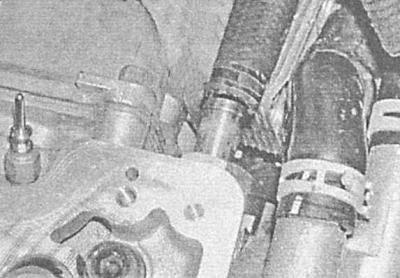
14. Disconnect the wiring from the coolant temperature sensor. Remove the mounting bolts and remove the thermostat housing from the left rear of the cylinder head.
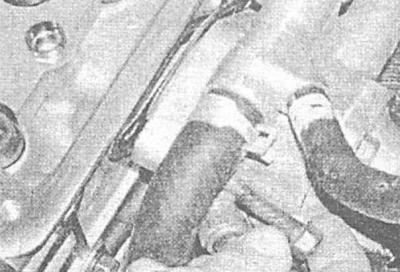
4. Following the sequence indicated, gradually, half a turn at a time, evenly loosen the ten head mounting bolts until they can be loosened manually.
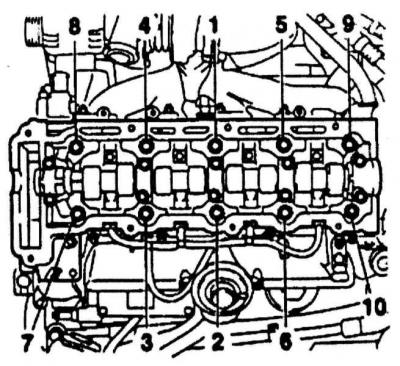
5. Remove the head mounting bolts together with the washers.
6. With the help of an assistant, remove the fairly heavy cylinder head from the block. Remove the sealing gasket - try not to lose the two guide bushings installed in the cylinder block. If the bushings are loose and can be easily removed, remove them and put them in a safe place. Do not throw away the old gasket - it can be used as a sample when purchasing a new one.
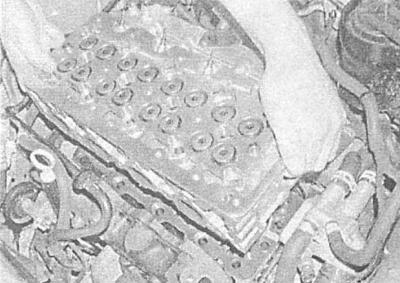
For a description of the procedure for disassembling the cylinder head if it needs to be repaired, see. General and major engine repairs.
2.0L Engines
1. Drain the cooling system (see Chapter Cooling and heating systems).
2. Perform the operations described above (see Removal and installation the camshaft and valve train components — Removal, 2.0L engines - pp. 1-13), - please note that a trolley jack will be required to lift the engine, - to distribute the load, place a wooden block between the jack head and the oil pan.
3. Wipe clean the fuel hose connections, unscrew the union bolts and remove the sealing washers. Disconnect the fuel return hose from the pump, release the hoses from the intermediate clamps and move them away from the head.
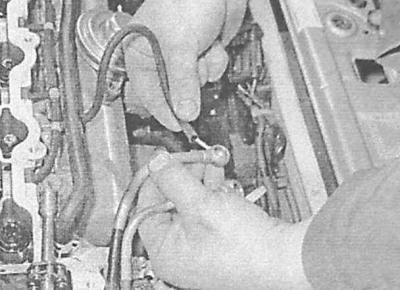
4. Remove the intake manifold and exhaust manifold (see Chapter Power and exhaust systems). If the head cannot be repaired, it can be removed together with the pipeline and manifold:
5. On high-pressure turbo models, remove the intake ducts and metal tube from the turbocharger.
6. Remove the bolts securing the wiring harness routing channel to the top of the intake manifold and move it away from the engine. Disconnect the crankshaft position (CKP) sensor wiring harness;
7. Remove the fuel pipes from the injection pump to the injectors. Disconnect the vacuum hoses from the intake manifold switching valve and the EGR valve;
8. Disconnect the electrical wiring from the glow plugs and remove the turbocharger heat shield;
9. Disconnect the turbocharger oil pipes from the cylinder block. Disconnect the diaphragm vacuum hose;
10. Remove the starter heat shield. Remove the mounting bolts and remove the wiring guide and exhaust manifold support bracket from the rear of the cylinder block.
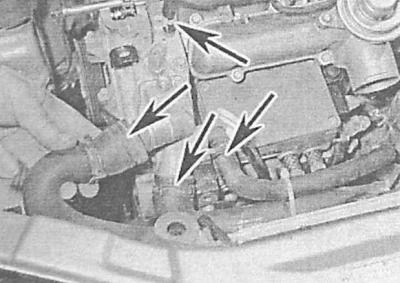
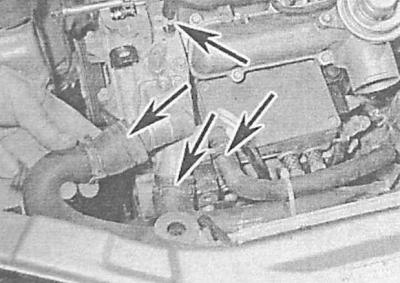
5. Loosen the clamps and disconnect the coolant hoses from the front and rear of the left cylinder head wall.
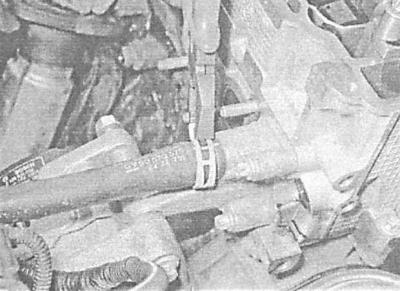
6. Remove the upper mounting bolt and move the generator away from the cylinder head.
7. Remove the three bolts securing the right side of the cylinder head to the top of the timing chain cover and the only bolt securing the head to the block.
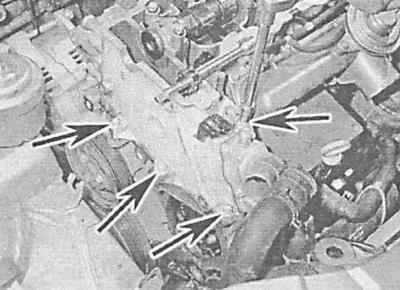
8. Following the reverse order of the above, gradually, half a turn at a time, loosen the ten main head mounting bolts until they can be turned by hand.
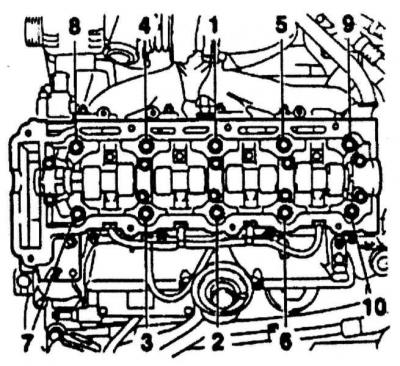
9. Remove the bolts complete with washers.
10. With the help of an assistant, lift the head and remove it from the engine. Remove the sealing gasket. Note the two guide bushings mounted on the top of the cylinder head - if the bushings are loose, remove them and put them in a safe place. It is wise to save the old gasket for identification of the new one.
Do not place the head on the lower mating surface, place wooden blocks under the head so that they do not touch the glow plugs or injector nozzles, which protrude from the plane of the head and can be damaged if the head is placed directly on the workbench.
For a description of cylinder head reconditioning procedures, see. General and major engine repairs.
Preparing for installation
All engines
1. Thoroughly clean and dry the mating surfaces of the cylinder head and block. Use a hard plastic or wooden scraper to remove all traces of old gasket material and carbon deposits. Also clean the piston crowns. Be extremely careful - the surfaces are easy to damage. Remember that dirt should not get into the oil ducts, water galleries, channels and threaded holes - plug them with plugs or seal them with tape. To prevent carbon deposits from getting into the gaps between the pistons and cylinders, pack the latter with thick grease, which can be easily removed with a stiff brush after the cleaning procedure is complete. After cleaning, wipe all surfaces with a clean, dry rag.
2. Inspect the mating surfaces of the head and block for deep scratches, cracks and other damage. Minor defects can be removed with a fine scraper; in more serious cases, the head should be ground or replaced.
3. Make sure the threaded holes are clean and dry - just in case, blow them out with compressed air (you can use a bicycle pump). The presence of traces of grease in blind holes can lead to the destruction of the block when tightening the bolts as a result of the increase in hydraulic pressure.
4. The head mounting bolts must be replaced without fail, regardless of their current condition.
5. Using a steel ruler and a blade-type feeler gauge, check the flatness of the mating surface of the head (see General and major engine repairs).
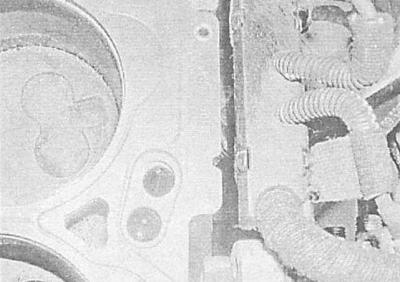
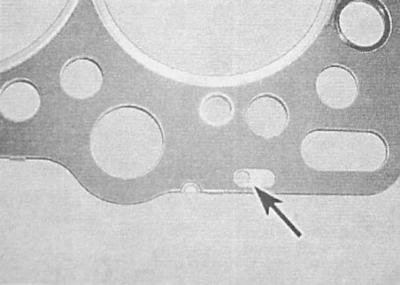
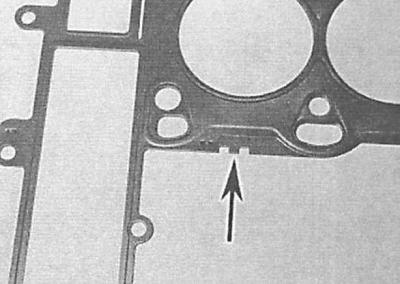
6. On these engines, the clearance between the head and pistons is adjusted by the thickness of the gasket. The left front corner of the gasket has notches, the number of which can be used to determine its thickness.
A - Identification of the cylinder head gasket thickness of the 1.7L SOHC engine (one notch)
B — Identification of the cylinder head gasket thickness of the 1.7L DOHC engine (one notch)
C - Identification of the thickness of the cylinder head gasket of the 2.0L engine (two notches)
A.
B.
C.
| Number of cuts | Gasket thickness, mm | ||
| Engines 1.7L SOHC | Engines 1.7L DOHC | 2.0L Engines | |
|
No breaks |
1.30 |
1.45 |
1.20 |
|
One notch |
1.40 |
1.50 |
1.30 |
|
Two notches |
1.50 |
1.55 |
1.40 |
7. The required thickness of the gasket can also be calculated based on the amount of piston protrusion above the block surface (see below).
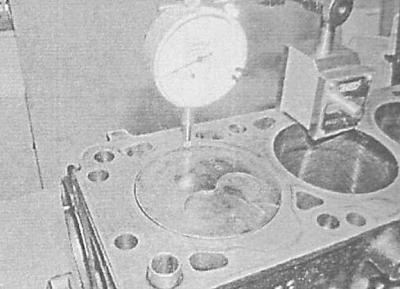
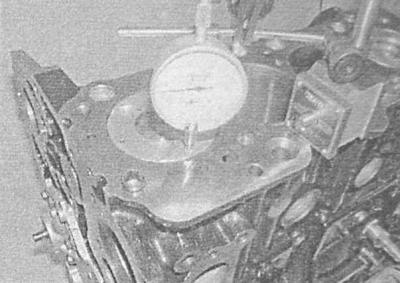
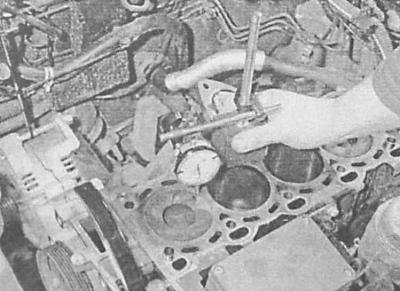
8. Bring the engine to the TDC position of the end of the compression stroke of the piston of the first cylinder. Install a plunger-type dial gauge on the block, press the plunger of the gauge to the mating surface of the block and zero the device. Now move the plunger to the surface of the piston bottom of the first cylinder and measure the amount of its protrusion (on 1.7L SOHC engines — at three points on the bottom of each piston). Next, acting in a similar manner, determine the amount of protrusion of the piston of the fourth cylinder.
A — Measuring piston protrusion on 1.7L SOHC engines
B — Measuring piston protrusion on 1.7L DOHC engines
C - Measuring the amount of piston protrusion on 2.0L engines
Article posted on a web portal: www.OpelBook.ru
A.
B.
C.
9. Turn the crankshaft half a turn to bring the pistons of the 3rd and 2nd cylinders to the TDC positions and repeat the measurements. Finally, return the engine to the TDC position of the piston of the first cylinder.
10. On 1.7L SOHC engines add up all 12 results obtained (three for each piston) and divide the result by 12; on 1.7L DOHC and 2.0L engines the gasket is selected based on the maximum protrusion value. Use the table below to calculate the required thickness of the new gasket.
| Piston protrusion value, mm | Required gasket | ||
| Engines 1.7L SOHC | Engines 1.7L DOHC | 2.0L Engines | |
|
less than 0.80 |
0.63—0.696 |
0.40—0.50 |
without breaks |
|
0.80—0.90 |
0.697—0.763 |
0.51—0.60 |
one notch |
|
0.90 and more |
0.764—0.830 |
0.61—0.70 |
two notches |
On 1.7L SOHC engines, if any piston protrudes more than 0.05 mm, install a thicker shim. For example, if the average protrusion is 0.79 mm and one measurement is 0.85 mm (difference of 0.06 mm), use a single-groove gasket.
Installation
Replacement of cylinder head mounting bolts is mandatory, regardless of their current condition!
Engines 1.7L SOHC
1. Using a clean cloth, wipe the mating surfaces of the block and head dry.
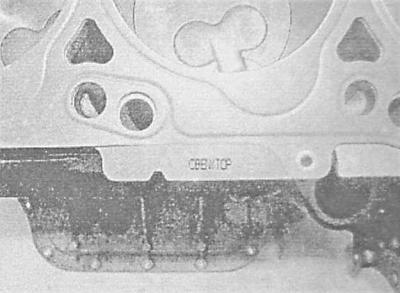
2. Make sure the two guide bushings are seated in their respective seats. Place a new sealing gasket on the mating surface of the cylinder block, with the "OBEN/TOP" marking facing upwards and forwards on the engine.
3. To prevent contact between the pistons and valves, turn the crankshaft counterclockwise 90°.
4. Using an assistant, carefully install the head onto the cylinder block, making sure that the guide bushings fit correctly into the mating sockets.
5. Lubricate the hydraulic compensators, locking washers and valve drive levers with clean engine oil and install the components in their regular places. Lubricate the rubbing surfaces of the valve drive levers with molybdenum-containing grease such as "Molikot A".
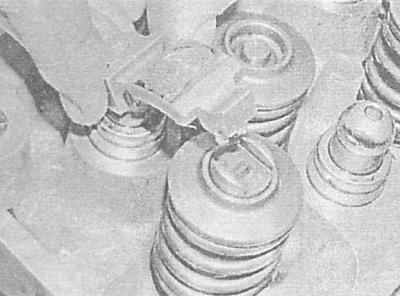
6. Apply a coat of suitable sealant (consult a service station) on the upper mating surface of the cylinder head.
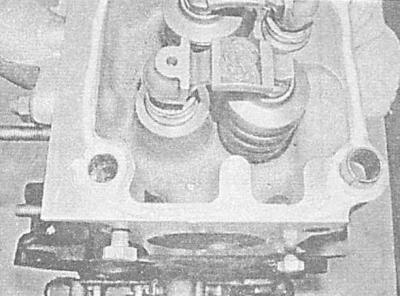
7. Carefully install the timing case (with a camshaft embedded in it) on the cylinder head.
8. Lightly coat the threads and underside of the bolt heads with clean engine oil, then install the bolts and tighten them finger tight.
9. Acting in a strictly defined sequence, in several steps evenly, tighten the head bolts with the force of the 1st stage.
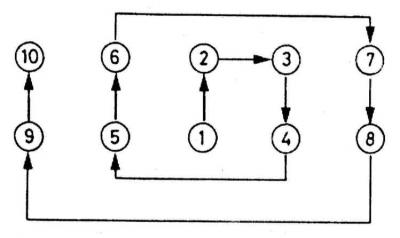
10. In the same order, tighten the bolts to the corners first at stage 2, then at stage 3 and stage 4, using a protractor attachment or using paint or a marker to mark the reference points.
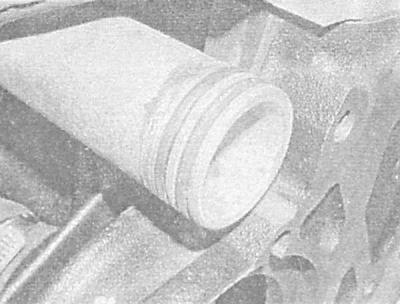
11. Install the thermostat housing to the right side of the cylinder head, using new O-rings on the ends of the coolant tube at the rear of the cylinder block and between the thermostat housing and the cylinder head. Make sure that the metal tube at the rear of the cylinder block is aligned with the housing. Tighten the mounting bolts to the specified torque.
12. Install the oil feed pipe onto the cylinder block and turbocharger, tightening the union bolts to the required torque.
13. Install the support bracket onto the generator and turbocharger, making sure the fasteners are tightened to the required torque.
14. Apply sealant to the mating surface of the exhaust manifold downpipe and gasket and install them on the exhaust manifold. Tighten the nuts to the required torque.
15. Attach the support bracket to the exhaust manifold and block and tighten its mounting bolts to the required torque.
16. Attach the turbocharger oil return pipe to the top of the oil pan, remembering to replace the sealing washers.
17. Install the rear timing belt cover, powertrain mount bracket, idler pulley, camshaft sprocket and timing belt (see Removal and installation the timing belt tensioner and timing gears (1.7L engines) and Removal and installation the timing belt).
18. Install the right powertrain mount support and the lower and upper sections of the timing belt cover (see Removal and installation the timing belt cover).
19. Install the crankshaft pulley (see Removal and installation the crankshaft pulley). Install the front wheel and lower the car to the ground.
20. Connect the electrical wiring to the glow plugs. Tighten the nuts securely.
21. Install the cooling system hoses onto the outlet pipe and secure the latter to the timing case cover.
22. Connect the fuel lines of the high-pressure fuel pump to the valve timing housing.
23. Connect the coolant hose to the thermostat housing and the upper radiator hose. Tighten the clamps securely.
24. Connect the electrical wiring to the thermostat housing.
25. Connect the wiring connectors to the temperature sensor, boost pressure sensor and EGR solenoid valve.
26. Connect the crankcase ventilation hoses to the timing case cover and tighten the mounting clamps securely.
27. Connect the vacuum hose and brake booster servo tube to the vacuum pump.
28. Connecting the air hose connecting the turbocharger to the intercooler - make sure the hose is securely fastened with mounting clamps.
29. Install the generator on the adjusting bar and tighten the lower generator mounting bolt to the required force.
30. Install the accessory drive belts (see Chapter Routine maintenance).
31. Install the air cleaner housing with air ducts and MAF sensor (see Chapter Power and exhaust systems).
32. Fill the cooling system (see Chapter Cooling and heating systems).
33. Check the engine oil level and make adjustments if necessary.
34. Tighten the wheel mounting bolts to the required torque.
35. Install and connect the battery.
36. Start the engine and check for signs of developing leaks. After warming up the engine to normal operating temperature, tighten the cylinder head mounting bolts to the 5th tightening stage angle (see Fig. Specifications).
Engines 1.7L DOHC
1. Using a clean cloth, wipe the mating surfaces of the block and head dry.
2. Make sure the guide bushings are installed in their proper places.
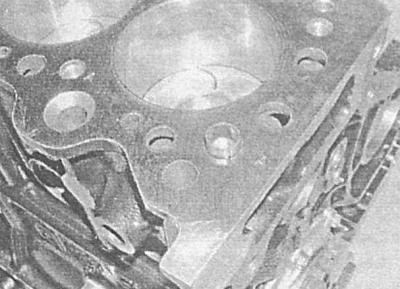
3. To prevent the valves from contacting the pistons, turn the crankshaft counterclockwise 60° from TDC.
4. With the help of an assistant, install the head on the block, making sure that the guide bushings fit into the mating sockets.
5. Lightly coat the threads and underside of the bolt heads with clean engine oil, then install the bolts and tighten them hand tight.
6. Moving from the middle to the edges, in several steps, tighten the head bolts evenly to the 1st stage force.
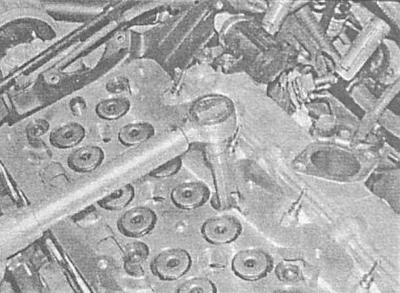
7. In the same order, tighten the bolts to the corners first at stage 2, then at stage 3, 4 and 5, using a protractor attachment or using paint or a marker to mark the reference points.
8. Further installation is carried out in the reverse order of dismantling the components. Please note the following points:
9. Before installing the timing belt, turn the crankshaft in the normal direction (clockwise) until the TDC marks are aligned;
10. After installing the injectors and fuel pipes, check the fuel system for signs of developing leaks (see Chapter Power and exhaust systems);
11. Make sure the electrical wiring is installed correctly;
12. Check the valve clearances and make adjustments if necessary (see Checking and adjusting valve clearances (1.7L DOHC engines));
13. Finally, fill the cooling system (see Chapter Cooling and heating systems).
2.0L Engines
During installation, you will also need new upper chain guide mounting bolts and a camshaft sprocket mounting bolt.
1. Using a clean cloth, wipe the mating surfaces of the block and head dry.
2. Make sure the guide bushings are in place. Place a new sealing gasket on the mating surface of the block.
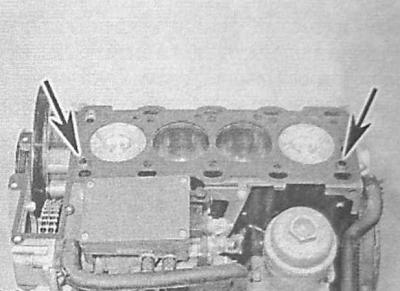
3. Make sure that the crankshaft is at TDC and locked, the cams of the valve drive of the first cylinder are turned with the working projections upward, and the groove in the end surface of the shaft journal is turned parallel to the cut of the head (inspection hole at the top).
4. Using an assistant, install the head on the cylinder block — make sure the guide bushings fit into the corresponding sockets. When installing the head, thread the timing chain through it and secure it to the surface of the head using a screwdriver or a suitable rod.
5. Lightly coat the threads and underside of the bolt heads with clean engine oil, then install the bolts and tighten them hand tight.
6. Acting in a strictly defined sequence, in several steps evenly, tighten the head bolts with the force of the 1st stage.
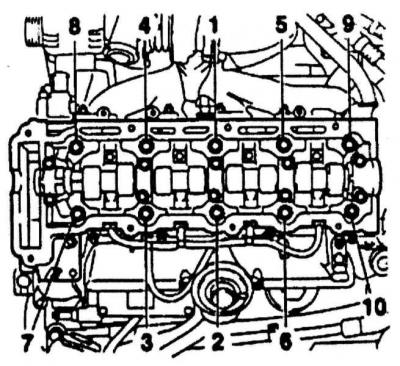
7. In the same order, tighten the bolts to the corners first at stage 2, then at stage 3, 4, 5 and 6, using a protractor attachment or using paint or a marker to mark the reference points.
8. Screw in the bolts securing the head to the timing chain cover and the cylinder block and tighten them to the required torque.
9. Turn the generator to its normal position and tighten the upper bolt of its fastening with the required force (see Chapter Engine electrical equipment).
10. Connect the cooling system hoses to the cylinder head and secure them with clamps.
11. Install the intake manifold, exhaust manifold and related components (see Chapter Power and exhaust systems).
12. Install the camshaft sprocket (see Removal and installation of timing chains and sprockets, checking the condition of components (2.0L engines).
13. Install new sealing washers on the fuel line union connectors of the high-pressure fuel pump. Tighten the connectors to the required torque (see Chapter Power and exhaust systems).
14. Finally, fill the cooling system (see Chapter Cooling and heating systems).
Visitor comments