


Contents: Single camshaft engines ⬇ Twin Cam Engines ⬇
Single camshaft engines
Camshaft sprocket
The outer belt covers are removed, and the following operations are carried out.
Turn the crankshaft so that piston No.1 is at TDC.
On 1.4 and 1.6 L engines, record the position of the tension indicator.
Loosen the three coolant pump bolts with a socket wrench, then rotate the pump to relieve belt tension.
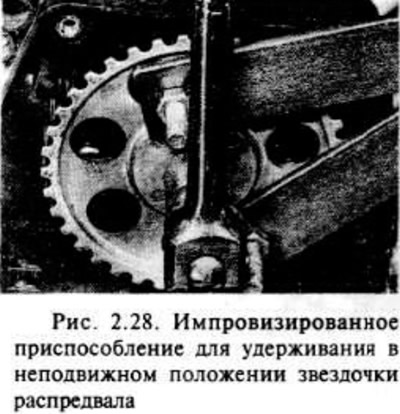
It is necessary to fix the camshaft so that it does not rotate, and this can be achieved in one of the following two ways.
- 1. Assemble the fixture shown in the figure and use it to fix the sprocket using the holes.
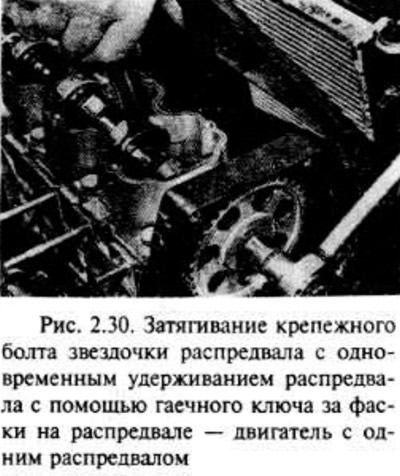
- 2. Remove the distributor cover and secure it with a wrench, grasping the shaft by the chamfers between cams NN 3 and 4.
Unscrew the camshaft sprocket bolt, not forgetting the washer.
Remove the sprocket from the end of the camshaft.
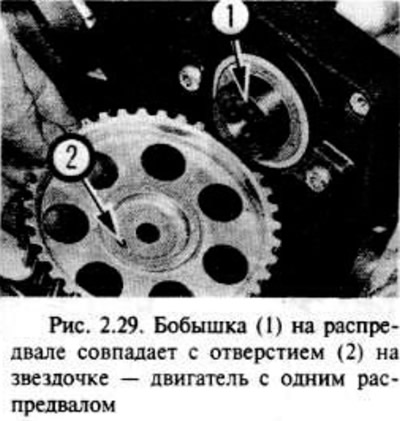
Installation begins with placing the sprocket on the camshaft (make sure the boss on the camshaft matches the hole on the sprocket).
Tighten the sprocket bolt to the specified torque.
Check that the TDC marks on the camshaft and crankshaft sprockets match (piston N 1 at TDC), then put on the belt.
Adjust the timing belt tension and install the outer belt covers.
Crankshaft Sprocket - Removal
After removing the outer belt covers, the following operations are performed.
Turn the crankshaft until the piston reaches TDC and remove the crankshaft pulley.
On 1.8 and 2.0 L engines, unscrew the crankshaft sprocket bolt as well. To prevent the crankshaft from turning, either engage direct transmission and have an assistant press the brake (only for models with manual transmission), or remove the starter and insert a suitable tool between the teeth of the crown gear. Unscrew the sprocket bolt (be careful when doing this, as it is tightened very tightly) and remove the gasket.
Next, lock the tension indicator lever and turn the pump as indicated earlier, then remove the belt.
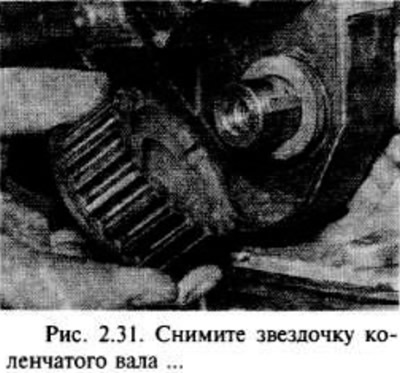
Remove the sprocket from the crankshaft using a suitable puller. Where necessary, remove the woodruff key and thrust washer from the crankshaft.
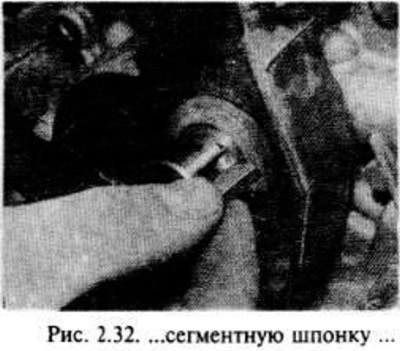
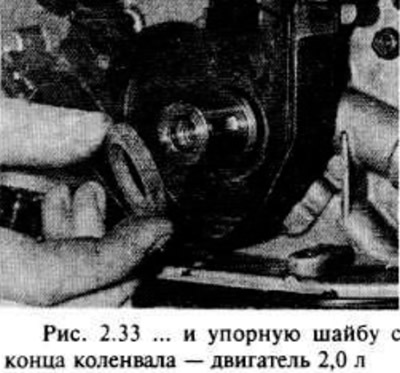
Installing the crankshaft sprocket
Where applicable, install the woodruff key onto the end of the crankshaft, then install the sprocket with the locking boss.
On 1.8L and 2.0L engines, where applicable, install the thrust washer and woodruff key onto the crankshaft ends, then install the crankshaft sprocket and tighten the new bolt to the specified torque.
Check that the TDC marks on the camshaft and crankshaft sprockets match (piston No.1 is at TDC), then put on the belt.
Install the crankshaft pulley, adjust the belt tension, install the outer belt covers.
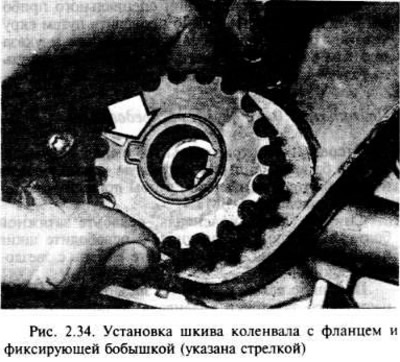
Twin Cam Engines
Removal and installation the camshaft sprocket
Remove the timing belt as described earlier.
It is necessary to secure the camshaft so that it does not rotate when the sprocket bolt is loosened, and this can be achieved according to the operations indicated at the beginning of this section, not forgetting that the chamfers for holding the camshaft in a stationary position are located in the front part of the 1st cam lobe (see fig. 2.35).
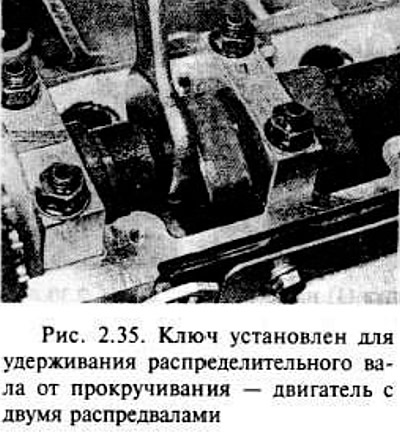
Loosen the camshaft sprocket bolt and remove it along with the washer. Remove the sprocket from the end of the camshaft.
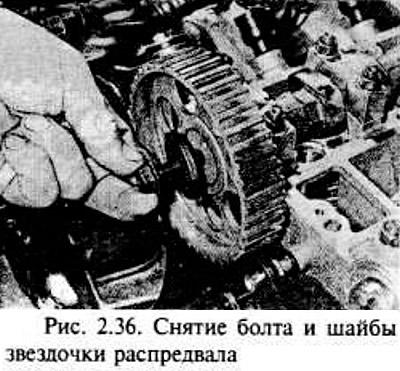
Place the sprocket onto the camshaft, making sure the boss aligns with the hole in the sprocket.
Install a new bolt and tighten it in two stages, securing the camshaft.
Install a new timing belt and adjust the tension.
Crankshaft Sprocket - Removal and Installation
Remove the timing belt. After this, you need to unscrew the crankshaft sprocket bolt and secure it. Using a Torx type bushing, unscrew the bolt (it's tightened very tightly) and remove the washer.
Remove the sprocket from the crankshaft using an appropriate puller if necessary.
Install the sprocket onto the crankshaft. Apply a small amount of grease to the threads of the new sprocket bolt and tighten it in two stages. Make sure the washer is under the bolt head and secure the crankshaft from turning.
Install a new belt and adjust its tension.
Visitor comments