


1.7L SOHC Models
Mass Air Flow (MAF) Sensor
The intake air temperature (IAT) sensor is integrated into the MAF sensor.
1. Turn off the ignition and disconnect the electrical wiring from the sensor.
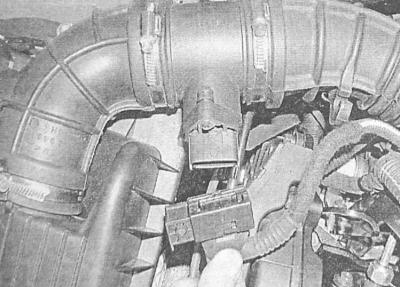
2. Release the clamps, disconnect the electrical wiring from the sensor and remove the sensor from the vehicle.
3. Installation is carried out in the reverse order. Make sure that the sensor and air ducts are securely fixed.
Accelerator Pedal Position Sensor
1. At the time of writing this Manual, the pedal assembly was manufactured as a monolithic unit and, in the event of malfunction, was subject to replacement as an assembly.
2. In the vehicle interior, unscrew the fasteners and remove the lower left section of the instrument panel trim to gain access to the pedal assembly (see Chapter Body).
3. Loosen the mounting nuts and remove the accelerator pedal assembly from the engine compartment bulkhead.
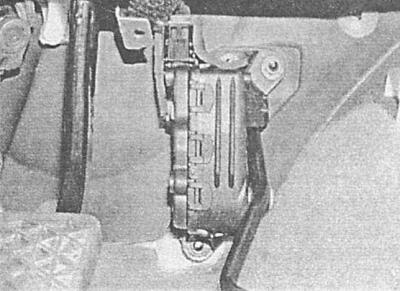
4. Release the lock and disconnect the electrical wiring from the sensor.
5. Installation is carried out in the reverse order. Make sure that the electrical wiring is connected correctly and that the fasteners are tightened securely with the required force.
6. Don't forget to install the instrument panel trim section.
Crankshaft Position Sensor (CKP)
1. The sensor is installed in the front part of the cylinder block - disconnect the electrical wiring, try to remember the order of its installation.
2. Unscrew the mounting bolt and remove the sensor.
3. Installation is carried out in the reverse order. Make sure that the fasteners are tightened with the required force.
Coolant Temperature (ECT) Sensor
1. The coolant temperature sensor is installed in the thermostat housing on the right side of the cylinder head, - disconnect the electrical wiring.
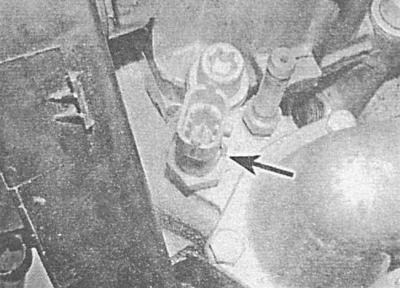
2. Drain the cooling system (see Chapter Routine maintenance), be prepared to collect any spilled coolant.
3. Unscrew the sensor from the thermostat housing - first open the expansion tank cap to release excess pressure in the tract, then install the cap in place and tighten it tightly. After unscrewing the sensor, immediately seal the hole for its installation with a rubber plug in order to minimize coolant loss.
4. Before installation, lubricate the threaded part of the sensor with sealant. Screw the sensor into the mounting socket and tighten it with the required force.
5. Connect the electrical wiring to the sensor.
6. Fill the cooling system (see Chapter Routine maintenance).
Boost pressure sensor
1. The boost pressure sensor is installed on the right side of the intake manifold - disconnect the electrical wiring.
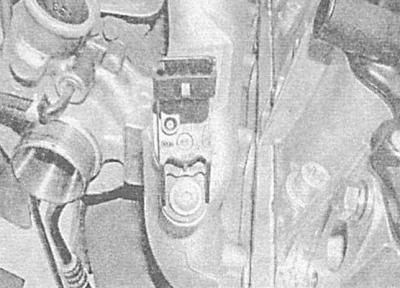
2. Loosen the mounting screw and remove the sensor from the pipeline.
3. Installation is carried out in the reverse order. Make sure that the fasteners are tightened with the required force.
Oil pressure alarm sensor
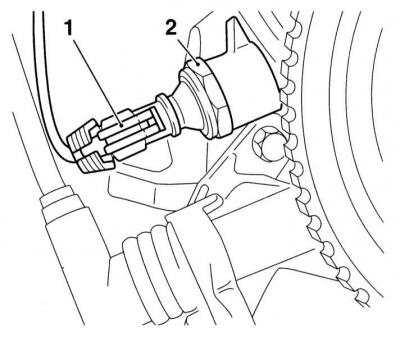
1 - electrical wiring connector
2 - oil pressure emergency sensor
The sensor is screwed into the rear of the oil pump housing. The signals generated by the sensor are used by the ECM to control the operation of the indicator lamp located on the instrument panel.
1. Set the parking brake, jack up the front of the vehicle and place it on supports; if equipped, remove the crankcase guard.
2. Disconnect the electrical wiring from the sensor.
3. Unscrew the sensor - prepare to collect any spilled oil, immediately seal the hole for installing the sensor with a suitable plug.
4. Installation is carried out in the reverse order. If the corresponding assembly is installed, do not forget to replace the sealing element, make sure that the sensor is tightened with the required force.
Electronic Engine Control Module (ECM)
Before removing the ECM, have it decoded in a car service workshop.
1. The ECM is located under the left front wheel arch protection liner. Set the parking brake, jack up the front of the vehicle and place it on supports, remove the wheel.
2. Remove the mounting screws and remove the locker.
3. Disconnect the wiring harness and remove the ECM from the support bracket.
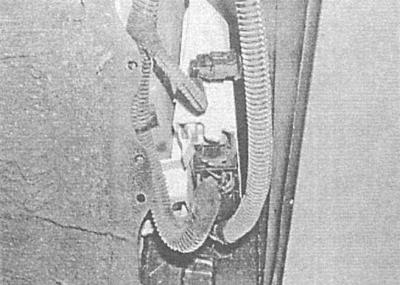
4. Installation is carried out in the reverse order. Make sure that the electrical wiring is connected correctly and securely fastened.
Electronic control module of the fuel injection pump
The fuel injection pump control module is built into the pump assembly. The authors of this Manual do not recommend attempting to dismantle the module.
Fuel temperature sensor
The sensor is built into the pump assembly. The authors of this Manual do not recommend attempting to dismantle the sensor.
Fuel injection pump shaft position sensor
The sensor is built into the pump assembly. The authors of this Manual do not recommend attempting to dismantle the sensor.
Injection start moment sensor
The sensor is built into the pump assembly. The authors of this Manual do not recommend attempting to dismantle the sensor.
Shut-off electromagnetic valve
The sensor is built into the pump assembly. The authors of this Manual do not recommend attempting to dismantle the sensor.
Models 1.7L DOHC
Mass Air Flow (MAF) Sensor
The intake air temperature (IAT) sensor is integrated into the MAF sensor.
See above 1.7L SOHC Models, the corresponding subsection.
Accelerator Pedal Position Sensor
See above 1.7L SOHC Models, the corresponding subsection.
Crankshaft Position Sensor (CKP)
1. Set the parking brake, jack up the vehicle and place it on supports; if equipped, remove the crankcase guard.
2. The sensor is installed at the rear of the cylinder block, under the starter. Get under the car and disconnect the electrical wiring from the sensor - try to remember the order in which it is laid.
3. Unscrew the mounting bolt and remove the sensor - the sealing ring must be replaced without fail.
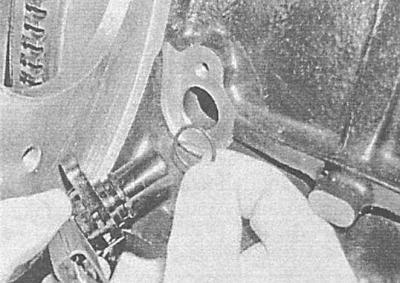
4. Installation is carried out in the reverse order. Do not forget to replace the sealing ring, make sure that the fasteners are tightened with the required force.
Coolant Temperature (ECT) Sensor
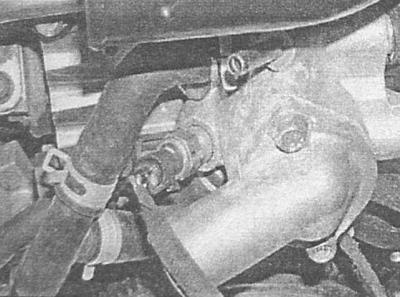
See above 1.7L SOHC Models, the corresponding subsection.
Boost pressure sensor
1. Remove the air cleaner duct installed at the rear of the engine compartment (see Removal and installation air intake tract components).
2. Remove the EGR valve from the intake manifold (see Exhaust and emission control systems).
3. Disconnect the wiring from the sensor attached to the right side of the intake manifold.
4. Unscrew the mounting bolts and remove the sensor.
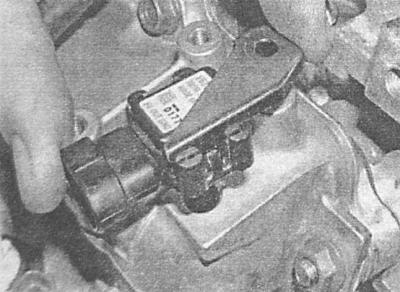
5. Installation is carried out in the reverse order. Make sure that the fasteners are tightened with the required force.
Oil pressure alarm sensor
1. The signals generated by the sensor are used by the ECM to control the operation of the indicator lamp located on the instrument panel.
2. Remove the battery with the support bracket (see Chapter Engine electrical equipment).
3. The sensor is located on the left side of the cylinder block, disconnect the electrical wiring from it.
4. Unscrew the sensor from the block - prepare to collect any spilled oil.
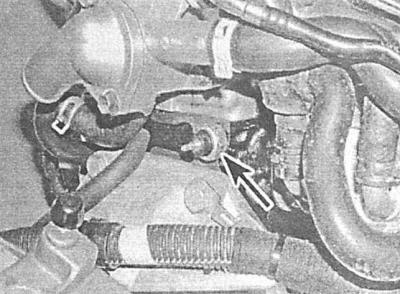
5. Lightly lubricate the threaded part of the sensor with sealant. Screw in the sensor and tighten it to the required torque.
6. Connect the electrical wiring, then install the battery with the support bracket in place.
7. Start the engine and check for signs of developing leaks.
Electronic Engine Control Module (ECM)
Before removing the ECM, have it decoded in a car service workshop.
1. The ECM is located on the top of the engine, above the EGR valve.
2. Disconnect the negative cable from the battery.
3. Release the spring clips and disconnect the two ECM wiring connectors, being careful not to damage the connectors.
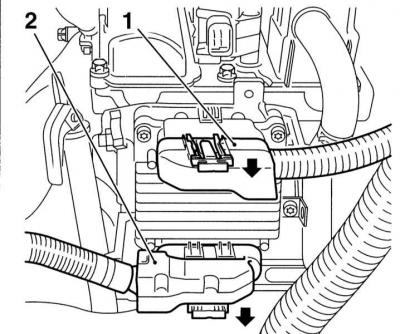
4. Remove the mounting bolts/nuts and ECM.
5. Installation is carried out in the reverse order. Ensure that the wiring is connected correctly and securely. The connectors differ in design; the harness coming from the left side of the engine compartment is connected to the rear socket.
Electronic control module of the fuel injection pump
The fuel injection pump control module is located at the rear of the pump assembly.
1. Set the parking brake, jack up the front of the vehicle and place it on supports; if equipped, remove the crankcase guard.
2. Get under the vehicle and disconnect the electrical wiring from the control module.
3. Loosen the mounting bolts and remove the control module.
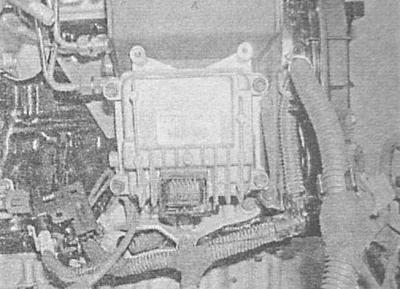
4. Installation is carried out in reverse order.
Turbocharging system relief solenoid valve
1. Set the parking brake, jack up the front of the vehicle and place it on supports; if equipped, remove the crankcase guard.
2. Acting in accordance with the instructions set out above (see Electronic control module of the fuel injection pump), remove the fuel injection pump control module.
3. Disconnect the vacuum tube and electrical wiring from the valve.
4. Remove the two mounting bolts and remove the solenoid valve.
5. Installation is carried out in the reverse order. Make sure that the fastening bolts are tightened securely. Pay attention to the difference in the thickness of the vacuum tubes - the smaller one is connected to the inlet fitting.
Atmospheric pressure sensor (BARO)
The sensor is installed at the rear of the cylinder block, between the fuel injection pump and the starter.
1. Set the parking brake, jack up the front of the vehicle and place it on supports; if equipped, remove the crankcase guard.
2. Disconnect the electrical wiring from the sensor.
3. Lift the sensor up and release it from the support bracket.
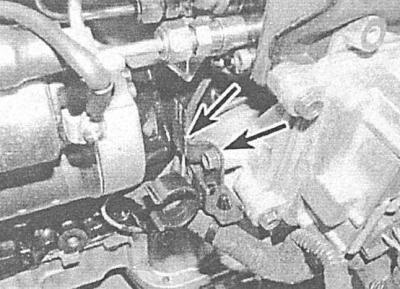
4. Installation is carried out in reverse order.
Fuel temperature sensor
Fuel injection pump components (1.7L DOHC models)
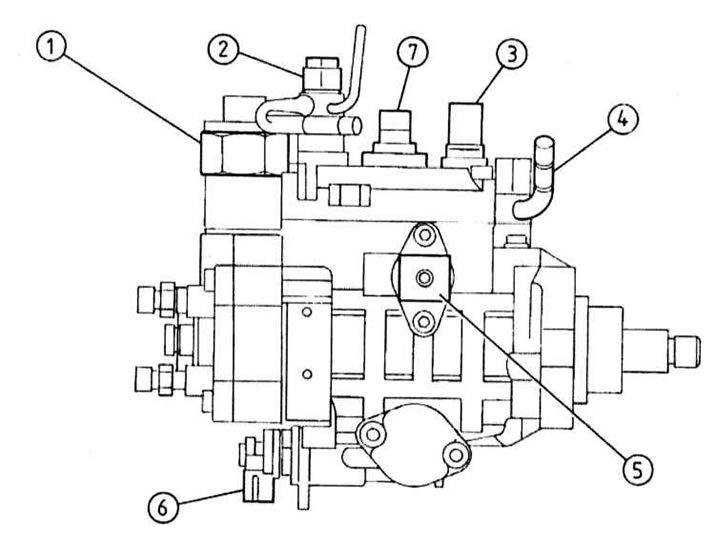
1 - Drain valve
2 — Fuel return line
3 — Fuel temperature sensor
4 — Fuel supply line
5 - Programmable memory block
6 — Injection timing control solenoid valve (PROM)
7 — Fuel injection pump shaft position sensor
The sensor is installed on the right at the top of the fuel injection pump assembly (see illustration Fuel injection pump components (1.7L DOHC models)).
1. Disconnect the electrical wiring and unscrew the sensor from the pump assembly.
2. After replacing the sealing element, screw the sensor into the fuel injection pump and tighten the nut securely.
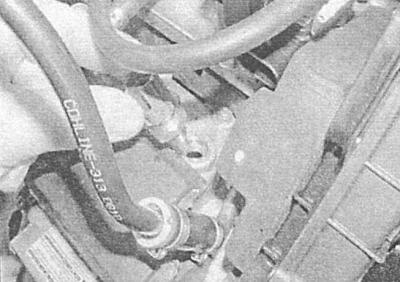
3. Restore the original electrical wiring connection.
Fuel injection pump shaft position sensor
The sensor is placed on the side of the fuel injection pump assembly (see illustration Fuel injection pump components (1.7L DOHC models)) and is not supplied to the spare parts market individually. If necessary, please contact the specialists of the Opel branded service station for advice.
Injection start moment sensor
The sensor is located under the fuel injection pump, closer to the flywheel/drive disk and is not supplied individually to the spare parts market. If necessary, contact the specialists of the Opel branded service station for advice.
Solenoid shut-off valve
The valve is installed in the upper part of the fuel injection pump, closer to the flywheel/drive disk and is not supplied individually to the spare parts market. If necessary, contact the specialists of the Opel branded service station for advice.
2.0 liter models
Mass Air Flow (MAF) Sensor
The intake air temperature (IAT) sensor is integrated into the MAF sensor.
See above 1.7L SOHC Models, the corresponding subsection.
Accelerator Pedal Position Sensor
See above 1.7L SOHC Models, the corresponding subsection.
Crankshaft Position Sensor (CKP)
1. Remove the mounting screws and remove the plastic protective cover from the top of the cylinder head.
2. In order to ensure adequate access to the sensor, apply the parking brake, jack up the front of the vehicle and place it on supports; if equipped, remove the crankcase guard.
3. Follow the wiring harness from the sensor to the wiring harness connector. Release the connector from the support bracket and disconnect it.
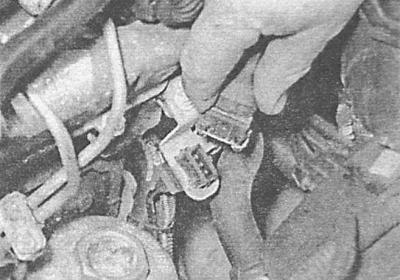
4. Wipe the engine surface around the sensor, then unscrew the mounting bolt and remove the sensor from the front of the cylinder block, remove the sealing ring.
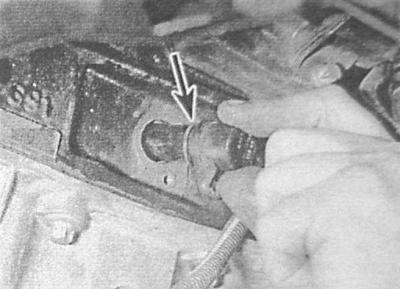
5. Installation is carried out in the reverse order. Do not forget to replace the sealing ring, make sure that the fastening bolt is tightened with the required force.
Coolant Temperature (ECT) Sensor
The sensor is screwed into the right side of the front part of the cylinder head, for a description of the procedures for removing and installing the sensor, see. Checking the proper functioning, removal and installation of electrical components of the engine cooling system control circuit.
Boost pressure sensor
1. Loosen the mounting screws and remove the plastic protective engine cover.
2. Remove the screws securing the wiring harness routing channel to the top of the intake manifold and disconnect the wiring harness from the sensor.
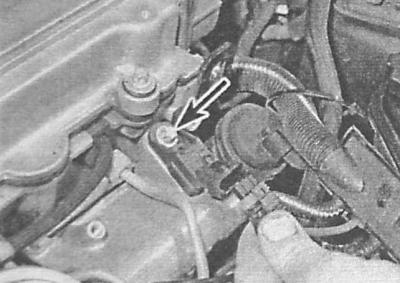
3. Remove the mounting bolt and remove the sensor from the top of the intake manifold - note the sealing ring seated on the shaft.
4. Installation is carried out in the reverse order. Do not forget to replace the sealing ring, make sure that the fastening bolt is tightened with the required force.
Oil temperature sensor
1. Set the parking brake, jack up the front of the vehicle and place it on supports; if equipped, remove the crankcase guard.
2. Drain the engine oil (see Chapter Routine maintenance), - after completing the procedure, do not forget to screw the drain plug of the pan back into place with a new sealing washer and tighten it with the required force.
3. Disconnect the electrical wiring and unscrew the sensor from the front of the crankcase.
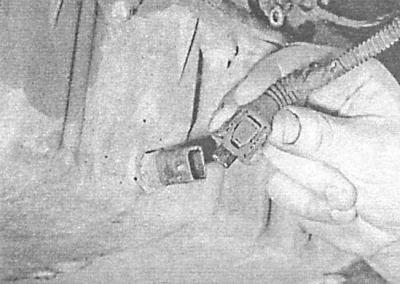
4. Installation is carried out in reverse order.
5. Finally, fill the engine with fresh oil (see Chapter Routine maintenance).
Electronic Engine Control Module (ECM)
Before removing the ECM, have it decoded in a car service workshop.
See above 1.7L SOHC Models, Oil pressure sensor.
Electronic control module of the fuel injection pump
The fuel injection pump control module is built into the pump assembly. The authors of this Manual do not recommend attempting to dismantle the module.
Intake manifold switching solenoid valve
Vacuum Line Routing Diagram for 2.0L High Pressure Turbocharged Models
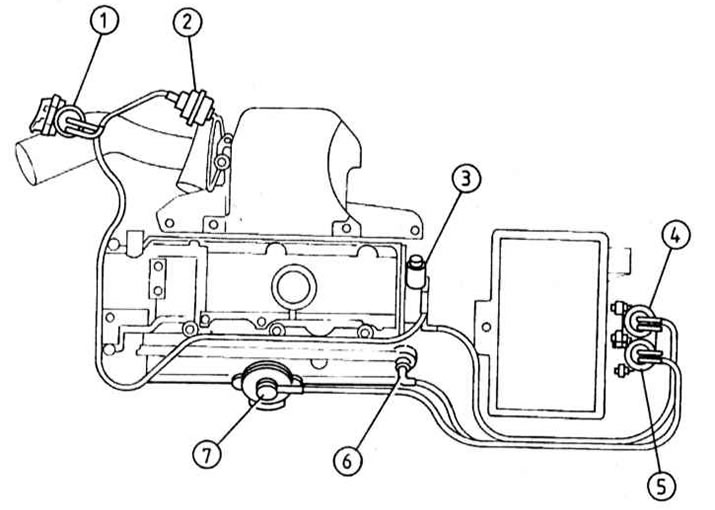
1 — Boost pressure control solenoid valve
2 — Boost pressure control actuator
3 - Vacuum pump
4 — EGR valve
5 — Electromagnet for controlling the operation of the intake manifold switching valve
6 — Intake manifold switching valve
7 — EGR valve
There are two valves on the engine: the exhaust gas recirculation (EGR) valve and the intake manifold switching valve. The latter is mounted closer to the front of the car (see illustration Vacuum Line Routing Diagram for 2.0L High Pressure Turbocharged Models).
1. Disconnect the electrical wiring and vacuum hoses from the valve, remove the mounting screws and remove the valve from the support bracket.
2. Installation is carried out in reverse order.
Turbocharging system electromagnetic relief valve
The solenoid valve is installed in the right rear corner of the engine compartment.
1. To gain access to the valve, remove the air intake duct (complete with MAF sensor), leading from the air cleaner to the turbocharger.
2. Disconnect the electrical wiring and vacuum hoses from the valve, unscrew the mounting screws and remove the valve from the support bracket.
3. Installation is carried out in reverse order.
Visitor comments