


Contents: Removal ⬇ Installation ⬇
Removal
1. Drain all fuel from the tank into a clean container.
2. Lift the edge of the seal base surrounding the filler neck and loosen the fastening screw at the bottom.
3. Block the front wheels, jack up the rear of the vehicle and securely support it on axle stands placed under the sides of the body frame.
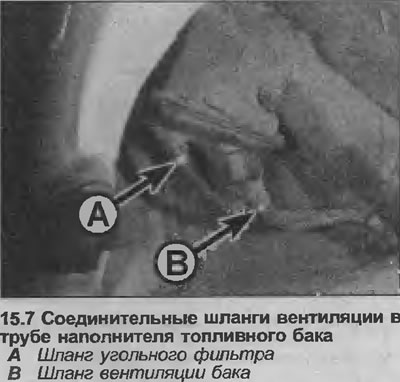
4. Unscrew the filler pipe mounting bolt from the bottom, then cut along the pipe or all the clamps securing other pipes or hoses to the bottom. Release the clamps, disconnect the filler and vent hoses from the lower end of the pipe, and the small diameter vent hoses from the couplings at the upper end.
Material taken from an internet portal (opelbook.ru)
5. Make sure that all components that may interfere with removal have been removed or disconnected, and exit the pipe from underneath the vehicle.
6. To check the function of the anti-leak valve in the filler pipe, turn the pipe upside down and fill the lower coupling with gasoline. If the valve is functioning properly, gasoline should not leak out the other side. If gasoline leaks out, the valve is faulty and the entire filler pipe must be replaced.
Installation
7. Installation is carried out in the reverse order of removal, and please note the following.
- a) Check the condition of all hoses and clamps, replace any components that you consider worn or damaged
- b) Connect the ventilation hoses to the couplings at the top end of the pipe, and also connect the hose from the carbon filter to the top coupling and the ventilation hose directly from the tank to the bottom coupling (see illustration).
- c) Replace any clamps that were cut during removal that secure any pipes or hoses to the filler pipe.
- d) Check carefully that there are no leaks when filling the tank; if you find any, fix the problem immediately.
Visitor comments