


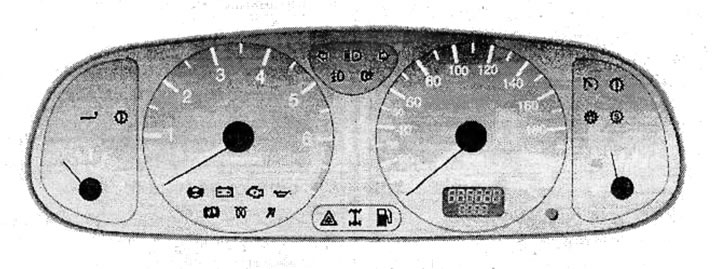

Trailer direction indicator light
The indicator lamp flashes at the interval of the trailer direction indicators. If it does not light, the direction indicator is faulty.

Transmission Fluid Temperature Warning Light
The indicator lamp lights up after the ignition is turned on and then goes out. If it lights up while the vehicle is moving, it means the transmission fluid temperature is very high. In this case, without stopping the movement, select the Sport program, reduce the load on the engine and move the selector lever to position 3 or 2. Do not stop the car. If the indicator light does not go out or flashes while driving, the transmission fluid needs to be replaced.

Anti-lock brake system warning light
ABS continuously monitors the wheel speed. If the wheels lock, ABS begins to continuously change the pressure in the hydraulic circuit of the brake drive of individual wheels. If you press the brake pedal under conditions where wheel lockup is possible, the brake system may make a "ticking" sound, or you may feel a corresponding pulsation in the depressed brake pedal during braking. This is normal and indicates that the ABS is operating. In order to allow the ABS to operate with maximum efficiency in this emergency situation, do not attempt to change the brake pedal pressure yourself or "pump" the brake pedal. Press the brake pedal as hard as the situation requires and let the ABS independently regulate the force applied to the wheel brakes.
Even with ABS, a car still requires a certain braking distance. Always maintain a safe distance from the vehicle in front.
Warnings. Even though the car is equipped with ABS, it is not able to replace the driver and therefore, when driving, it is still necessary to be careful. Indeed, ABS will not be able to prevent an accident in the following cases:
- In case of dangerous driving style with disregard for safety measures, exceeding the permitted speed or failure to maintain a safe distance from the vehicle moving in front;
- driving at high speed in situations where traction on the road surface is significantly reduced, such as on wet surfaces where there is a risk of aquaplaning.
- Driving at excessive speed on poor road surfaces. The ABS system is designed for the most efficient use of the braking system on highways and roads. If the road surface is in poor condition, ABS may reduce the effectiveness of the braking system.
The ABS warning light comes on for approximately a few seconds after the ignition switch is turned to the ON position. During this time, the ABS self-diagnosis is performed and the warning light goes out if the system is normal. If the light remains on, this indicates a fault with the ABS.
Warning! If the ABS warning light stays on, it may indicate that there is a fault with the ABS. However, in this case, your vehicle's service brake system will continue to function normally.

Battery charge indicator light
Information taken from the website opelbook.ru
The indicator lamp comes on when the ignition switch key is turned to the ON position and goes out after the engine starts.
The indicator lamp indicates a malfunction of the generator or battery charging system.
If the light stays on while driving:
- Stop your vehicle at the nearest safe place.
- Turn off the engine and check the tension and condition of the alternator drive belt.
- If the belt tension is adjusted properly, there is a fault in the battery charging system.
- Have the charging system checked and repaired by your Opel dealer.

Engine Management System Malfunction Indicator Lamp
The indicator lamp comes on after turning the ignition key to the ON position and goes out a few seconds after the engine starts.
The indicator lamp is an integral part of the engine management system that monitors various components of the emission control system. If the light comes on while driving, it means there is a potential problem with the emission control system.
If the lamp comes on while the vehicle is moving, or does not come on after the ignition key is turned to the ON position, contact your nearest Opel dealer to have the system checked.
In general, you can continue to drive the vehicle and it does not need to be towed, but have the system checked by an Opel dealer as soon as possible.
If the lamp flashes after the ignition is turned on, it means that the engine start interlock system is faulty and the engine cannot be started.

Low oil pressure warning light
The warning light indicates low engine oil pressure in the engine lubrication system.
If the light stays on while driving:
- Stop the car.
- Turn off the engine and check the engine oil level. If the level is insufficient, add the required amount of oil.
If the oil pressure warning light remains on after adding oil, or if there is no oil available to top up, contact your Opel dealer.
Note: If you do not turn off the engine immediately, it may be seriously damaged.

Parking brake and low brake fluid level warning light
The indicator lamp lights up in the following cases:
- The parking brake is applied;
- The brake fluid level in the hydraulic brake system reservoir drops below the minimum permissible level.
After turning the key in the ignition switch to the ON position, the indicator lamp lights up for a few seconds and then goes out.
Parking brake indicator light
The indicator lamp comes on when the parking brake is applied and the ignition key is in the ON position. The lamp should go out when the parking brake is released.
Low Brake Fluid Warning Light
If the indicator lamp does not go out when the parking brake is released, this indicates a low brake fluid level. If the lamp remains on:
- Stop your vehicle at the nearest safe place.
- Turn off the engine and check the brake fluid level in the reservoir. If necessary, add brake fluid to the required level. Also check all components of the brake system for leaks
- If brake fluid leaks are detected, or the warning light remains on, or the brake system does not operate properly, stop driving. Have the vehicle towed to an Opel dealer for inspection and any necessary brake system repairs.
If the braking system does not work or its effectiveness has decreased, you must stop the car as follows:
- Press the brake pedal with more force than usual;
- If the service (foot) brake does not work, then to stop the vehicle, reduce the vehicle speed by braking with the engine and slowly pull the parking brake lever up. At the same time, press the brake pedal to turn on the brake lights to warn drivers behind you of your braking.
To check the lamps for proper operation, make sure that the parking brake and low brake fluid level indicator lamp comes on when the ignition switch key is turned to the ON position.

Glow plug indicator light
After turning the key in the ignition switch to the ON position, the indicator lamp lights up. As soon as the glow plugs have warmed up the engine to the set temperature, the control lamp goes out and you must immediately start the engine.

Airbag warning light
After turning the key in the ignition switch to the ON position, the indicator lamp lights up for a few seconds and then goes out. If the indicator lamp does not light or lights up while driving, contact your Opel dealer immediately for the necessary assistance.

Hazard warning light indicator lamp
The indicator lamp flashes when the hazard warning lights are switched on.

Four-wheel drive indicator light
The indicator lamp comes on when all-wheel drive is engaged.

Low Fuel Warning Light
The control lamp lights up when the fuel gauge needle enters the red sector, and even earlier on sharp turns. Refuel your vehicle as soon as possible.

Direction indicator lamp
The turn signal indicator lamp flashes when the turn signal switch lever is pressed.
Excessive blinking of the lamp indicates a poor connection in the turn signal circuit or a burnt out turn signal bulb.

High beam indicator lamp
The indicator lamp lights up when the high beam headlights are switched on and a light signal is given by switching the headlights.

Fog light indicator lamp
The indicator lamp lights up when the fog lights are switched on.

Rear fog light indicator lamp
The indicator lamp comes on when the rear fog lights are switched on.

Cruise control system indicator light (cruise control)
The indicator lamp comes on when the cruise control system is turned on.

Automatic transmission electronic control indicator light
After turning the key in the ignition switch to the ON position, the indicator lamp lights up for a few seconds and then goes out. If the indicator light comes on while the vehicle is moving, this indicates a malfunction in the gearbox, and the gearbox control switches to the backup program. In this case, the vehicle can be driven with some restrictions, but you should contact your Opel dealer as soon as possible.

Winter mode automatic transmission
The indicator lamp lights when Winter mode is engaged.

Sport mode automatic transmission
The indicator lamp lights when Sport mode is engaged.
Tachometer
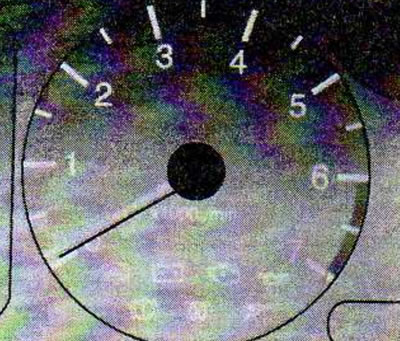
The tachometer shows the approximate rotation speed of the engine crankshaft.
Use a tachometer to ensure proper gear shifting and to prevent engine jerking and crankshaft over-revving.
Note: Do not allow the engine to run at engine speeds in the right tachometer zone. This may result in serious engine damage.
Speedometer
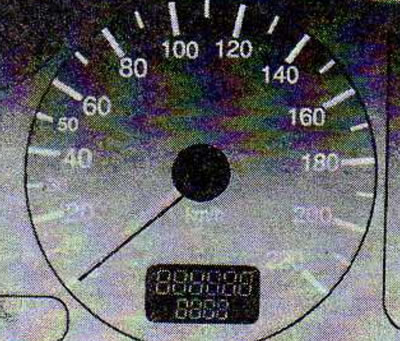
The speedometer shows the speed of the car as it moves forward.
Odometer
The odometer shows the total mileage of the vehicle.
Daily mileage counter
To reset the trip meter, press the button.
Coolant temperature gauge
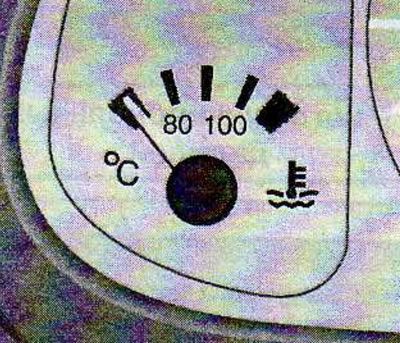
Indicates the engine coolant temperature when the ignition is on.
If the pointer of the indicator entered the red scale zone while the engine was running, this may indicate that the engine is overheating. Immediately stop the vehicle in a safe place and eliminate the cause of overheating. During the trip, make sure that the coolant temperature remains within the normal range, i.e. the arrow is in the middle of the scale.
When driving slowly during hot weather, the temperature gauge needle may approach the maximum values on the scale.
Fuel gauge
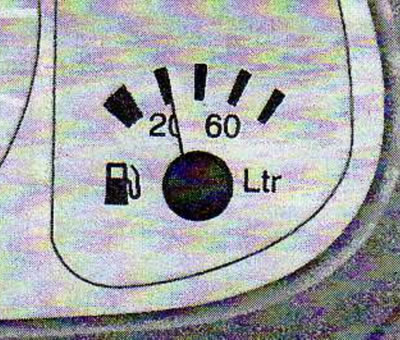
The fuel gauge shows the approximate fuel level in the tank.
The indicator needle may move slightly when braking, turning, accelerating the vehicle, and driving downhill or downhill.
Warning. You must not start driving if the fuel level is below the permissible level; if the fuel is completely used up, it may cause damage to the catalytic converter.
Visitor comments