


2. Disconnect the hoses and wiring from the carburetor, marking them so as not to mix them up when reconnecting them later.
3. To access the jets and float chamber, remove the top half of the carburetor, which is secured with 5 screws. Blow out the jets and their passages with compressed air (do not try to clean them with wire under any circumstances). If it is necessary to remove the jets, they should be carefully unscrewed.
4. Remove the mesh filter from the intake pipe by prying it up with a small screwdriver. Replace the filter (see photo).
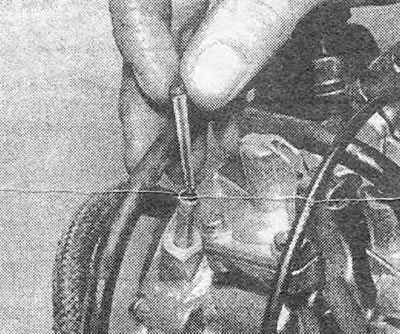
Photo 18.4. Removing the mesh filter from the intake manifold.
5. Clean the float chamber from dirt and sediment. Replace the intake needle valve and its seat if they are worn or if the engine has high mileage. Replace the float if it is damaged.
b. There is no float high level adjustment procedure specified for this carburetor. In any case, the upper level can vary within such wide limits that there is no need for precise adjustment. Just make sure the inlet needle valve closes completely before the float reaches the top of its lift.
7. Replace the membranes in the partial load mixture enrichment valve and in the accelerator pump. If the repair kit contains valve or accelerator pump parts, they should be installed in place of the old parts.
8. Further disassembly of the carburetor is not recommended. Pay special attention to the throttle valve opening mechanism if you decide to disassemble it: the locking system is of great importance.
9. The carburetor is assembled in reverse order. Replace all gaskets and seals with new ones and lubricate the lever mechanisms with molybdenum grease.
10. Before installing the carburetor on the engine, perform the checks and adjustments described in the next section.
Visitor comments