


Contents: 2.0L Engine - General Information ⬇ Timing belt of the camshaft (1.6,…⬇ Front camshaft oil seals (1.6, 1.8…⬇ Camshaft (1.6, 1.8 and 2.0 liters,…⬇ Cylinder head (1.6, 1.8 and 2.0…⬇ Sump (1.6, 1.8 and 2.0 liters, since…⬇ Oil pump (1.6, 1.8 and 2.0 liters,…⬇ Front crankshaft oil seal (from the…⬇ Engine (volume 2.0 liters) - removal…⬇
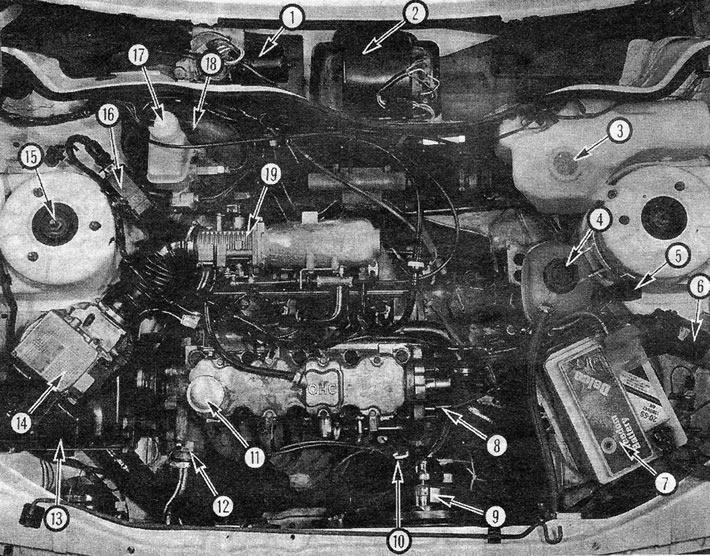
Under the bonnet - 1987 1.8 model, 18SE engine and L3 Jetronic fuel injection system: 1. Windscreen wiper motor; 2. Heater fan motor; 3. Washer reservoir; 4. Coolant reservoir; 5. Fuel system relay; 6. Ignition coil; 7. Battery; 8. Ignition distributor (trambler); 9. Radiator cooling fan; 10. Engine oil level gauge; 11. Oil filler cap; 12. Thermostat housing; 13. Air purifier; 14. Air flow sensor; 15. Suspension strut mount; 16. Ignition system control device; 17. Brake fluid reservoir; 18. Brake booster; 19. Damper valve housing
1. In 1987, significant changes were introduced to the 1.6 and 1.8 litre engines, and a 2.0 litre engine was also introduced. The modified engines can be easily identified by the position of the oil filler cap, which is now located next to the camshaft cover on the camshaft belt side. Additionally, the top belt cover is secured with spring clips instead of the bolts used on earlier models.
2. The main modifications of engines are the following:
3. Cylinder Block: Its structure has been strengthened to reduce vibration and engine noise, which also results in reduced bore and bearing wear.
4. Head: The combustion chamber profile has been changed, resulting in an increased combustion chamber area in the cylinder head, and on fuel injected engines the inlet ports have been changed. In addition, the capacity of the cylinder cooling jacket has been reduced, which has shortened the warm-up period.
5. Crankshaft: Crankshaft counterweight #1 now has a segmented disc (engines with a volume of 1.8) or a toothed locking washer (2.0 liter engines), to ensure alignment of ignition and fuel supply system control devices with engine speed/crankshaft position.
6. Connecting rods and cranks: The diameter and width of the small end bore of the connecting rod have been changed, and narrower crank studs have been installed. To ensure optimum engine balance, connecting rods are divided into 16 weight categories.
7. Additional changes were made to the design of pistons and rings, valves and their springs, camshaft and oil pump.
8. Except for those operations described in the Appendices, all other maintenance, repair and disassembly procedures are similar to those presented for engines on earlier models, and all information provided below should be used only in conjunction with the information available in Chapter 1.
2.0L Engine - General Information
9. This engine is similar in design to the 1.8L engine, and the maintenance, repair, and disassembly procedures for this engine are the same as for the 2.0L engine. The difference in specifications is indicated in the Specifications at the beginning of this Chapter. Where specification information is not provided in this Chapter, the information for the 1.8L engine may be used.
Timing belt of the camshaft (1.6, 1.8 and 2.0 l, since 1987) - replacement
Note: Correct adjustment of the timing belt requires the use of a special device provided by Vauxhall. Approximate adjustment can also be made using the method described below, but after that, ideally, it is recommended to contact a specialist to check that the adjustment is correct using special equipment.
10. Disconnect the battery ground cable and, for easier access, remove the air cleaner assembly as described in Chapter 3.
11. Drain all fluid from the cooling system as described in Chapter 2.
12. Loosen the generator adjustment link and mounting bolts (see photo 3.12), move the generator towards the engine and remove the drive belt from the pulleys.
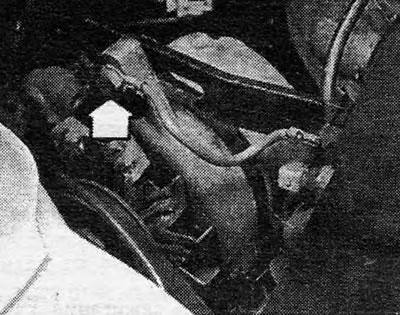
Photo 3.12 Generator adjustment connecting element bolt (indicated by the arrow)
13. Release the retaining clips and remove the upper timing belt cover (see photo 3.13).
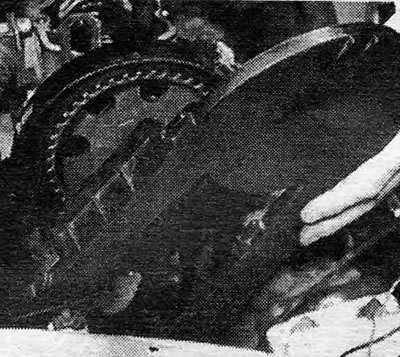
Photo 3.13 Removing the upper timing belt cover
14. Using a wrench placed on the camshaft pulley bolt, turn the camshaft until piston #1 is in the firing position. This position will be indicated by the protrusion on the camshaft pulley being aligned with the pointer on the oil pump housing, and the protrusion on the camshaft sprocket being aligned with the sprocket on the inner periphery of the timing belt cover (see photo 3.14 A and B).
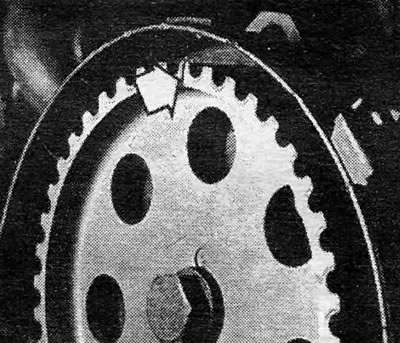
Photo 3.14 A Align the protrusion on the camshaft chain ring (indicated by the arrow)...
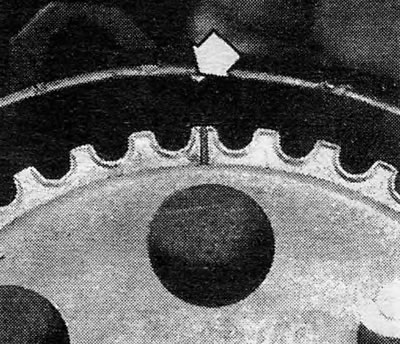
Photo 3.14 B....with an asterisk on the inner cover of the toothed belt (indicated by the arrow)
15. Raise and support the front of the vehicle, then remove the right front wheel.
16. Using a suitable Allen key, loosen the four bolts securing the crankshaft pulley to the timing belt sprocket and remove the pulley (see photo 3.16 A and B).
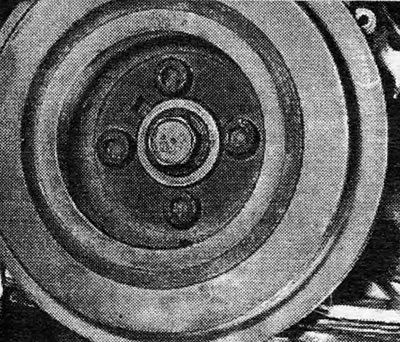
Photo 3.16A Unscrew the four crankshaft pulley mounting bolts...
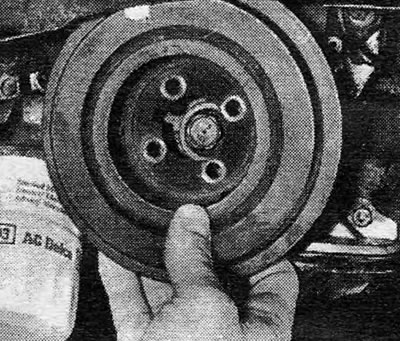
Photo 3.16B....and remove the pulley
17. Release the retaining clips and remove the intermediate timing belt cover from the water pump area.
18. Using a suitable Allen key or other appropriate tool, loosen the three bolts securing the coolant pump, then rotate the pump in place to release the tension on the timing belt. The pump can be moved by holding the protrusion located on the side of its casing (see photo 3.18 A and B).
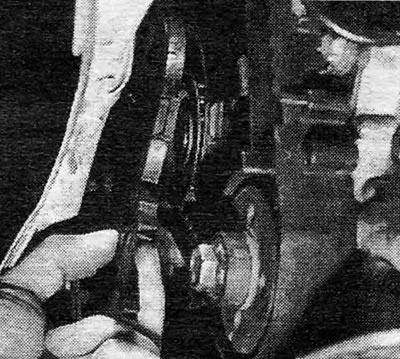
Photo 3.18 A Loosen the upper bolt (A) of the coolant pump, the front bolt (B)...
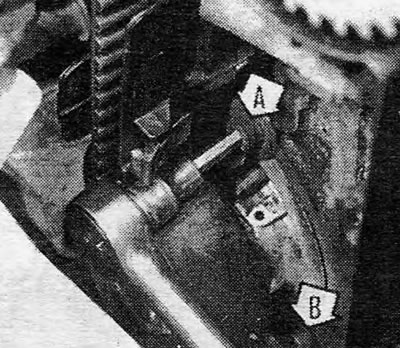
Photo 3.18 B....and the rear bolt (C), then push the pump using the tab (D)
19. If you intend to continue using the same belt, mark its direction of travel with chalk, then remove it from the three sprockets (see photo 3.19).
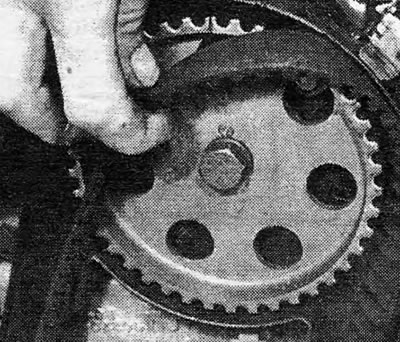
Photo 3.19 Remove the toothed belt from the chain rings
20. Check the condition of the belt and replace it if any signs of cracking, tearing, oil contamination or general wear are found.
21. Without changing the position of the crankshaft and camshaft, place the belt over the chain rings. Tighten the belt slightly by moving the coolant pump, then temporarily tighten the pump bolts.
22. Install the crankshaft pulley in place (without tightening its mounting bolts), and check that all marks match as described previously in Section 14. Now rotate the crankshaft through two full cycles, in the direction of normal rotation, and check that the pointers can be fully aligned again. If this is not the case, loosen the belt tension and reposition it on the crankshaft chain rings until all the pointers can be aligned properly.
23. Loosen the coolant pump mounting bolts and move the pump to achieve belt tension. The tension is correct when it can be turned approximately 90 degrees by hand at a point located midway between the crankshaft and camshaft chain rings on the straight side of the belt. Once the correct belt tension has been achieved, tighten the coolant pump bolts, rotate the camshaft one full cycle, and check the tension again. Repeat this procedure until you achieve the correct belt tension.
24. Install the intermediate timing belt cover onto the cooler pump.
25. Install the camshaft pulley in place and secure it with four bolts, tightened to the required degree.
26. Replace the upper timing belt cover and secure it with the retaining clips.
27. Install the alternator drive belt and adjust its tension as described in Chapter 2.
28. Replace the wheel and lower the car to the ground.
29. Install the air cleaner as described in Chapter 3, fill the cooling system as described in Chapter 2, then connect the battery ground wire.
Front camshaft oil seals (1.6, 1.8 and 2.0 litres, 1987 onwards) - replacement
30. Remove the camshaft timing belt as described above.
31. Remove the air hose if equipped, then remove the bolts and remove the camshaft cover. Mark the position of the cable clamps under the mounting bolts to facilitate reassembly. Remove the cover gasket.
32. Loosen the central mounting bolt and remove the chain wheel from the camshaft (see photo 3.32). To prevent the camshaft from rotating while loosening this bolt, use a wrench with flat spots located on the areas between #3 and #4 of the camshaft.
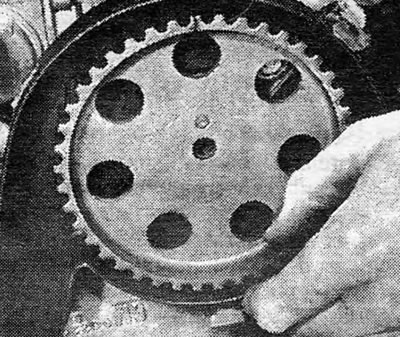
Photo 3.32 Removing the chain ring from the camshaft
33. Loosen the central bolt of the crankshaft chain ring without changing the installed position of the crankshaft. To prevent the crankshaft from rotating while loosening this bolt, it may be sufficient to engage the gear and the handbrake (only in case of manual transmission); but a better way would be to remove the flywheel bottom cover plate and lock the gear ring with a large screwdriver or something similar.
34. Remove the sprocket from the crankshaft. If it is firmly in place, reinstall the bolt two or three turns, then remove the sprocket using a two-handed puller (see photo 3.34 A and B).
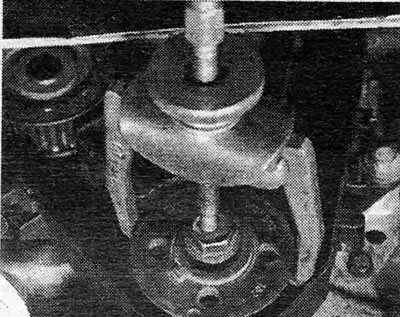
Photo 3.34A Use a puller, if necessary, to disconnect the chain ring from the crankshaft...
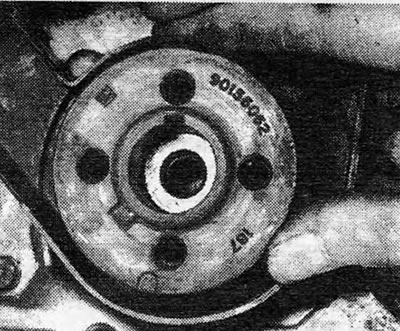
Photo 3.34B....then remove the chain ring from the crankshaft
35. Carefully release the Woodruff key, then remove the spacers located behind the key (see photo 3.35 A and B).
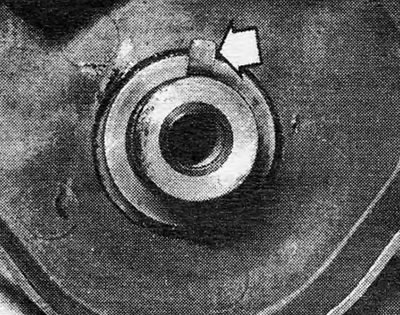
Photo 3.35A Remove the Woodruff key (indicated by the arrow)...
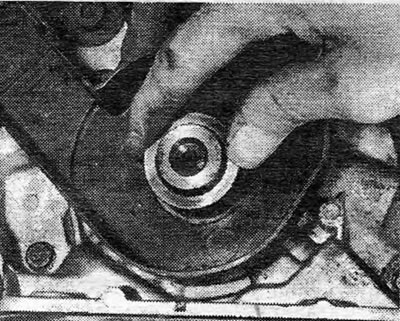
Photo 3.35B... and behind it the gasket(s)
36. Remove the two upper bolts securing the rear timing belt cover to the camshaft housing and release the electrical wire from the upper retaining clip. Remove the two lower bolts securing the rear belt cover to the oil pump housing, then remove the cover from underneath (see photo 3.36 A and B).
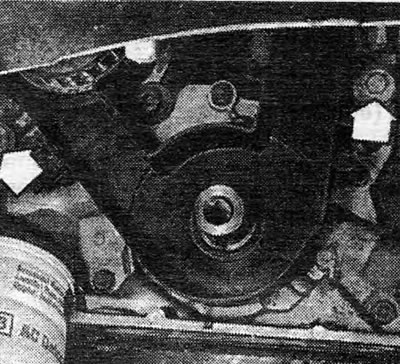
Photo 3.36A Timing Belt Rear Cover Fastening Bolts (indicated by arrows)
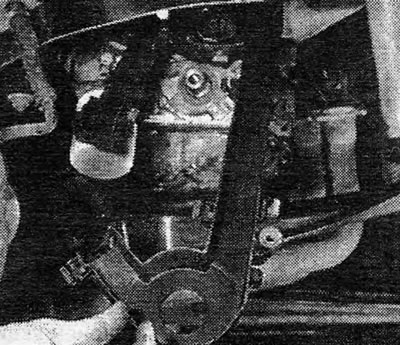
Photo 3.36B Removing the rear timing belt cover
37. Punch or drill a small hole in the center of the oil seal. Screw a self-tapping screw into it and pull it out, grasping the screw with pliers.
38. Clean the gasket installation area in the camshaft housing, then lubricate the lips and side surfaces of the new gasket with engine oil.
39. Install the new gasket with its lips facing inward and tap it into place using a piece of pipe and a mallet. Be careful when installing to avoid damaging the gasket lips; if the new gasket comes with a protective sleeve, be sure to use it.
40. Install the timing belt cover and secure it with four bolts.
41. Place the shims on the crankshaft, install the Woodruff key and timing belt chain ring in place. Replace the chain ring retaining bolt and tighten it to the required torque (see photo 3.41).
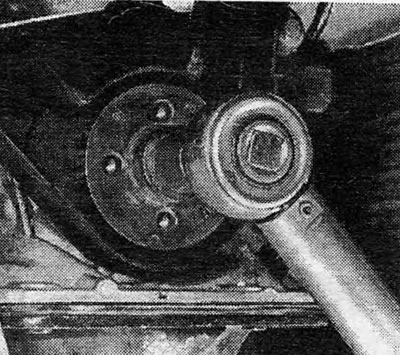
Photo 3.41 Tighten the chain ring mounting bolt to the required degree
42. Install the camshaft chain ring in place and secure it with the mounting bolt, tightened to the required degree.
43. Using a new gasket if necessary, reinstall the camshaft cover. Tighten the mounting bolts gradually in a diagonal sequence to the required degree. Connect the sleeve.
44. Install and adjust the camshaft timing belt, referring to the information at the beginning of this Section.
Camshaft (1.6, 1.8 and 2.0 liters, since 1987) - removal and installation
45. The procedures for removing and installing the camshaft are described in the next section on removing and installing the cylinder head. The camshaft housing bolts also hold the cylinder head in place, so when these bolts are removed, there is a good chance the gasket will be damaged. For this reason, if you intend to remove the camshaft, you must completely remove the cylinder head.
Cylinder head (1.6, 1.8 and 2.0 liters, since 1987) - removal and installation
Note: The following procedure describes the removal and installation of the cylinder head, complete with pipes, on fuel injected engines. This process can also be used for carbureted engines, and if necessary, please contact Chapter 3 for details on connecting electrical wiring and fuel lines for carburetor engines.
46. The cylinder head may only be removed when the engine is cold, otherwise there is a risk of damage.
47. Disconnect the battery ground cable.
48. Remove the air cleaner assembly as described in Chapter 3.
49. Drain all fluid from the cooling system as described in Chapter 2.
50. Disconnect the radiator and heater hoses from the cylinder head and pipeline.
51. Disconnect the spark plug high tension wires, marking them if necessary, then remove the distributor cap (ignition distributor). On 1.6 liter engines, remove the distributor as described in Chapter 4.
52. Remove the bolt securing the crankshaft housing air sleeve to the side of the cylinder head (see photo 3.52).
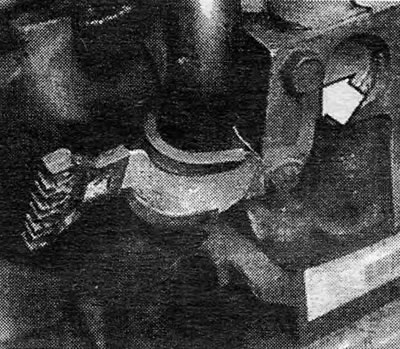
Photo 3.52 Loosen the crankshaft casing air tube mounting bolt (indicated by the arrow)
53. Loosen the air duct tube connecting sleeve at the camshaft housing, remove the oil level gauge, and unscrew the two air duct tube mounting bolts from the block. Disconnect the sleeve completely and remove the entire air tube assembly (see photo 3.53 A and B).
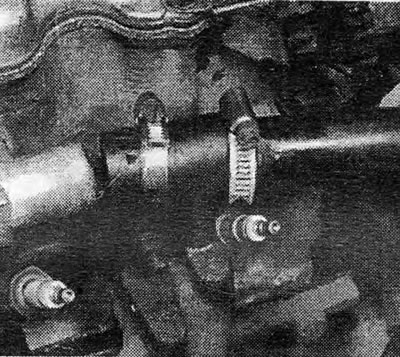
Photo 3.53A Disconnect the air tube sleeve from the camshaft housing
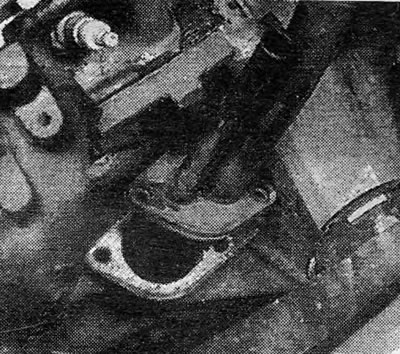
Photo 3.53B Removing the air tube structure
54. Disconnect the choke cable from the carburetor or choke housing, depending on the model.
55. Disconnect the electrical wires and wiring plugs from the carburetor, fuel injection system components, fuel line and cylinder head as necessary. Label all wires when removing them to avoid confusion during reassembly; if necessary, refer to Chapter 3 or the following Sections for further information. Once all the wiring is disconnected, you can move it away from the engine.
56. Disconnect and cap the fuel lines from the carburetor and injection system, depending on the model. Also on carburetor models, remove the fuel pump.
57. Disconnect the brake booster vacuum hose at the inlet of the pipeline (see photo 3.57).
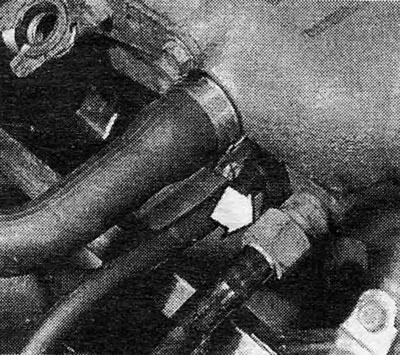
Photo 3.57 Connecting the brake booster vacuum hose to the pipeline (indicated by the arrow)
58. Disconnect the exhaust pipe from the pipeline.
59. Disconnect the hoses from the auxiliary air valve (see photo 3.59), then remove the valve from the camshaft housing.
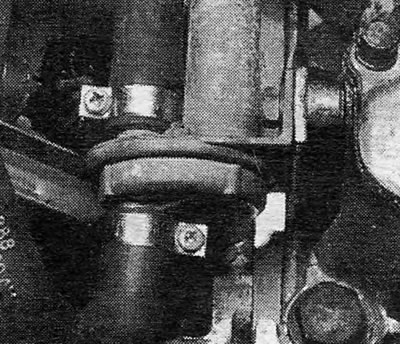
Photo 3.59 Hose connections at the auxiliary air valve
60. Loosen the bolts and remove the camshaft cover (see photo 3.60).
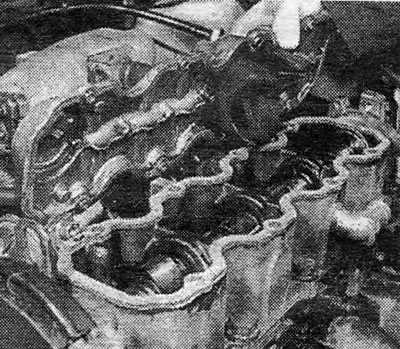
Photo 3.60 Removing the camshaft cover
61. Loosen the generator adjusting links and mounting bolts, move the generator towards the engine and remove the drive belt from the pulleys.
62. Remove the timing belt covers and release the belt tension as described in steps 13-18 earlier in this Section.
63. Remove the timing belt from the camshaft chain ring, then loosen the central mounting bolt and remove the chain ring from the camshaft. To prevent the camshaft from rotating when loosening this bolt, place a wrench with special flat sections between No. 3 and No. 4 camshaft lobes.
64. Remove the two bolts securing the rear timing belt cover to the camshaft housing (see photo 3.64)
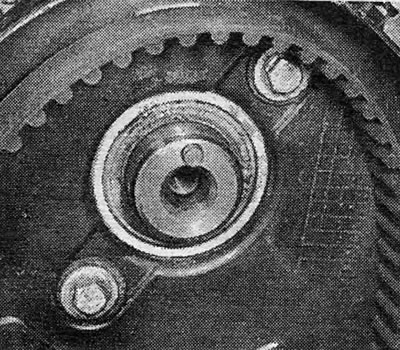
Photo 3.64 Bolts securing the rear timing belt cover to the camshaft housing
65. Loosen the cylinder head bolts in the reverse order to that shown in Figure 13.1; loosen the bolts 1/4 turn at a time, then 1/2 turn in the sequence shown until all bolts are loose. This process is very important to avoid damaging the cylinder head or camshaft housing. Be sure to throw away the old bolts and purchase new ones.
66. Remove the rear timing belt cover from the camshaft housing, then lift the housing up and off the mounting tabs (see photo 3.66).
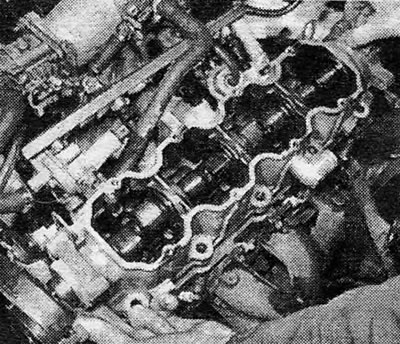
Photo 3.66 Removing the camshaft housing from the cylinder head
67. Remove the levers and plates from the cylinder head. Remove the valve lifters and place them in a container of clean engine oil to avoid any chance of them drying out. Keep all the parts in their original order (see photo 3.67 A, B and C).
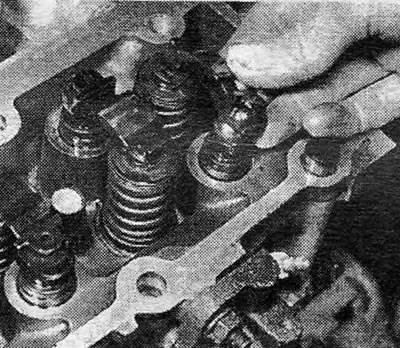
Photo 3.67A Remove the levers...
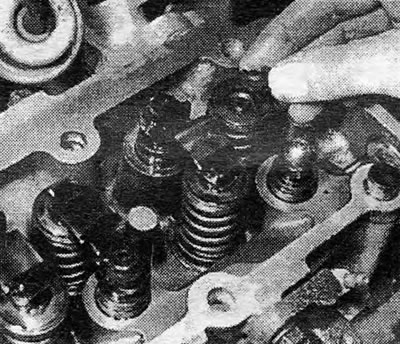
Photo 3.67B... behind them are plates...
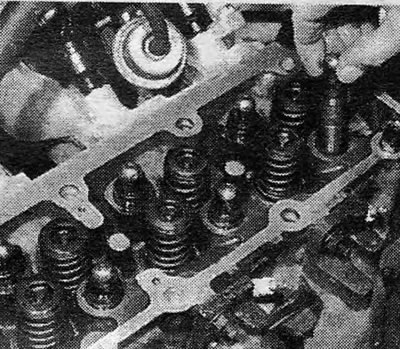
Photo 3.67C... and remove the valve lifters
68. Remove the cylinder head (see photo 3.68). If it gets stuck, gently pry it out with a plastic mallet. Remove the head gasket.
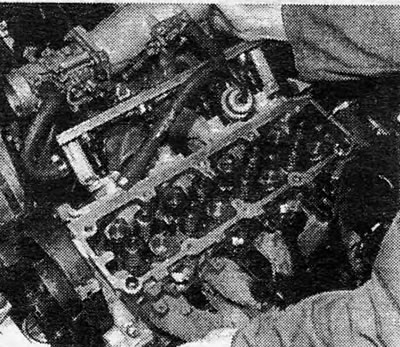
Photo 3.68 Removing the cylinder head
69. If further disassembly of the cylinders is required, refer to the information on these processes given in chapter 1.
70. Clean the cylinder head and block from carbon by carefully scraping it off. Cover cooler passages and other openings with plastic or cloth to prevent carbon or dirt from entering. Blot excess oil from the bolt holes; hydraulic pressure can cause the block to crack when the bolts are screwed in if there is excess oil in the bolt holes.
71. Once everything is clean, place the new head gasket on the block so that the word "OBEN" can be read on top (see photo 3.71).
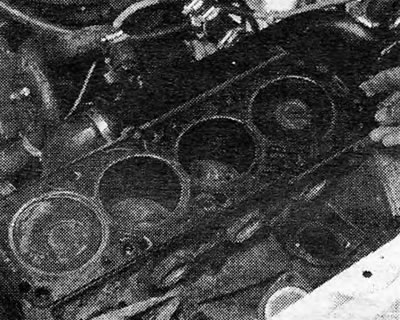
Photo 3.71 Install a new gasket with the word "OBEN" located on top
72. If the crankshaft was turned during removal of the cylinder head, reposition it so that piston No. 1 is in the firing position.
73. After you have thoroughly cleaned the mating surfaces, place the cylinder head on the block so that the mounting tabs fit into their holes.
74. Reinstall the hydraulic lifters, plates and levers into the cylinder head in their original order. When installing new hydraulic lifters, first soak each one in a container of clean motor oil and then squeeze them by hand several times.
75. Temporarily place the chain ring on the camshaft and check that the pointer is positioned correctly. If necessary, reinstall the shaft to the correct position, then remove the chain ring again.
76. Apply the hardening compound to the mating surfaces of the cylinder head and camshaft housing, and install the housing on the cylinder head.
77. Install new cylinder head bolts and tighten them in a spiral pattern as shown in Figure 13.1 to the required torque. Note that tightening these bolts occurs in five stages, with the last four stages requiring measurements of the bolt's angular position. You can use a template or a special measuring tool for these purposes (see photo 3.77). These tools can be purchased from the manufacturers at very reasonable prices, or they can be borrowed from happy owners.
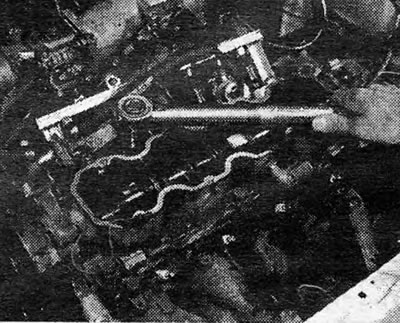
Photo 3.77A First tighten the cylinder head bolts to stage 1...
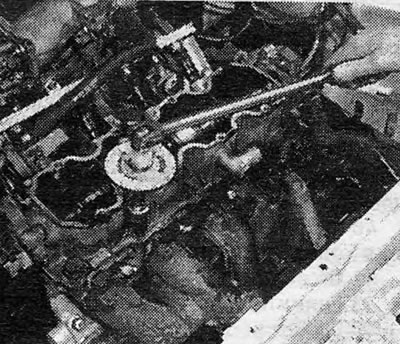
Photo 3.77B... and then to the correct angular value over four more stages
78. Install the two bolts securing the rear timing belt cover to the camshaft housing.
79. Install the camshaft chain ring and secure its central bolt, tightening it to the required degree (see photo 3.79).
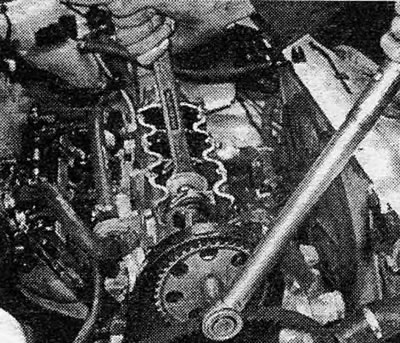
Photo 3.79 Hold the camshaft and tighten the chain ring bolt to the required degree
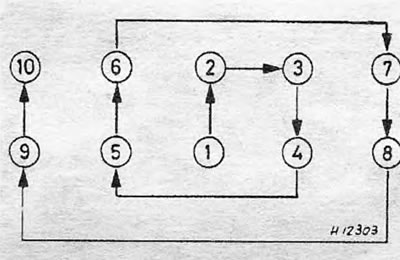
Figure 13.1 Cylinder Head Bolt Tightening Sequence - Work in a spiral pattern as shown
80. Check that the camshaft chain ring and crankshaft pulley alignment marks are in the correct position as described previously, then install and tension the timing belt as described in steps 21 - 27 of this Section.
81. Install the camshaft cover using a new gasket.
82. Install and tension the alternator drive belt as described in Chapter 2.
83. The installation processes for the remaining parts are carried out by performing the actions taken during disassembly in the reverse order. When finished, fill the cooling system as described in Chapter 2.
84. After the engine has started and reached normal operating temperature, check and adjust the idle speed if necessary (if it is regulated), and then tighten the cylinder head bolts again to the required degree in stage 5.
Sump (1.6, 1.8 and 2.0 liters, since 1987) - removal and installation
85. Remove the plug and allow the engine oil to drain into a suitable container. After draining the oil, replace the plug.
86. Raise and support the front of the vehicle.
87. Disconnect the exhaust pipe from the pipe and from the ball joint, and remove the front section of the exhaust pipe from the vehicle.
88. Loosen the bolts and remove the cover from the flywheel (see photo 3.88).
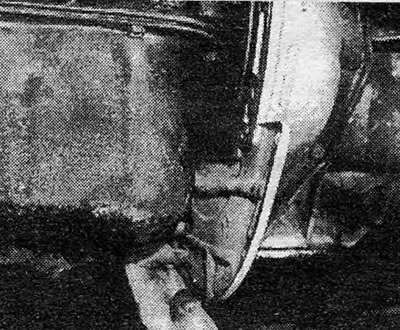
Photo 3.88 Removing the flywheel cover
89. Gradually loosen and then remove the oil pan mounting bolts.
90. Lower the oil pan down under the car (see photo 3.90).
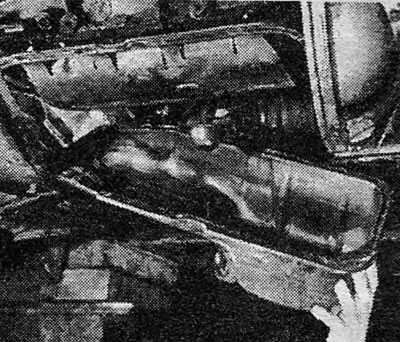
Photo 3.90 Removing the oil pan
91. If the oil pan is removed to gain access to the crankshaft and bearings, remove the old oil pickup tube and screen plate as follows.
92. Remove the two bolts securing the oil pickup pipe to the oil pump housing (see photo 3.92), and unscrew the bolt securing the support bracket to the edge of the crankshaft casing.
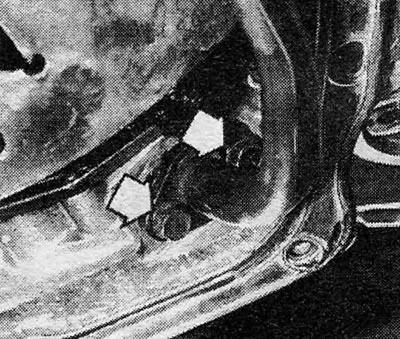
Photo 3.92 Oil pickup tube mounting bolts (indicated by arrows)
93. Remove the old oil pickup tube and the screen plate behind it (see photo 3.93).
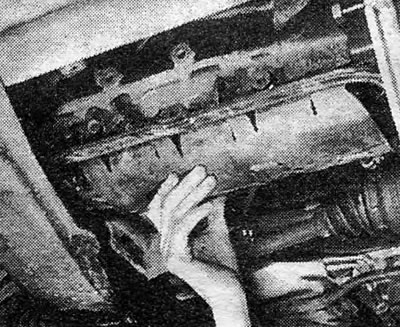
Photo 3.93 Removing the shielding plate
94. Remove the double-sided rubber gasket from the shielding plate (see photo 3.94).
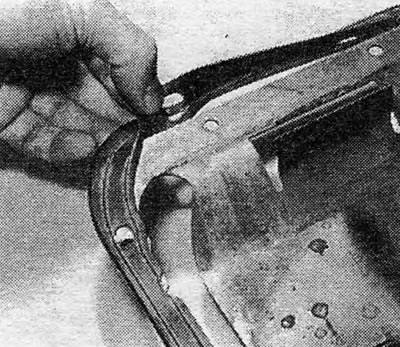
Photo 3.94 Removing the double-sided rubber gasket from the shielding plate
95. Clean the oil pan thoroughly and purchase a new gasket if the old one shows even the slightest sign of damage. The O-ring on the oil pickup pipe must be replaced in any case (see photo 3.95).
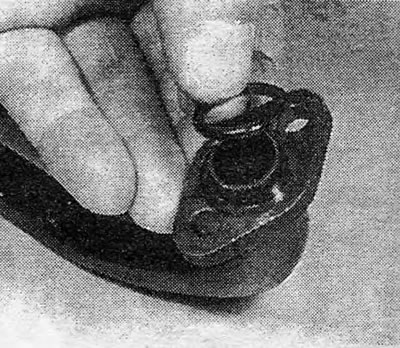
Photo 3.95 O-ring gasket of the oil inlet pipe
96. Install the gasket onto the shield plate, then install the plate into place using the two oil pan bolts to temporarily hold it in place.
97. Install the oil pickup pipe and secure it with two bolts on the flange and a support bracket bolt. Remove the two bolts that temporarily secure the shield plate, then lift the oil pan into place. Install the bolts and tighten them gradually, in a diagonal sequence, to the required degree.
98. Reinstall the flywheel cover and front section of the exhaust pipe.
99. Lower the car to the ground and fill the engine with oil.
Oil pump (1.6, 1.8 and 2.0 liters, since 1987) - removal and installation
100. Remove the camshaft timing belt and its covers as described in paragraphs 30 - 36 of this Section.
101. Remove the oil pan as described earlier in this Section.
102. Remove the oil filter and disconnect the oil pressure switch wire from the oil pump housing (see photo 3.102).
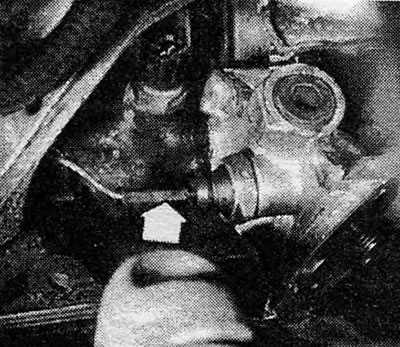
Photo 3.102 Connecting the oil pressure switch electrical wire (indicated by the arrow)
103. Loosen the mounting bolts and remove the oil pump housing from its guide protrusions on the cylinder block (see photo 3.103 A and B). Remove the gasket.
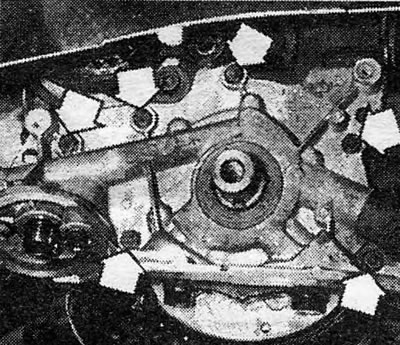
Photo 3.103 A Loosen the oil pump housing mounting bolts (indicated by an arrow)...
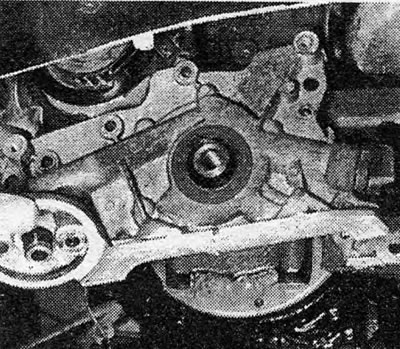
Photo 3.103 B... and remove the casing
104. If further disassembly of the oil pump is required, refer to Chapter 1.
105. Clean all traces of the old gasket from the mating surfaces of the pump housing and cylinder block.
106. Apply the curing compound to the new gasket and place it on the block tabs (see photo 3.106).
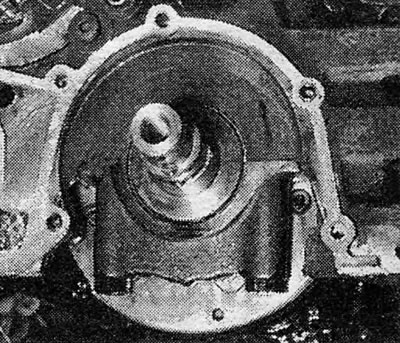
Photo 3.106 Place the new housing gasket over the mounting tabs
107. To protect the lips of the oil gasket when installing the oil pump, wrap the crankshaft projection with film and thoroughly lubricate the lips of the gasket.
108. Carefully place the casing back in place and unroll the film.
109. Install the mounting bolts and tighten them to the required torque.
110. Install a new oil filter and connect the oil pressure switch wire.
111.Install the oil pan as described earlier in this Section.
112. Install the timing belt as described above in steps 40-44 earlier in this Section.
Front crankshaft oil seal (from the pulley side) — (1.6, 1.8 and 2.0 liters, since 1987) - removal and installation
113. Remove the camshaft timing belt and its covers (belts) as described in points 30-36 earlier in this Section.
114. Punch or drill a small hole in the front surface of the oil seal and screw a self-tapping screw into it. Grasp the screw with pliers and pull out the seal.
115. Wind a little film onto the crankshaft projection and thoroughly lubricate the gasket lips.
116. Using a piece of tubing and a mallet, carefully begin to push the gasket into place.
117. Install the timing belt as described above in paragraphs 40-44 of this Section.
Engine (volume 2.0 liters) - removal and installation
118. The details of the engine removal and installation process are basically the same as for the earlier engines described in Chapter 1. If you need information on fuel or ignition system components, refer to the appropriate Sections of this Chapter (Supplements). Hydraulic Valve Lifters - General Information
119. For those engines that have high mileage or have had many repairs in the past (especially if an oil change has taken place), it is quite possible that hydraulic valve lifters may suffer from severe internal contamination, which in extreme cases will result in increased engine noise and accelerated wear. To minimize the occurrence of engine problems, it is recommended to disassemble and clean the valve lifters every time the cylinder head is disassembled. Please note that there are no replacement parts for the valve lifters, so if any part of the system fails, it must be replaced entirely.
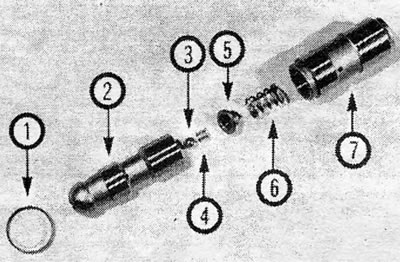
Photo 3.119 Hydraulic valve lifter parts 1. Ring; 2. Plunger; 3. Ball; 4. Smaller spring; 5. Plunger cap; 6. Large spring; 7. Cylinder
120. Carefully remove the ring from the top of the valve. It is usually possible to remove the ring by hand - if you use tools to do this, be extremely careful not to damage the ring.
121. Remove the plunger from the cylinder, followed by the spring.
122. Using a small screwdriver, carefully remove the cap from the base of the plunger. Remove the spring and ball from under the cap, being careful not to lose them.
123. Carefully clean all components using paraffin or other suitable solvent, paying particular attention to the machined surfaces of the cylinder (its inner surface), and piston (outer). Dry all parts thoroughly using a non-shedding cloth. Check the springs carefully for signs of damage - and if the springs are in poor condition, the entire valve lifter will need to be replaced.
124. Lightly lubricate all components with clean engine oil of the appropriate type, then assemble the structure as follows.
125. Replace the plunger and place the ball in the base of the plunger (see photo 3.125).
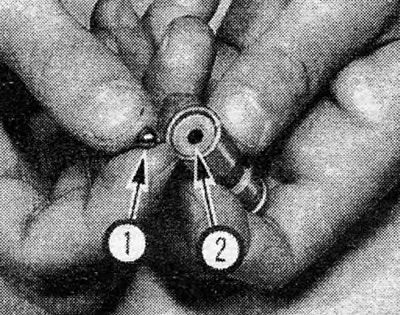
Photo 3.125 Place the ball (1) in its place (2) at the base of the plunger
Original article on the web portal www.OPELBOOK.ru
126. Replace the smaller spring into the plunger cap, then replace the cap and spring, making sure the spring seats on the ball. Apply gentle circular pressure to the cap flange using a small screwdriver until the flanges are fully seated in the groove at the base of the plunger (see photo 3.126 A and B).
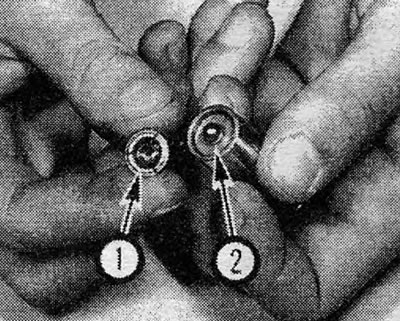
Photo 3.126A Spring (1) placed in the plunger cap and ball (2) in place in the plunger
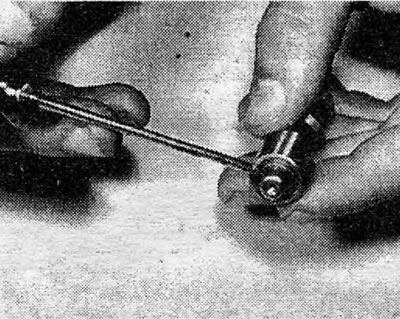
Photo 3.126B Place the cap flange into the plunger groove
127. Place the large spring over the plunger cap, making sure it is seated correctly, and insert the plunger and spring into the cylinder (see photo 3.127 A and B).
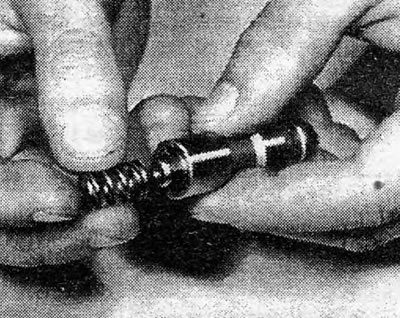
Photo 3.127A Place the spring over the plunger cap...
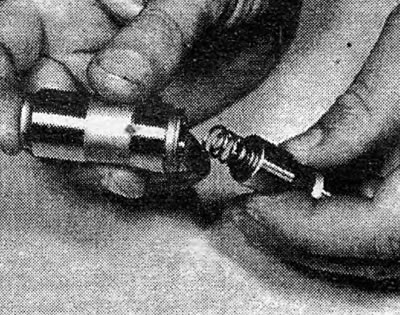
Photo 3.127B... then install the plunger and spring assembly into the cylinder
128. Place the ring on top of the plunger and gently press the plunger with your hand until the ring, when moving downwards, enters completely into the groove in the cylinder (see photo 3.128).
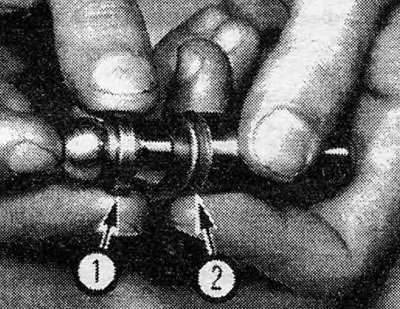
Photo 3.128 Place the ring (1) over the plunger and slide it into the groove (2) in the cylinder
Visitor comments