


Cars with 4-cylinder engine
Caution! New main bearing cap bolts will be required for installation.
1. Remove the oil pump and flywheel/drive plate (see Part B).
2. Remove the piston/connecting rod assemblies as described in Chapter 9. If the pistons/connecting rods do not need repair, loosen the cap bolts and push the pistons out just enough so that the connecting rods do not touch the crankshaft journals.
3. On earlier DOHC engines with a split sump, gradually loosen the remaining bolts and remove the main bearing cap retainer frame from the block base. Discard the retaining bolts; they are subject to replacement.
4. Check the crankshaft axial play as described in Chapter 13, then proceed as follows.
5. The main bearing caps should be numbered from 1 to 5. Cap No.1 is the one closest to the toothed drive belt (see illustration).
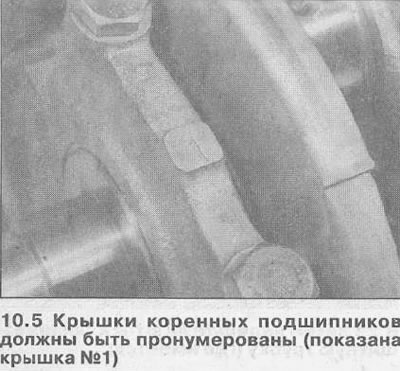
Note! On some engines, the bearing cap near the flywheel/drive plate (No. 5) may not need to be marked, as it is easily identified. If necessary, mark the caps yourself to indicate the correct orientation and avoid confusion during installation.
6. In a diagonal sequence, evenly loosen the ten main bearing cap bolts one-half turn at a time, then remove all bolts.
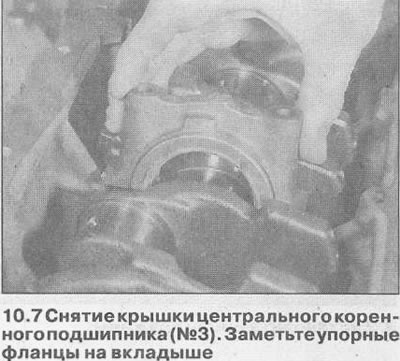
7. Carefully remove each cover from the cylinder block, making sure the lower main bearing remains in place in the cover (see illustration).
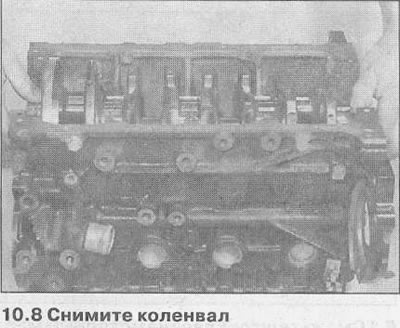
8. Carefully lift the crankshaft, making sure that the upper main bearings do not shift (see illustration). Remove the oil seal from the flywheel/drive plate side.
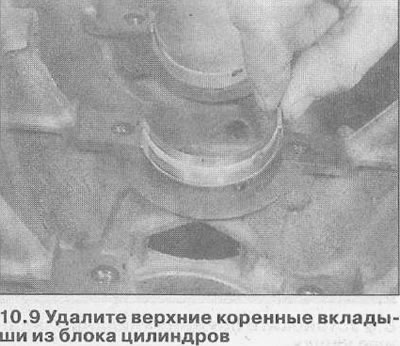
9. Remove the upper bearing shells from the cylinder block and tape them to the corresponding caps (see illustration).
Cars with 6-cylinder engine
Caution: Use new main bearing cap bolts when installing.
10. Remove the oil pump and flywheel/drive plate as described in Parts B of this Section.
11. Remove the piston/connecting rod assemblies as described in Chapter 9. If the pistons/connecting rods do not need repair, unscrew the caps and push the pistons into the cylinders just enough so that the connecting rods do not touch the crankshaft journals.
12. Check the crankshaft axial play as described in Chapter 13, then proceed as follows.
13. Before removing, check that the mark on the main bearing cap clamping frame is clearly visible (the arrow should point towards the front end of the engine).
14. Turn the cylinder block upside down, loosen and remove the four bolts securing the main bearing cap clamping frame to the cylinder block.
15. Working in a diagonal sequence, gradually loosen the eight main bearing cap bolts one-half turn at a time, then remove the bolts and lift the cap retaining frame off the cylinder block.
16. The main bearing caps should be numbered from 1 to 3. Cap No.1 is the one closest to the toothed drive belt; the bearing cap near the flywheel/drive disk does not need to be marked, as it is easy to identify. If necessary, mark the caps yourself so that you can indicate the correct orientation and avoid confusion during installation.
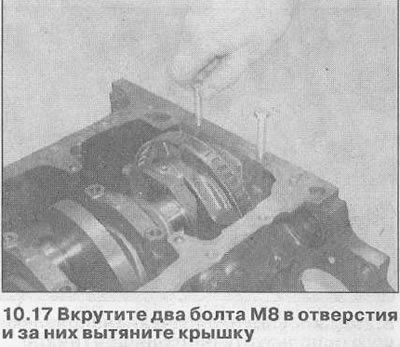
17. Carefully remove each cover from the cylinder block, making sure that the lower main bearing remains in the cover. If the rear cover is tightly seated and does not come off, screw two M8 bolts into the holes and pull the cover out using them (see illustration).
Information taken from the website (www.opelbook.ru)
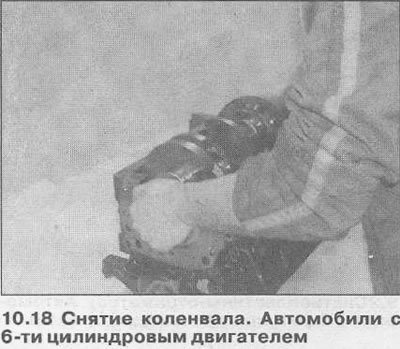
18. Carefully lift the crankshaft, making sure that the upper main bearings do not shift (see illustration). Remove the crankshaft oil seal from the flywheel/drive plate side, it must be replaced.
19. Remove the upper bearing shells from the cylinder block and tape them to the corresponding covers.
Visitor comments