


Removal
1. Remove the toothed drive belt as described in Chapter 7.
2. Remove all camshaft sprockets, crankshaft sprocket, upper idler pulley/tensioner pulley assembly and lower idler pulley (see Chapter 8).
3. Unscrew the mounting bolts and remove the inner timing belt cover from the engine (see Chapter 6).
4. Remove the small oil pan section, oil pump pickup tube/strainer and main oil pan section (see Chapter 12).
5. Remove the lower alternator mounting bolt, then loosen the upper bolt and rotate the alternator on it to move it away from the oil pump housing.
6. Disconnect the wiring connector from the oil pressure sensor, then remove the bolt securing the wiring harness guide to the front of the pump housing.
7. Remove the mounting bolts, then pull the oil pump housing assembly off the end of the crankshaft, being careful not to lose the mounting pins. Remove the housing gasket - it must be replaced.
Bulkhead
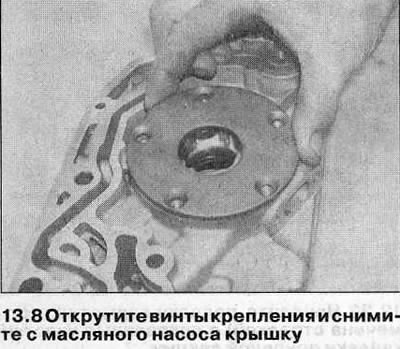
8. Loosen the mounting screws and remove the pump cover (see illustration).
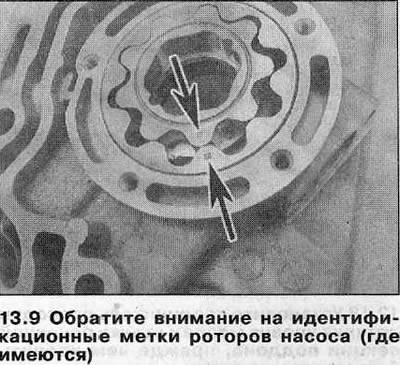
9. Mark the top of the pump rotors with a marker to ensure proper orientation when reinstalling them. On some models, the rotors are marked at the factory (see illustration).
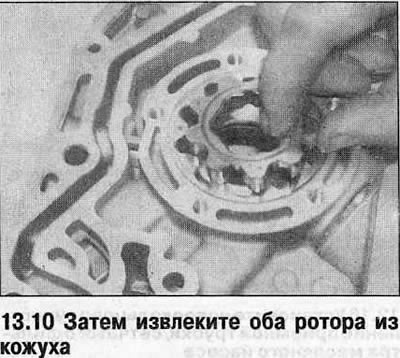
10. Remove the rotors from the pump housing (see illustration).
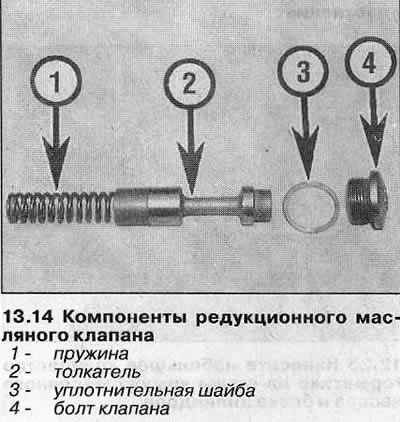
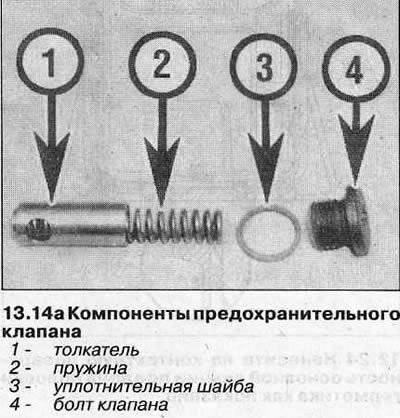
11. Unscrew the oil pressure relief valve and relief valve bolts from the top of the casing and remove the valve springs and tappets, remembering their orientation in the pump. Remove the sealing washers from the valve bolts (see illustrations).
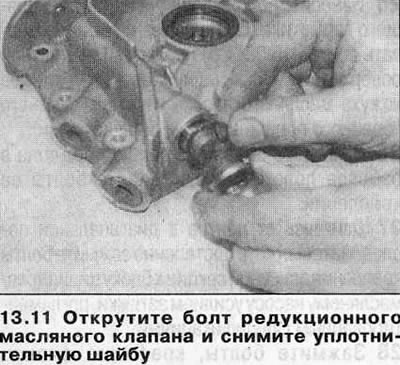
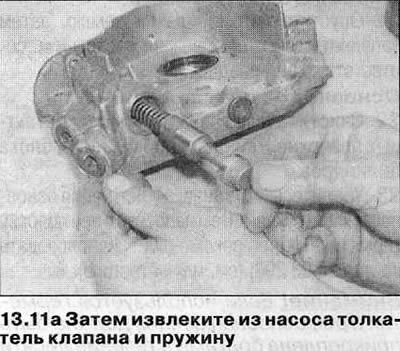
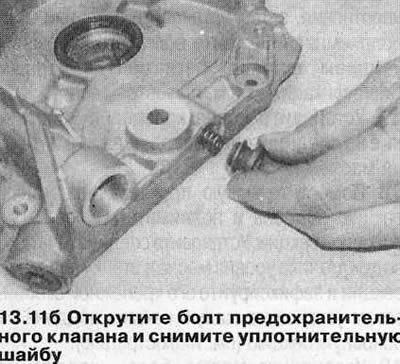
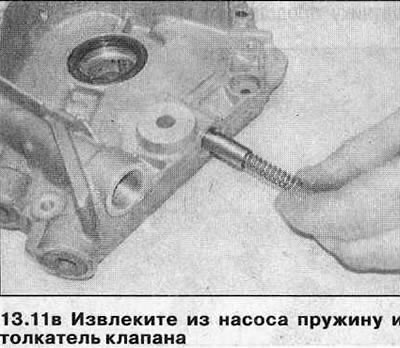
Note: The bypass valve can be removed without removing the pump from the engine, just remove the outer timing belt cover.
12. Clean components and carefully inspect rotors, pump housing and valve lifters for scoring and signs of wear. Replace components as necessary; if the rotors or pump casing are scratched, the entire pump assembly must be replaced.
13. If the components appear to be in good condition, measure the rotor end clearance and check the pump cover for distortion. If the clearances are outside the tolerances specified in the Specifications, replace the pump.
14. If the pump is in satisfactory condition, reassemble the components in the reverse order of removal, paying attention to the following:
- a) Make sure both rotors are oriented according to the marks made before removal.
- b) Tighten the pump cover screws to the specified tightening torque Specifications.
- c) Install new O-rings on the valve bolts and ensure that the valve lifters and springs are correctly oriented (see illustrations).
- d) Finally, prime the oil pump with clean engine oil by rotating the inner rotor.
Installation
15. Before installation, it is necessary to determine which of the three types of oil pump is installed on the engine. Determine the diameter of the oil pump mounting bolts. In 1999, the diameter was increased from M6 to M8. If M6 bolts are used, inspect the oil pump cover/inner timing belt cover (see illustration). The modified cover has an additional hole allowing access to the upper oil pump bolt (No. 6 in tightening sequence).
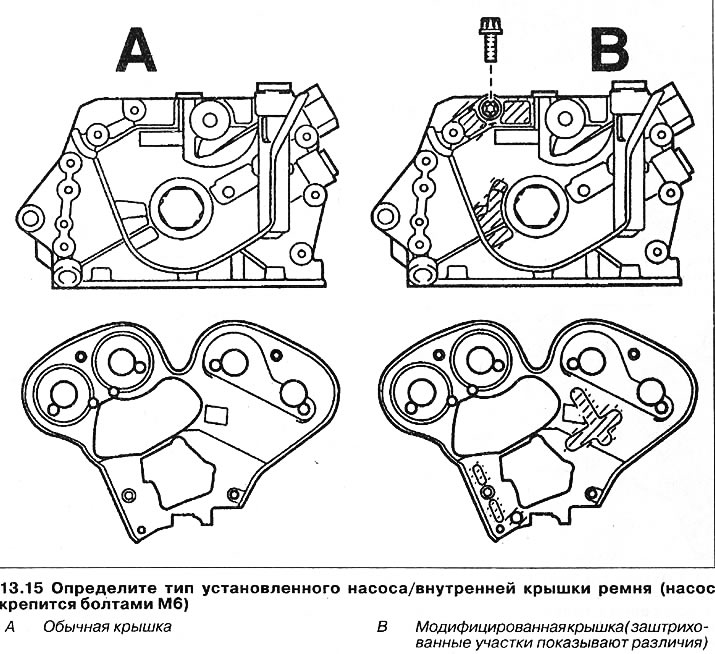
Oil pump with M6 mounting bolts and regular internal timing belt cover
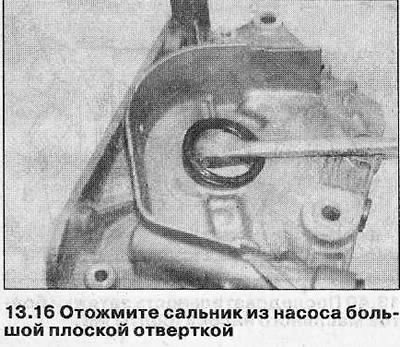
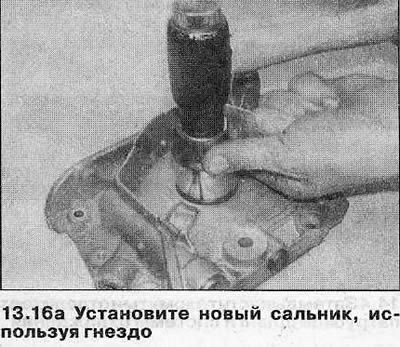
16. Before installing, carefully pry the crankshaft oil seal out using a flat-head screwdriver. Lubricate the sealing lip of the new oil seal with clean engine oil and install it with the lip facing inward. Use a tubular drift for this, which rests only on the hard outer edge of the seal (see illustrations). The seal should be flush with the casing.
17. Make sure that the contact surfaces of the oil pump and cylinder block are clean and dry and that the mounting pins are in the working position.
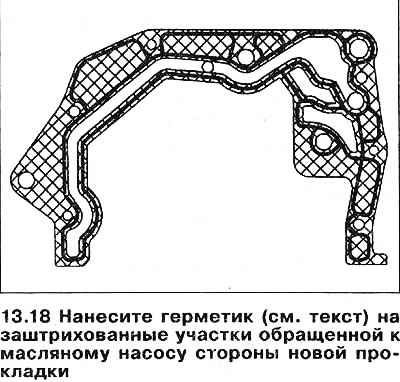
18. Apply a thin layer of sealant (Opel recommends using composition 15 03 170) approximately 0.2 mm thick on the shaded areas of the oil pump side of the new gasket (see illustration).
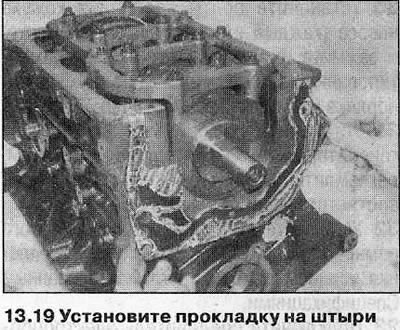
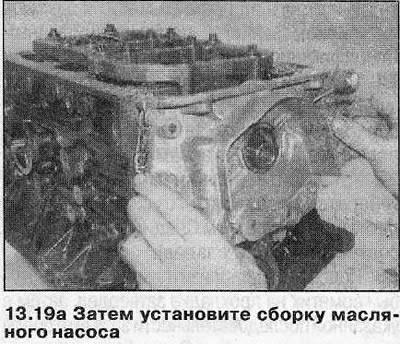
19. Install the gasket on the cylinder block, then carefully move the oil pump into the working position and place the inner rotor on the end of the crankshaft. Install the pump on the pins, being careful not to damage the sealing lip of the oil seal (see illustrations).
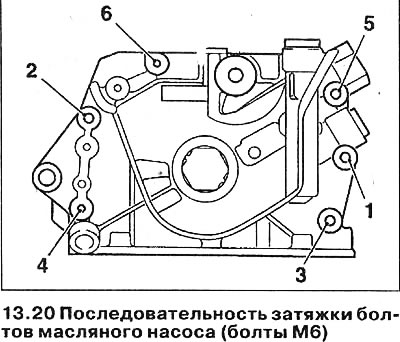
20. Install the pump casing mounting bolts each strictly in their original place and tighten them with the specified tightening force Specifications (see illustration).
21. Install the lower timing belt guide pulley onto the pump and tighten the mounting bolt to the specified tightening torque Specifications.
22. Install the lower generator mounting bolt and tighten it to the specified tightening torque Specifications (see the relevant section).
23. Wait approximately 10 minutes for the sealant on the gasket to harden, then tighten the bolts in the sequence shown to the tightening torque (see Specifications).
24. Remove the lower guide pulley from the oil pump, install the inner timing belt cover (see Chapter 6) and tighten the mounting bolts with the tightening force specified Specifications.
25. Connect the oil pressure sensor wiring connector and secure the wiring harness guide into position with the bolt.
26. Install the main pan section, oil pump pickup tube/strainer and small pan section as described in Chapter 12.
27. Install the sprockets, idler pulleys and timing belt tensioner, then install the belt (see Chapters 7 and 8).
28. Finally, install a new oil filter and fill the engine with clean oil (see the relevant section).
Oil pump with M6 mounting bolts and modified inner timing belt cover
29. Perform the actions described in points 16-19.
30. Install the pump casing mounting bolts (each one strictly to the same place) and tighten them to the tightening torque specified in the Specifications in the order shown (see illustration 13.20).
31. Install the lower generator mounting bolt and tighten it to the specified tightening torque Specifications (see the relevant section).
32. Install the inner timing belt cover (see Chapter 6) and tighten the mounting bolts with the tightening force specified Specifications.
33. Connect the oil pressure sensor wiring connector and secure the wiring harness guide into position with the bolt.
34. Install the main oil pan section, oil pump pickup tube/strainer and small oil pan section (see Chapter 12).
35. Install the sprockets, idler pulleys and timing belt tensioner, then install the belt (see Chapters 7 and 8). Before installing the outer timing belt cover, re-tighten all oil pump mounting bolts to the torque specified in the Specifications in the sequence shown (see illustration 13.20).
36. Finally, install a new oil filter and fill the engine with clean oil (see the relevant section).
Oil pump with M8 mounting bolts
37. Remove all traces of blocking compound from the threads of the oil pump mounting bolts.
38. Perform the actions described in points 16-19.
39. Apply a little blocking compound (Opel recommends using 15 10 181) on the thread of each pump mounting bolt, then install the bolts, each one strictly in its original place, and tighten them by hand.
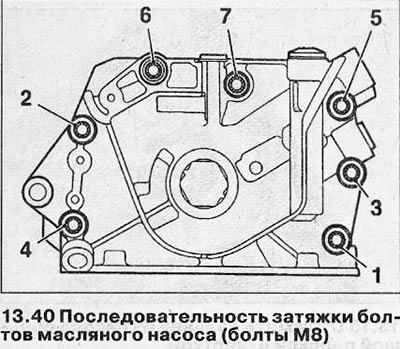
40. In the specified sequence, tighten all pump mounting bolts to the specified tightening torque Specifications (see illustration).
41. Install the lower generator mounting bolt and tighten it to the specified tightening torque Specifications (see the relevant section).
42. In the same sequence, tighten the pump mounting bolts to the required tightening torque (see Specifications).
43. Connect the oil pressure sensor wiring connector and secure the wiring harness guide into position with the bolt.
44. Install the inner timing belt cover (see Chapter 6) and tighten the mounting bolts with the tightening force specified Specifications.
45. Install the main pan section, oil pump pickup tube/strainer and small pan section as described in Chapter 12.
46. Install the sprockets, idler pulleys and timing belt tensioner, then install the belt (see Chapters 7 and 8).
47. Finally, install a new oil filter and fill the engine with clean oil (see the relevant section).
Visitor comments