


Contents: Selecting inserts ⬇ Checking the working clearance of…⬇ Installing piston/connecting rod…⬇
Attention! It is recommended to install new piston rings and connecting rod bearings, regardless of the condition of the previous ones.
Selecting inserts
1. Connecting rod bearings are available in various grades. The required bearing size can be determined by measuring the crankshaft journals (see Chapter 13).
Checking the working clearance of the connecting rod bearing
2. Clean the backs of the bearing shells and the bearing surfaces in the connecting rods and caps.
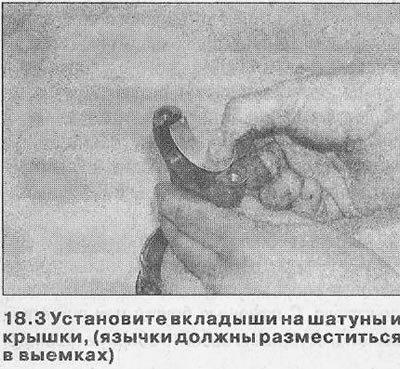
3. Insert the bearing shells into their places in the connecting rods and caps. Make sure the mounting tabs enter the slots (see illustration). If the old liners are used for checking, install them strictly in the same place. The gap can be determined in one of two ways.
4. First method (you will need internal micrometers or calipers) — install the caps on the connecting rods with the liners in the working position. Tighten the cap mounting bolts with the specified tightening torque and measure the diameter of the hole formed by each pair of liners (bearing inner diameter). Measure the diameter of each crankshaft journal and subtract it from the bearing inside diameter. The result is equal to the connecting rod bearing operating clearance.
5. Second (and more accurate) the method consists of using a special Plastigauge tool, as described in Chapter 17, points 5-14.
Installing piston/connecting rod assemblies
6. Check that the bearings are installed correctly as described in points 2 and 3 above. If new bearings are being installed, remove the protective grease from them.
7. Lubricate the cylinders, pistons and piston rings, then place each piston/connecting rod assembly in the appropriate position.
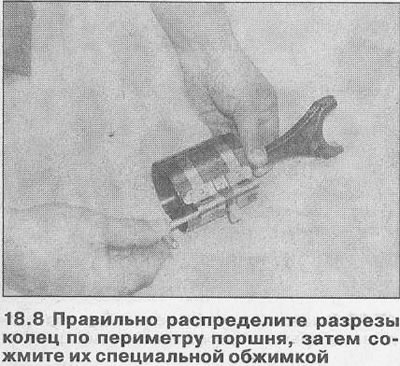
8. Starting with assembly #1, position the piston rings as described in Chapter 16, then compress them with a special ring crimper (see illustration).
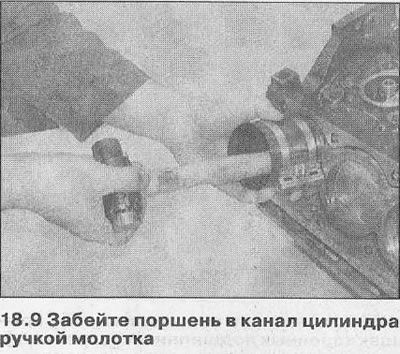
9. Insert the piston/connecting rod assembly into the top of cylinder #1, making sure the arrow on the piston head points toward the front end of the engine. Using a block or the handle of a hammer, carefully tap the assembly into the cylinder until the piston head is flush with the block surface (see illustration).
10. Being careful not to damage the cylinder walls, generously lubricate the crankshaft journal and both bearing shells, then insert the piston/connecting rod assembly into the cylinder bore onto the crankshaft journal.
11. Make sure that the contact surfaces of the connecting rod and cap are clean and dry.
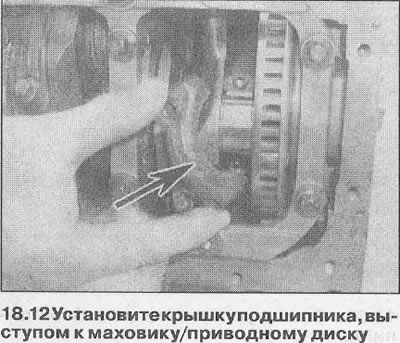
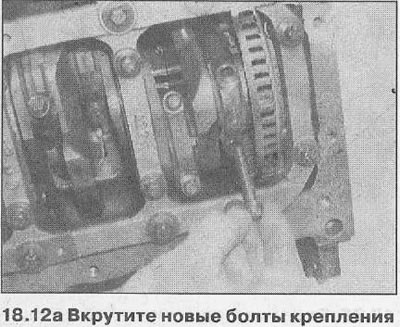
12. Install the connecting rod bearing cap, aligning it correctly with the marks (the protrusion on the base of the bearing cap must face the flywheel/drive plate), then screw in the new mounting bolts (see illustrations).
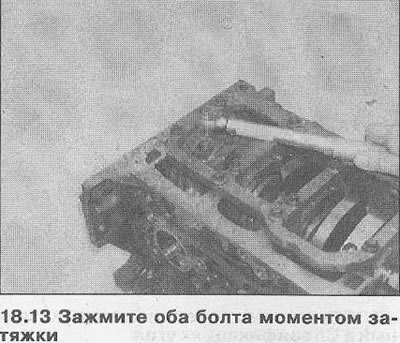
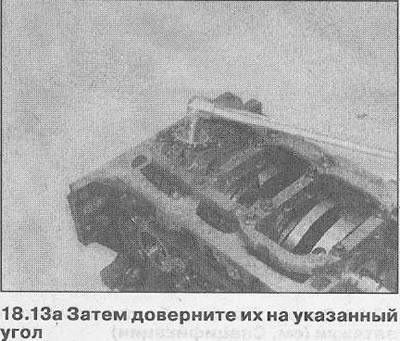
13. Tighten both cover mounting bolts to the specified tightening torque (see Specifications of the relevant section), then turn them to the specified angle (see illustrations).
14. Install the remaining piston/connecting rod assemblies in the same manner.
15. Check that the crankshaft rotates freely.
16. On 4-cylinder engines, do the following:
- a) Install the crankshaft balancer assembly as described in Part A.
- b) On all engines, install the oil pump pickup pipe and pan, then install the cylinder head as described in Part B.
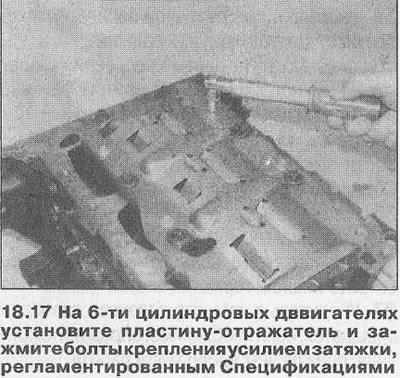
17. On 6-cylinder engines, install the reflector plate on the base of the main bearing cap clamping frame and tighten the mounting bolts to the specified tightening torque Specifications (see illustration). Proceed as described in Parts B of this Section, install the pan, then install the cylinder heads.
Visitor comments