


Attention! It is recommended to install new main bearings, regardless of the condition of the previous ones.
Selecting inserts
1. Although the factory may install different bearing sizes, all are available commercially. Opel supplies bearings in nominal and repair sizes. Bearing size can be determined by measuring the crankshaft journal (see Chapter 13).
Checking the main bearing clearance
2. Clean the back side of the bearings and the bearing surfaces of the bearings in the cylinder block and in the covers.
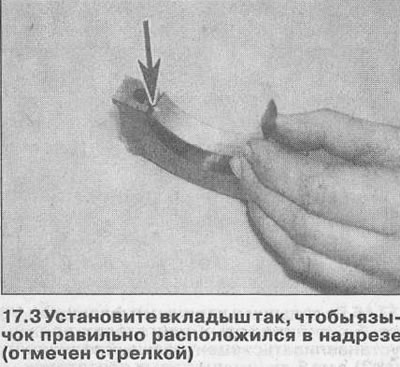
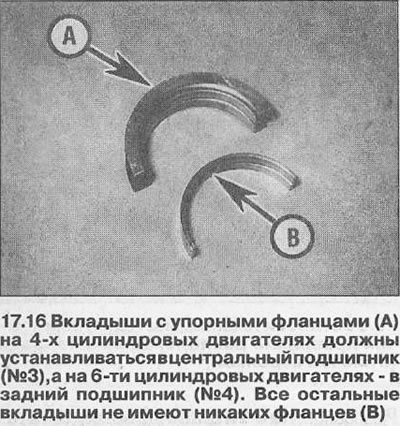
3. Insert the liners into the covers and into the cylinder block, making sure that the tab on the liners fits into the corresponding recess (see illustration). If old bearings are used for inspection, make sure that they are installed strictly in the same place. When installing new bearings on 6-cylinder engines, note that bearing No.1 is wider than bearings No.2 and No.3, and that bearings No.2 and No.3 with grooves should be installed on top (into the cylinder block). The gap can be determined in one of two ways.
4. First method (you will need internal micrometers or calipers) — install the main bearing caps on the cylinder block with the liners in the working position. Tighten the cap mounting bolts with the specified tightening torque and measure the diameter of the hole formed by each pair of liners (bearing inner diameter). Measure the diameter of each crankshaft journal and subtract it from the bearing inside diameter. The result is equal to the main bearing operating clearance.
5. Second (and more accurate) the method consists of using a special tool called Plastigauge. The tool consists of a scale and plastic threads of round cross-section. The procedure using Plastigauge is performed as follows.
6. Install the upper main bearing shells into the working position and carefully lower the crankshaft into the crankcase. Do not use any lubricant, the crankshaft journals and shells must be absolutely clean and dry.
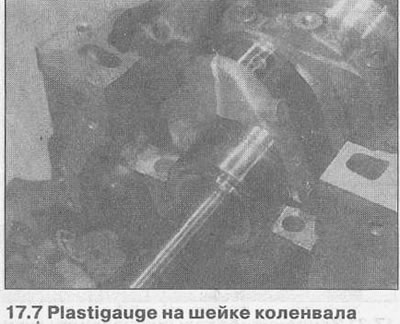
7. Cut several pieces of Plastigauge thread to the appropriate size (they should be slightly shorter than the width of the main bearings) and place a piece on each neck (see illustration).
8. Install the caps with liners in their places. Be careful not to displace the Plastigauge. On 6-cylinder engines, also install the main bearing cap clamping frame (the arrow on the frame should point towards the front end of the engine).
9. Install the mounting bolts and tighten them with tightening force (see Specifications in the relevant section), and then turn it to the desired angle (see points 22 and 23). Do not turn the crankshaft during this operation. Unscrew the bolts and carefully remove the main bearing caps.
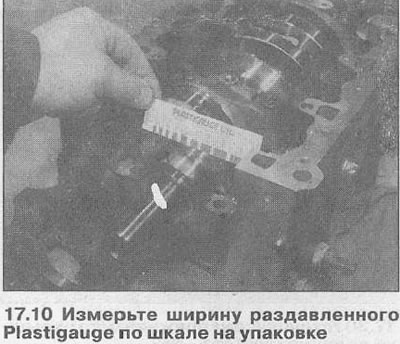
10. Compare the width of the deformed thread with the scale. The working gap is indicated on the scale (see illustration). Compare the obtained result with the data given in the Specifications (see sections 2A and 2B).
11. If the gap is too large, the bearings may be the wrong size or excessively worn (if old liners are reused). Before deciding that the crankshaft is worn, make sure that no dirt or oil has entered between the bearing shells and the caps or block when measuring the clearance. If one end of the Plastigauge thread is wider than the other, the crankshaft journal may be tapered.
12. Before deciding to replace components, consult your Opel dealer or engine repair specialist for advice.
13. If necessary, purchase bearings of the correct size and recheck the running clearance as described above.
14. Finally, carefully clean all traces of Plastigauge from the crankshaft and bearings.
Installing the crankshaft
Cars with 4-cylinder engine
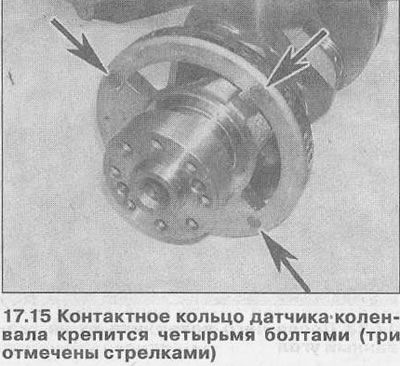
15. Carefully lift the crankshaft out of the cylinder block. If a new crankshaft is installed, do not forget to transfer the sensor contact ring from the old one to it. Secure the sensor with new mounting bolts, tightening them with the tightening force specified in the Specifications (see illustration).
16. Place the inserts in their places as described above in points 2 and 3 (see illustration). If new bearings are being installed, remove the protective grease from them. Wipe the bearings and covers with a thick (lint-free) cloth.
17. Lubricate the upper bearings, then lower the crankshaft into place in the crankcase (see illustration).
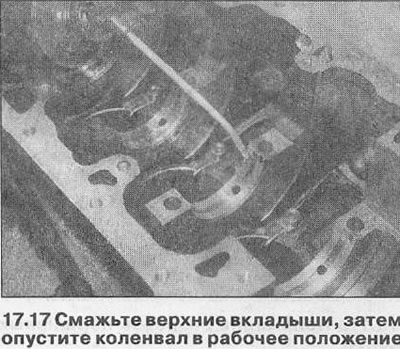
18. Then check the axial play as described in Chapter 13.
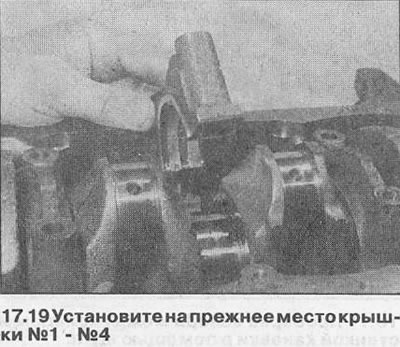
19. Insert the liners into the caps, then install the caps into the cylinder block (see illustration). Make sure that they are installed exactly in their original place.
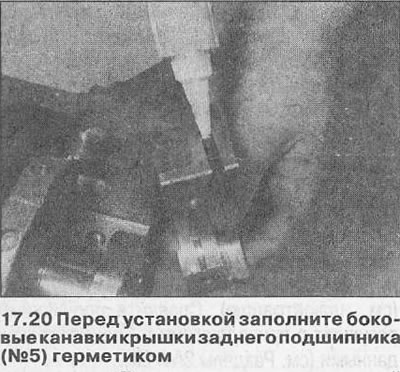
20. Clean the surface of the rear bearing cap (No. 5), then fill the groove on each side of the cap with sealant (Opel recommends using sealant 15 03 295) (see illustration). Install the cover into the crankcase, orienting it correctly.
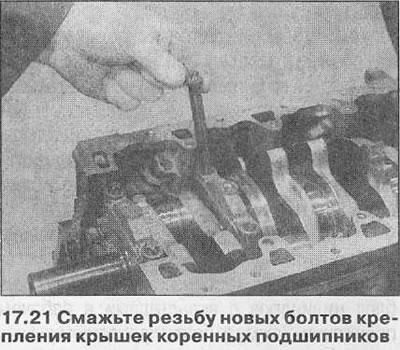
21. Apply a small amount of oil to the threads of the main bearing cap bolts. Tighten all bolts by hand (see illustration).
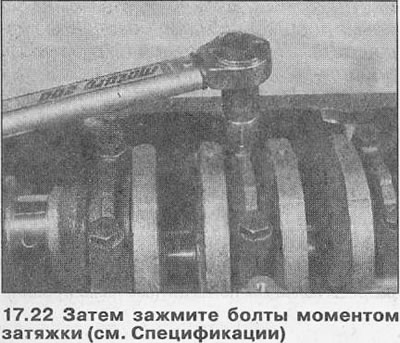
22. Working in a diagonal sequence from the center outward, tighten the main bearing cap bolts to Stage 1 torque (see Specifications) (see illustration).
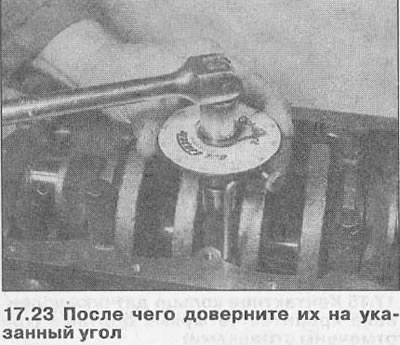
23. Then again in the same sequence tighten all the bolts to the specified angle (see Specifications in the relevant section).
24. After all the bolts are tightened, apply more sealant into the grooves in the rear main bearing cap.
25. Make sure the crankshaft rotates freely; if necessary, determine the cause before continuing.
26. On early engines with two overhead camshafts (DOHC) and a two-piece sump, clean the contact surfaces, then install the main bearing cover press frame on the block. Insert the new mounting bolts into the center holes and tighten them first with a tightening torque (see Specifications), and then turn it to the angle specified in the Specifications.
27. On all engines, install the connecting rod/piston assemblies as described in Chapter 18.
28. Guided by Part B (dOHC engine), install a new crankshaft oil seal, then install the flywheel/drive plate, oil pump, cylinder head, drive belt sprocket and new timing belt.
Cars with 6-cylinder engine
29. Install the crankshaft as described in points 15-18.
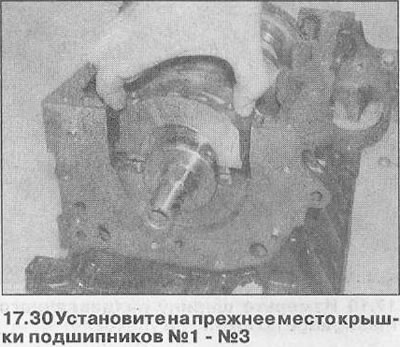
30. Install the liners into the caps, then install caps 1-3 into the cylinder block (see illustration).
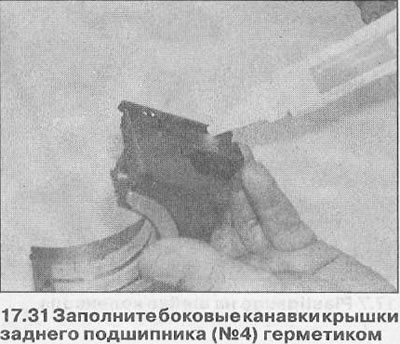
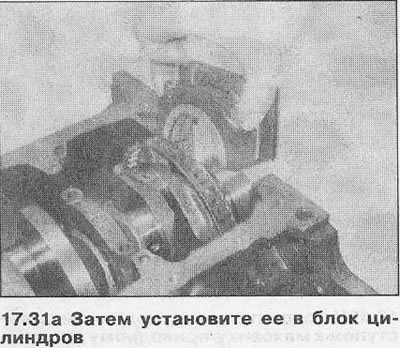
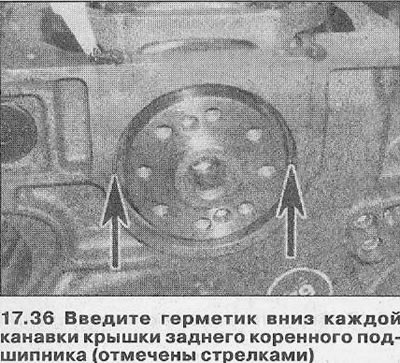
31. Clean the rear bearing cap, then fill the groove on each side of the cap with sealant (Opel recommends using sealant 15 03 295). Install the bearing cap into the crankcase, orienting it correctly (see illustrations).
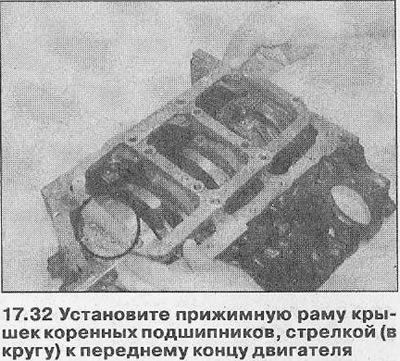
32. Unscrew the threaded couplings so that they do not protrude outward from the main bearing cap clamping frame, then install the frame with the arrow towards the front end of the engine (see illustration).
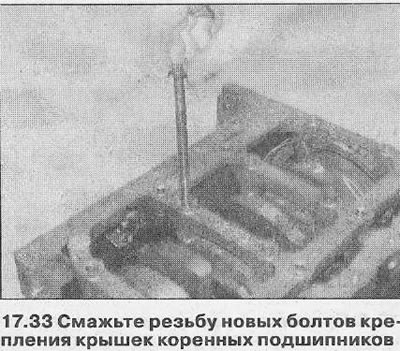
33. Lubricate the threads of the new main bearing cap bolts (see illustration). Insert the bolts and tighten them by hand.
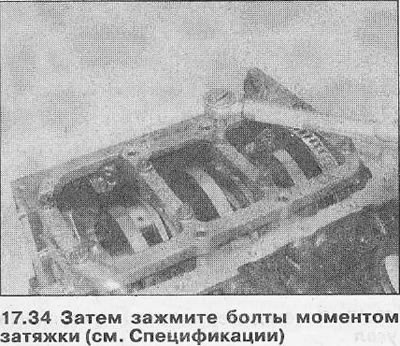
34. Working in a diagonal sequence from the center outward, tighten the main bearing cap bolts evenly and gradually to a tightening torque of (see Specifications) (see illustration).
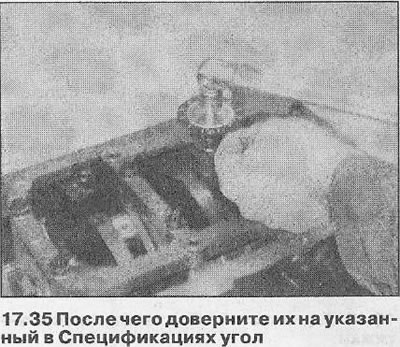
35. Then tighten all the bolts again in the same sequence to the specified Specifications corner (see illustration).
36. After all the bolts are tightened, inject more sealant into the grooves in the rear main bearing cap. Then wipe off any excess sealant with a clean cloth.
37. Make sure the crankshaft rotates freely; if necessary, determine the cause before continuing.
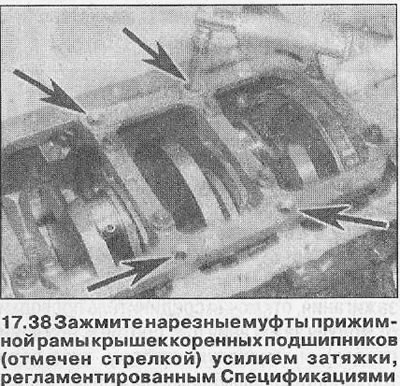
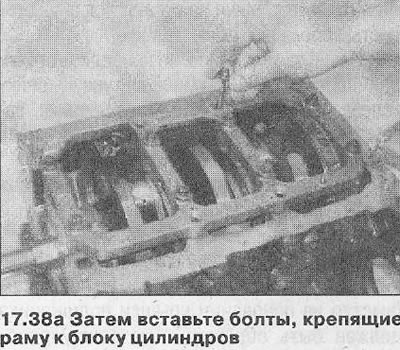
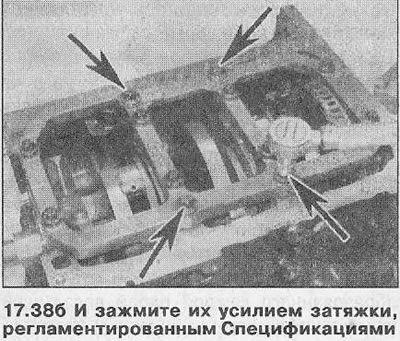
38. Screw the threaded couplings into the clamping frame of the main bearing caps and tighten them with the tightening force specified Specifications. Then insert the bolts that secure the frame to the cylinder block and tighten them to the specified tightening force Specifications (see illustrations).
39. Install the connecting rod/piston assemblies as described in Chapter 18.
40. Guided by Part B, install a new crankshaft oil seal, then install the flywheel/drive plate, oil pump, cylinder heads, timing belt sprockets, and the drive belt itself.
Visitor comments