


The electronic ignition system generates very high voltage! Be careful and take all necessary precautions when servicing any components of the system, including not only the main (ignition module, coil and high voltage wires), but also related items such as spark plug connectors, tachometer and other equipment. Persons with an implanted pacemaker should not be allowed to service ignition system components!
The correct functioning of the spark plugs largely determines the efficiency of the engine. It is important that the engine is equipped with the correct type of spark plugs (see Vehicle settings and routine maintenance). The need for unscheduled maintenance of spark plugs occurs extremely rarely, provided that the engine itself is in good condition. To avoid accidental damage to the electrodes, do not clean the spark plugs without using special equipment.
In most cases, replacing spark plugs requires a special spark plug head (with elastic liner inside) a special tool is also available in a set with a ratchet drive, as well as a kit for safely disconnecting the high-voltage wire tips from the spark plug tails, although its use is not strictly required. Using a torque wrench will allow you to achieve the correct tightening force for the spark plugs.
Tools needed when replacing spark plugs
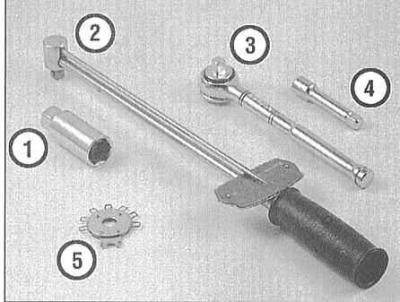
1 — Spark plug head - Equipped with a special elastic insert, eliminating the possibility of accidental damage to the porcelain insulator when unscrewing the spark plug.
2 - Torque wrench - Although not a required tool, it provides a reliable guarantee of the correct tightening force of the spark plugs.
3 - Ratchet drive - Used in combination with a spark plug head and torque wrench.
4 — Extension - Depending on the model and its auxiliary units, access to the spark plugs may be limited to varying degrees, so using extensions of the appropriate shape and design will make the procedure much easier.
5 - Tool for measuring and adjusting spark plug gaps - There are several types of this type of tool available - make sure that the tool comes with a feeler gauge that matches the size of the spark plug gaps on your vehicle.
Coal deposits
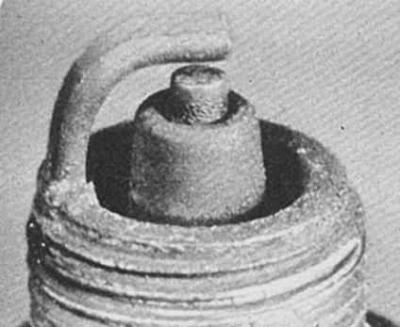
Symptoms: The presence of soot indicates an over-rich fuel-air mixture or weak spark intensity. Causes misfires, difficult starting and leads to unstable engine operation.
Recommendations: Check if the air cleaner is clogged, if the fuel level in the float chamber is too high, if the choke is stuck, and if the contacts are too worn. Try using spark plugs with a longer insulator, which increases resistance to contamination.
Oiling
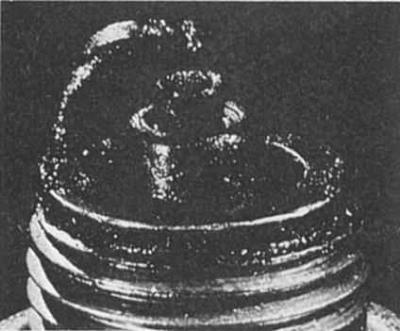
Symptoms: Oiling of the spark plug is caused by wear of the oil-deflecting caps. Oil gets into the combustion chamber through worn valve guides or piston rings. It causes misfires, makes starting difficult and leads to instability of engine operation.
Recommendations: Perform mechanical repairs and replace spark plugs.
Overheat

Symptoms: Porous, white insulator, erosion of electrodes and absence of any deposits. Leads to a reduction in spark plug life.
Recommendations: Check if it meets the requirements of the Specifications (in Chapter Vehicle settings and routine maintenance) the glow plug rating, whether the ignition timing is set correctly, whether the fuel-air mixture is too lean, whether there are any vacuum leaks in the intake manifold and whether the valves are jammed. Also check the coolant level and whether the radiator is clogged.
Too early ignition
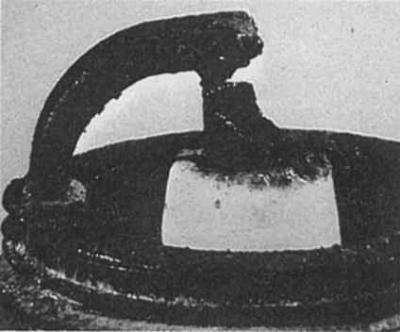
Symptoms: The electrodes are melted. The insulator is white, but may also be contaminated due to misfires or foreign particles entering the combustion chambers. May cause engine failure.
Recommendations: Check the glow number of the installed spark plugs, the ignition timing, and the quality of the mixture (isn't it too poor?), whether the cooling system is clogged and whether the lubrication system is functioning normally.
Conductive gloss

Symptoms: The insulator has a yellowish color and a polished appearance. Indicates a sudden increase in temperature in the combustion chambers during sharp acceleration. Normal deposits melt, acquiring the appearance of a varnish coating. Leads to misfires at high speeds.
Recommendations: Change the spark plugs (cooler, while maintaining the same driving style).
Short circuit of electrodes
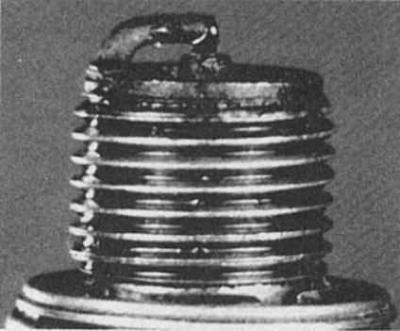
Symptoms: Combustion waste products enter the interelectrode space. Solid deposits accumulate, forming a bridge between the electrodes. Leads to ignition failure in the cylinder.
Recommendations: Remove deposits from the interelectrode space.
Normal condition of the candle
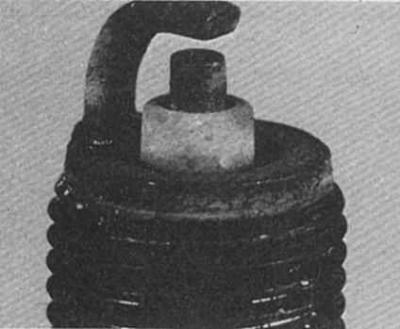
Symptoms: Grey-brown colour and slight wear of the electrodes. The glow number of the spark plugs corresponds to the type of engine and its general condition.
Recommendations: When replacing spark plugs, install spark plugs of the same type.
Ash formation
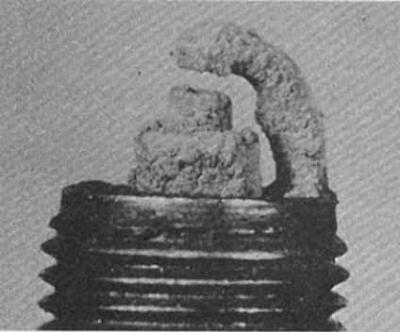
Symptoms: Soft, brownish deposits on one or both spark plug electrodes. They are caused by oil and/or fuel additives. Excessive buildup can insulate the electrodes and cause misfires and rough running under acceleration.
Recommendations: If deposits accumulate quickly, replace the oil seals to prevent oil from entering the combustion chambers. Try changing the fuel brand.
Wear

Symptoms: Rounding of the electrodes with a small accumulation of deposits at the working end. The color is normal. It leads to difficulty in starting the engine in cold, wet weather and increased fuel consumption.
Recommendations: Replace the spark plugs with new ones of the same type.
Detonation
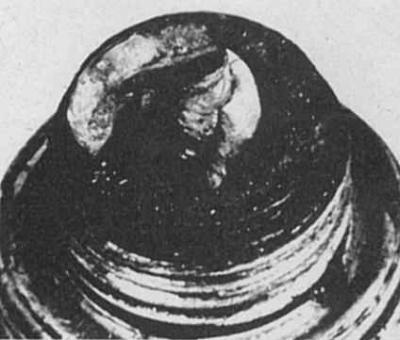
Symptoms: Insulators may be chipped or cracked. Insulator damage may also result from improper spark plug gap adjustment. Piston damage may result.
Splashing
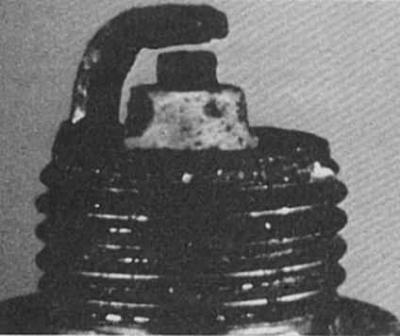
Symptoms: After a long period of misfire, deposits may become loose while the combustion chamber remains at operating temperature. At high speeds, deposits flake off the piston and stick to the hot insulator, causing misfires.
Recommendations: Replace the spark plugs or clean and reinstall the old ones.
Mechanical damage
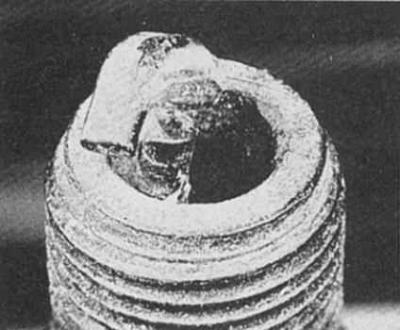
Symptoms: Can be caused by foreign material entering the combustion chamber or by the piston hitting a spark plug that is too long. Leads to cylinder failure and piston damage.
Recommendations: Remove foreign particles from the engine and/or replace
OHC 1.2 and 1.4 l engines
To make installation easier, mark the high voltage wires with tape according to the sequence of cylinders 1 through 4. Sometimes the high voltage wires may already be marked accordingly.
1. Disconnect the high-voltage wires from the spark plugs. When doing this, pull only the plug, not the cable, or use a special puller.
2. Remove the spark plugs using a suitable spark plug wrench. Make sure that the wrench is not tilted, as this can destroy the ceramic insulation of the spark plug. Opel recommends using the HAZET 900KF socket with a size of 20.8 mm for this purpose.
In heat-protective tubes (engines produced since 09.1994.) spark plugs with a 16 mm hexagon are installed, as in the DOHC engine.
3. Compare the removed spark plug with the condition chart shown in the photographic insert, which will allow you to qualitatively assess the general condition of the engine.
4. Before installing the spark plug, make sure that the threaded tip is screwed on tightly and that the threads on the body and the outer surface of the spark plug are well cleaned.
5. Installation is carried out in the reverse order. Tighten the spark plugs with force 25 Nm.
DOHC engines 1.4 and 1.6 l
1. Remove the oil filler cap.
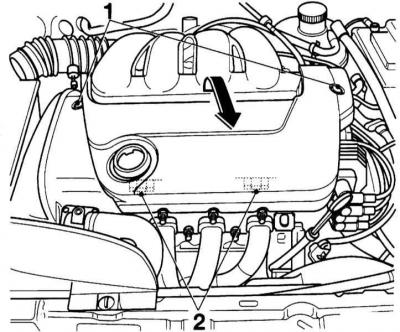
2. Unscrew the bolts (1) and pull the locking strips of the high-voltage wire cover out of the rubber strips (2) on the cylinder head. Fold back the high-voltage wire cover and remove it.
Removal the locking strips of the high-voltage wire cover
3. Close the oil filler cap.
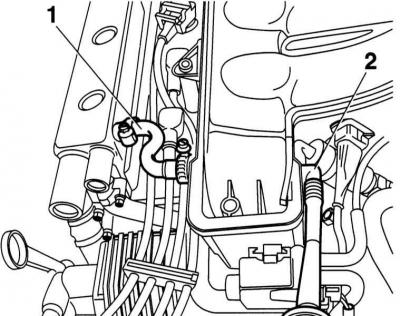
4. Remove PCV hoses (1) and (2).
Removal PCV Hoses
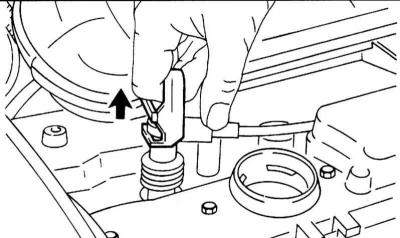
5. Disconnect the high-voltage wires from the spark plugs using the puller located on one of the spark plug connectors.
Disconnecting the high voltage wire from the spark plug using a puller
6. The spark plugs on DOHC engines are deeply recessed into the spark plug wells, so you will need a wrench drive extension to unscrew them. After placing the head on the spark plug, connect the drive and, carefully turning the wrench counterclockwise, unscrew the spark plug.
Removal a spark plug from a deep recess using a special key
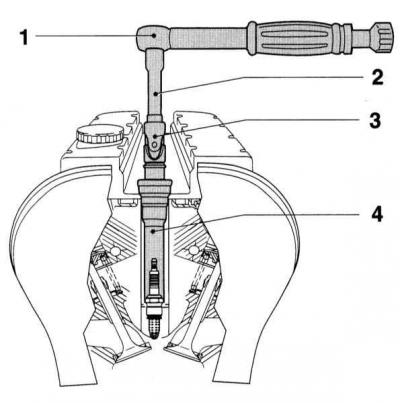
1 - Ratchet handle
2 - Extension cord
3 — Cardan joint
4 - Spark plug head with elastic insert
5 - Spark plug
7. Compare the removed spark plug with the condition chart shown in the photographic insert, which will allow you to qualitatively assess the general condition of the engine.
8. Before installing the spark plug, make sure that the threaded tip is screwed on tightly and that the threads on the body and the outer surface of the spark plug are well cleaned.
9. Thread one of the new spark plugs into the appropriate hole in the engine by hand. After making sure that the spark plug is not twisted in the threads, tighten it to the required torque (if you have a torque wrench at hand). To make the spark plug installation procedure easier, pull a piece of flexible fuel hose onto its tail. This eliminates the possibility of thread stripping, since the slightest biting will simply cause the hose to start turning. Install all remaining spark plugs in a similar manner.
10. Installation is carried out in the reverse order. Tighten the spark plugs with force 25 Nm, and the bolts for fastening the high-voltage wire cover - with force 8 Nm.
Features for DOHC 1.0 and 1.2L engines
1. Remove the ignition module (see Chapter Engine electrical systems).
2. Remove the spark plugs using a spark plug wrench.
3. Installation is carried out in reverse order.
Visitor comments